
Flowers
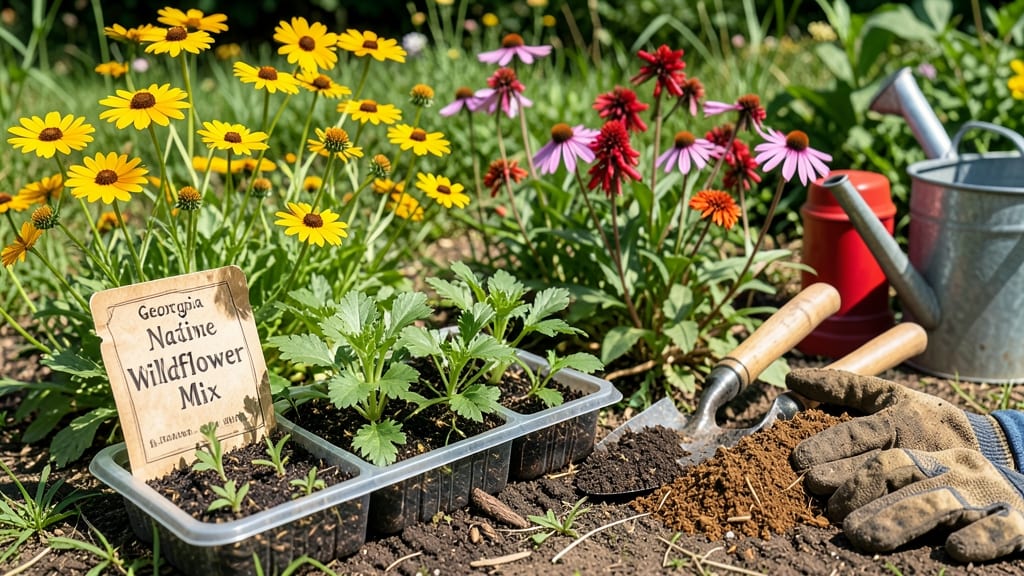
Planting wildflowers in Georgia at the right time means vibrant blooms from spring through fall without the guesswork.
If you’ve ever watched seeds sprout only to wilt under an unexpected frost, you know timing is everything. Georgia’s frost dates shift dramatically from the mountains to the coast, which means a one-size-fits-all approach won’t work.
Most gardeners in 7a-9a zones should aim for late winter to early spring or fall—September to October is ideal for year-round color. But regional tweaks matter: Piedmont areas can handle early spring planting, while coastal zones may need to wait until after mid-March.
Below, I’ll break down the exact frost-date triggers for your region, the best native wildflowers to choose, and how to prep soil for maximum germination—so you can skip the trial-and-error and enjoy a low-maintenance meadow.
Georgia’s frost zones and wildflower planting windows by season
Georgia’s frost zones range from 5a to 8b, creating distinct planting windows for wildflowers. The North Georgia Mountains (zones 5a-6b) face earlier frosts, while the Coastal Plain (zones 7b-8b) enjoys longer growing seasons. Understanding these zones helps you time plantings for vibrant blooms without frost damage.
For spring wildflowers, plant after the last frost date—typically mid-March in North GA and late February in South GA. In fall, aim for September-October to allow roots to establish before winter. These windows maximize seed germination and bloom longevity.
Early frosts can devastate tender species, while late frosts may delay blooms. In Zone 5a, protect seedlings with row covers until temperatures stabilize. Meanwhile, Zone 8b gardeners can plant tropical wildflowers like Mexican Sunflower (Tithonia rotundifolia) year-round.
Here’s a quick reference for planting windows across Georgia’s frost zones:
| Frost Zone | Last Frost Date | First Frost Date | Spring Planting Window | Fall Planting Window |
|---|---|---|---|---|
| 5a (North GA) | Mid-April | Mid-November | Late April–May | August–September |
| 6a (Piedmont) | Mid-March | Late October | March–April | September–October |
| 7a (Central GA) | Late February | Early November | February–March | September–October |
| 8a (South GA) | Early February | Mid-November | January–February | September–October |
| 8b (Coastal Plain) | Late January | Early December | January–February | October–November |
In North Georgia (Zones 5a-6a), focus on hardy perennials like Black-Eyed Susan (Rudbeckia hirta) and Purple Coneflower (Echinacea purpurea). These thrive with fall planting and spring germination, avoiding early frost risks. Use mulch to insulate roots during winter.
For South Georgia (Zones 7b-8b), summer-blooming wildflowers like Mexican Sunflower and Blanket Flower (Gaillardia pulchella) shine. Plant seeds in late winter for spring blooms or early fall to extend color into winter. These zones support year-round planting with minimal frost concerns.
Regional microclimates also matter. Valleys may frost earlier than ridges, while urban areas often stay warmer. Monitor local weather forecasts and adjust planting by 1-2 weeks if needed. Native wildflowers are best adapted to these variations.
Pro tip: Stagger plantings every 2-3 weeks for continuous blooms. For example, sow Coreopsis in March and Cosmos in June to enjoy color from spring to fall. This technique works across all frost zones.
Always prepare soil 4-6 weeks before planting by loosening topsoil and adding compost. This improves drainage and seed-to-soil contact, critical for wildflower success. In drought-prone areas, mulch heavily to retain moisture.
Finally, avoid planting in extreme heat (above 90°F). Seedlings struggle to establish roots under scorching conditions. If summer planting is necessary, water deeply twice daily and use shade cloth until seedlings harden off.
Best wildflower types for Georgia’s climate and their ideal planting times
Georgia’s native wildflowers thrive when planted at the right time, aligning with the state’s variable frost dates and humid subtropical climate.
The key is to plant when soil temperatures are ideal—typically in early fall or late winter—to give seeds time to establish roots before extreme heat or cold arrives.
For example, Black-Eyed Susans and Purple Coneflowers bloom prolifically when planted in September or October, while Coreopsis prefers slightly earlier sowing in August or early September.
Timing isn’t one-size-fits-all in Georgia. Northern regions like Zone 7a face earlier frosts, while Southern areas like Zone 8b enjoy longer growing seasons. This means your planting deadlines shift by up to 4 weeks depending on where you live.
For instance, Blue Wild Indigo seeds should hit the ground by October 15 in North Georgia but can wait until November 1 in South Georgia without risking winter kill. Let’s break down the best wildflowers for Georgia and their precise planting windows to ensure year-round color.
🌱 Numbered Highlights: When to Plant Wildflowers in Georgia
- September 1–15: Plant Black-Eyed Susan and Purple Coneflower for spring blooms. Soil temps stay warm enough for germination.
- October 1–15: Sow Coreopsis and Blanket Flower to avoid winter stress. Ideal for North Georgia’s earlier frosts.
- November 1–15 (South GA only): Late window for Blue Wild Indigo and Partridge Pea. Soil remains workable in Zone 8b.
- February 15–March 15: Direct-sow Wild Bergamot and Butterfly Weed for summer color. Avoid planting after March 15 to prevent drought stress.
- April 1–15 (only for heat-tolerant species): Plant Sunflower varieties like ‘Autumn Beauty’ for late-season blooms. Requires daily watering until established.
Native wildflowers like Purple Coneflower (Echinacea purpurea) are drought-tolerant once established but need consistent moisture during their first 4–6 weeks. Plant these 6–8 weeks before your average first frost—typically by October 15 in most of Georgia—to ensure they develop strong root systems.
Their cheerful pink-purple blooms attract pollinators and last from June through September, making them a low-maintenance staple.
Coreopsis (Coreopsis spp.) is another top performer, thriving in Georgia’s hot summers and well-draining soils. For maximum impact, sow seeds in late summer (August) or early fall (September). This timing allows seedlings to germinate in mild weather and avoid the intense heat of July. Coreopsis blooms from spring through fall, offering yellow, orange, or pink daisy-like flowers that brighten meadows and borders alike.
If you’re aiming for early spring color, focus on Wild Bergamot (Monarda fistulosa) and Butterfly Weed (Asclepias tuberosa). These frost-hardy perennials should be planted in late winter (February–March) to take advantage of Georgia’s lengthening daylight.
Wild Bergamot’s lavender spikes bloom from May to September, while Butterfly Weed’s orange flowers appear from June to August and support monarch butterflies.
For year-round interest, combine these wildflowers with annuals like Sunflowers (Helianthus annuus) for late-season drama. Plant Sunflower seeds in April in South Georgia or May in North Georgia, choosing dwarf varieties like ‘Teddy Bear’ to avoid towering over other plants.
Their bold yellow blooms appear in late summer and provide a striking contrast to fading perennials.
Remember: Soil prep is half the battle. Loosen the top 6 inches of soil, mix in compost, and rake seeds lightly into the surface. Mulch with straw to retain moisture and suppress weeds.
With the right timing and care, your Georgia wildflower garden will burst into color—with minimal effort—from spring through fall. 🌻