
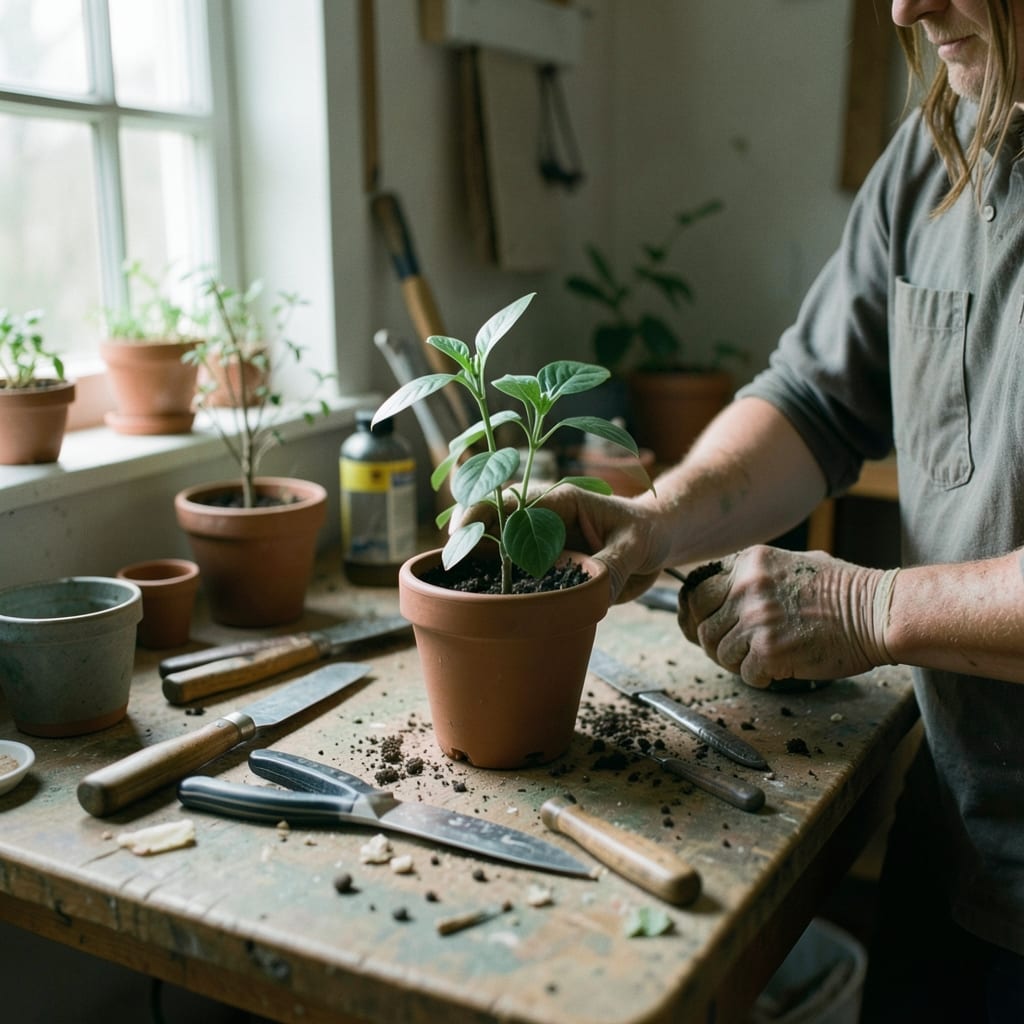
What this work is made with
This page is a list of things, not a story. Gardening lives in the soil, the tools that shape it, and the hands that use them—not in the words alone. Here, we name what holds the work together.
Vegetable Loop publishes practical advice for growing plants, from seed to harvest. Every tip, every failure, and every lesson comes from the things that do the work: worn-out gloves, a cracked trowel, a seedling that refused to thrive.
These are the objects that teach us what to trust—and what to question.
The things that do the work
These are the objects that shape what you’ll find here: the worn, the broken, and the stubbornly useful. They’ve seen seasons, blunders, and small victories. Each one has a story—but it’s not the kind you’d expect.
The plastic bucket
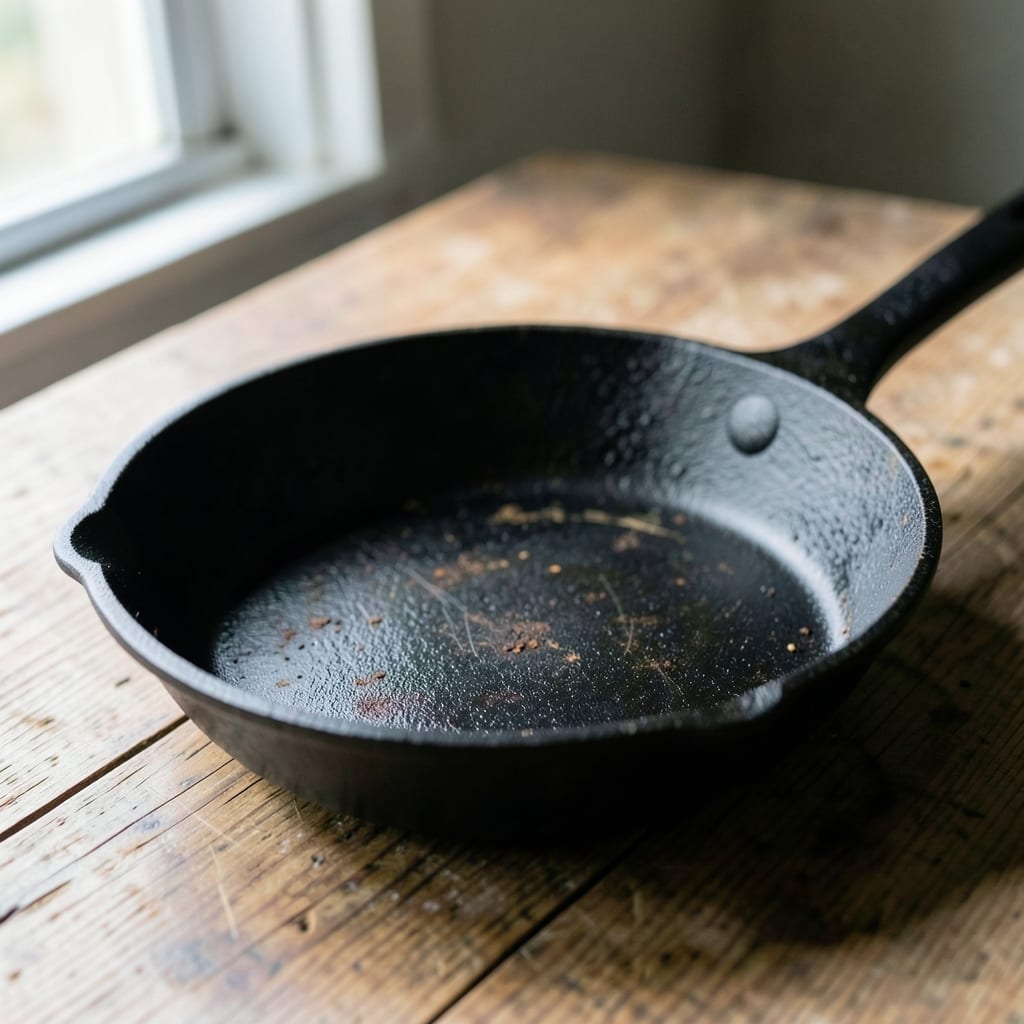
A ten-litre bucket with a chipped rim, bought for £3 at a garden centre in 2019. It’s held compost, rainwater, and more failed seed starts than we’d like to admit.
It taught us that cheap tools last longer than expensive ones—if you treat them right. The chipped rim? That’s from dropping it while carrying it full of soggy soil. We keep it anyway.
The wooden stake
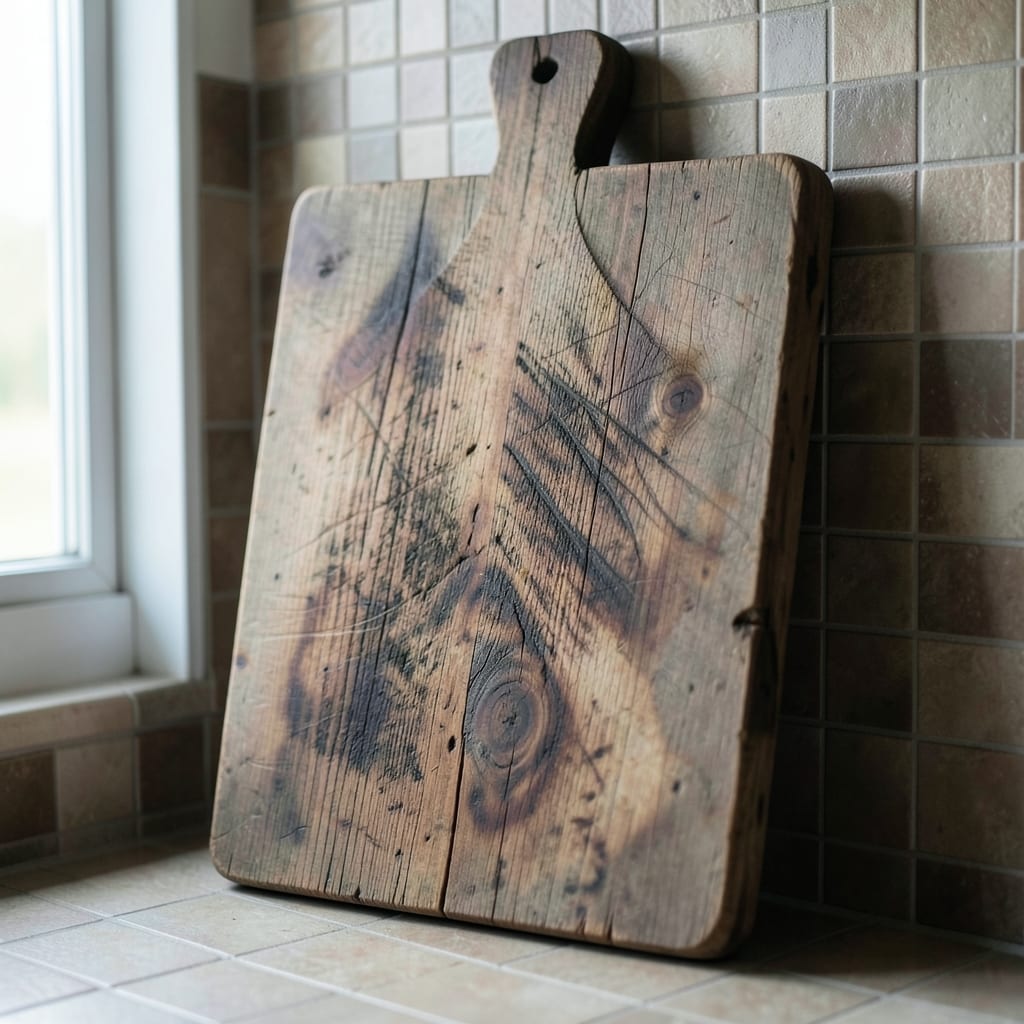
A splintered willow stake, salvaged from a neighbour’s hedge in 2021. It’s lost its straightness and half its bark, but it still holds up tomato plants better than any store-bought version.
It taught us that the best tools aren’t always the new ones. This stake has been bent, soaked, and left in the rain, yet it never buckles. The splinters? A reminder that gardening is about adaptability, not perfection.
The rubber gloves
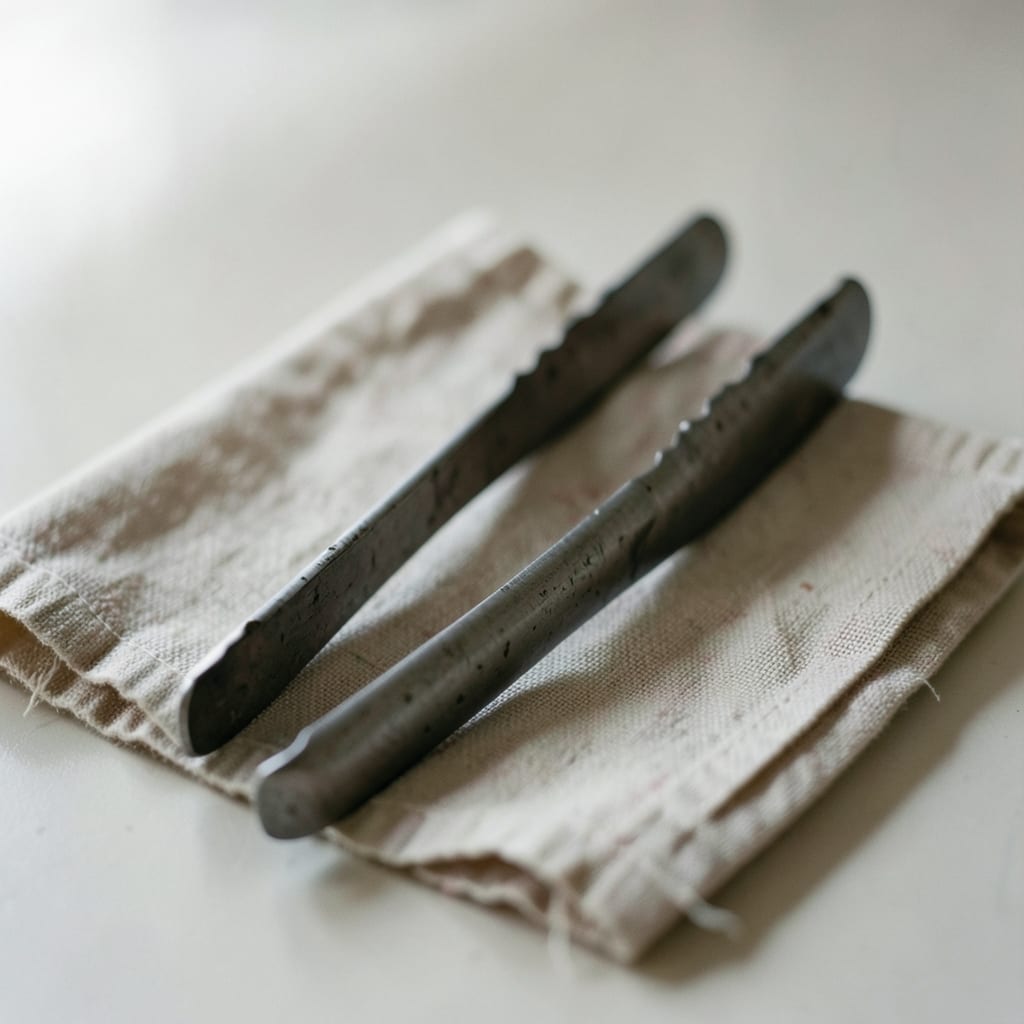
A pair of faded, stretched-out gardening gloves, bought in 2018 and still in use. The fingers are too loose now, and the palms have worn thin in spots—you can see the calluses underneath.
They taught us that discomfort is part of the process. These gloves don’t protect like they used to, but they’ve seen every season, every blister, and every triumph. We keep them because they’ve earned their keep.
The stone
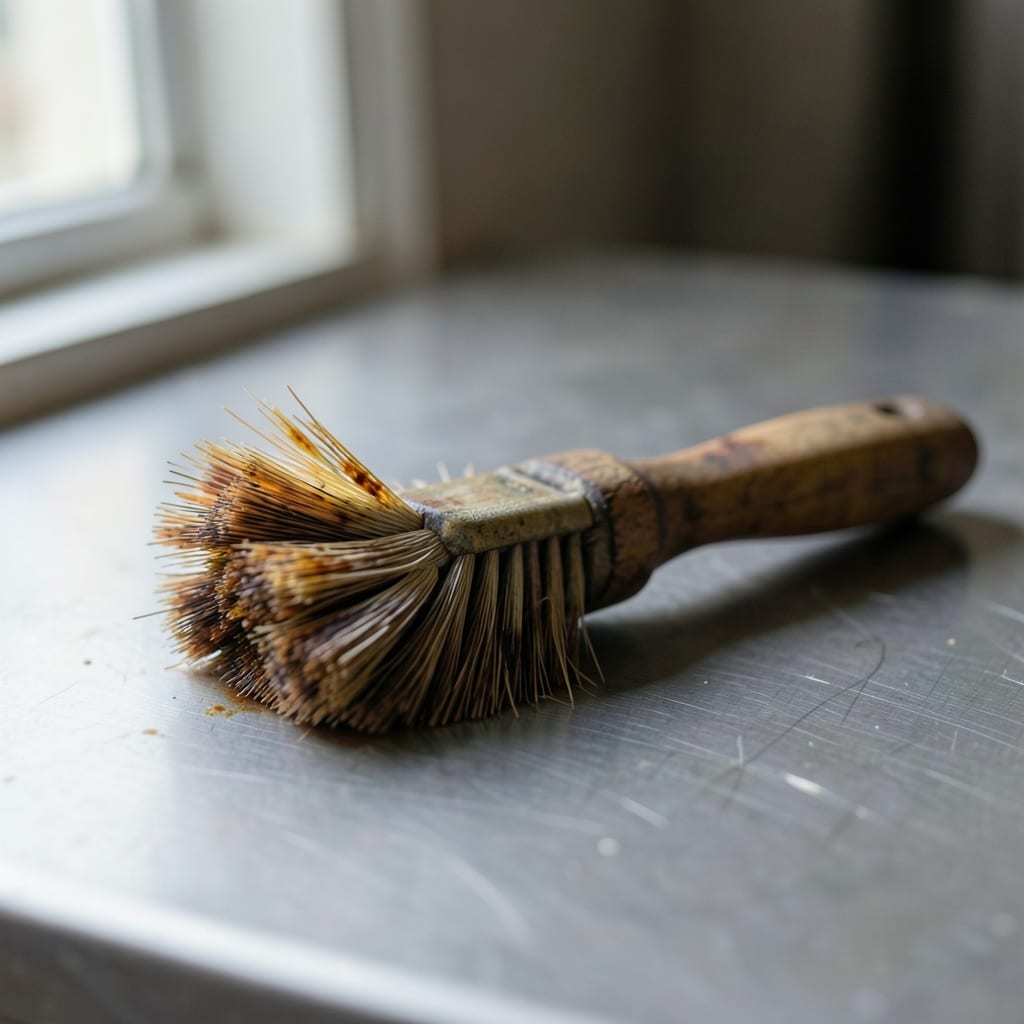
A smooth river stone, found in a local creek in 2020. It sits in the bottom of a watering can to weigh it down—no fancy markings, no brand, just a lump of quartz that’s been here longer than we have.
It taught us that sometimes the simplest things are the most reliable. This stone has never failed, never rusted, never cracked. It’s just… there. A reminder that gardening doesn’t need gadgets.
What is not in the drawer
This work does without a few things—by choice, not by accident.
Deliberately absent
- Digital soil meters—we trust our fingers and the soil’s memory more.
- Brand-new tools—wear tells the truth better than shine.
- Pre-mixed fertilisers—we prefer to learn what our plants actually need.
- Overly precise measurements—gardening is about intuition, not maths.
Behind the scenes

I am Wallace Baptiste, the founder and editor of Vegetable Loop. My job here is to dig up lessons from the dirt, the failures, and the small wins—and to write them down before they’re forgotten.
I still remember the first tomato I grew from seed—it was tiny, lopsided, but tasted like sunshine. That moment hooked me for life.
Wallace Baptiste, 2018
Wallace Baptiste
I came to gardening through a childhood spent in my grandmother’s backyard in Louisiana, where she grew okra, collard greens, and tomatoes that could split a jar just by looking at it. She handed me a trowel when I was six and never let me put it down.
This work has given me calluses on my thumbs, a permanent dirt stain under my nails, and a habit of noticing how plants lean toward the light—even when I’m not looking at them. I can no longer walk past a garden centre without checking the seed packets for maturity dates.
I’m here to share what’s worked, what’s flopped, and why it matters. Gardening isn’t just about growing things; it’s about patience, curiosity, and the quiet magic of watching something sprout where the soil remembers.
Why any of this matters to you
These objects—worn, broken, or stubbornly useful—are why every tip here feels real. They’ve been there for the missteps, the surprises, and the moments when the soil just… works. You’ll see their influence in the advice: no jargon, no shortcuts, just what’s been tested in the dirt.
When you read about saving seeds or reviving wilting herbs, you’re not just getting instructions. You’re getting the story of the tools that shaped them—the ones that held the compost, the ones that bent but didn’t break, the ones that taught us to pay attention.
Every page here is built on the same things: experience, trial, and a little bit of stubbornness. You won’t find perfection—just what’s been proven to work, even when it’s messy.
The guides are grouped by category: Advice, Aphids, Blooming, Companion Plants, Container Gardens and Diseases.