
Companion Plants
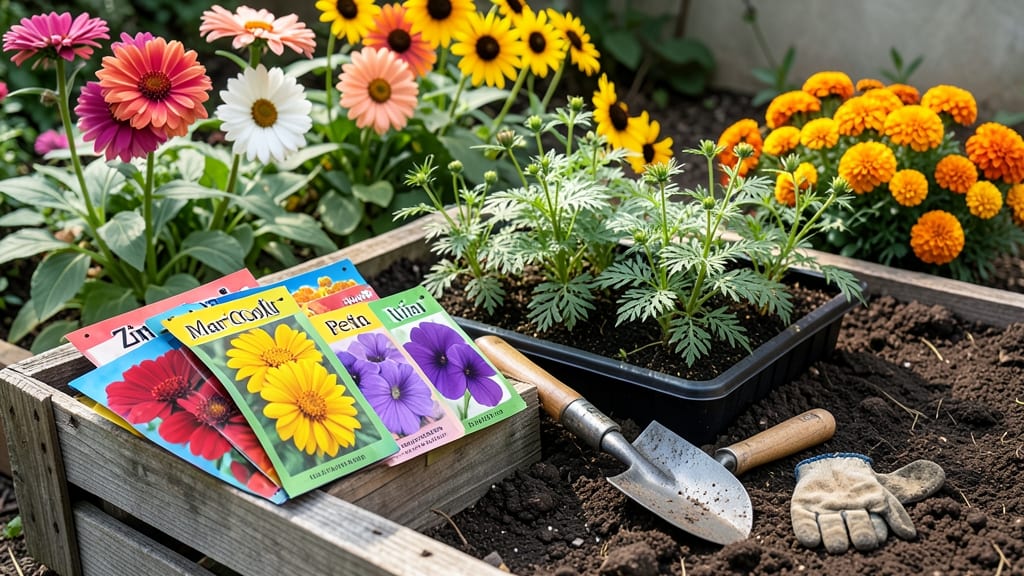
Planting flower seeds in Tennessee at the right time means the difference between a garden bursting with color and one that fizzles before summer even arrives.
Tennessee’s unpredictable frost dates and humid summers can make timing your flower seed planting a real challenge—but getting it right means vibrant blooms all season long.
Whether you’re sowing petunias in the East or marigolds in the West, the key is understanding your local frost window. Most regions can start seeds indoors by February, but direct planting waits until after the last frost, usually mid-April.
Below, I break down the exact timing for spring and fall planting, the best heat-tolerant varieties for Tennessee’s climate, and how to stretch your blooms into autumn with smart fall strategies.
Tennessee’s frost dates by region: exact timing for spring & fall planting
Timing your flower seed planting in Tennessee depends heavily on your region’s last frost dates, which can vary by 2-3 weeks from East to West. Understanding these microclimates helps you avoid late spring frosts that can devastate tender seedlings.
In East Tennessee, cooler mountain air often delays warming, while West Tennessee’s flatter terrain warms faster—critical differences for annual flowers like zinnias or perennials like coneflowers.
For spring planting, most Tennessee gardeners aim to sow seeds after April 15, but this shifts 10-14 days earlier in West Tennessee’s USDA Zone 7b areas. Fall planting follows a similar regional pattern, with first frost dates arriving 2 weeks earlier in mountainous East TN than in the Memphis area.
These variations mean your valley garden might need frost protection 2 weeks longer than your mountain slope just a few miles away.
Annual flowers like marigolds or petunias are especially sensitive to late frosts, so I recommend waiting until soil temperatures reach 60°F (15°C)—a rule that works across all regions. Perennials, however, can often handle cooler soil and may be planted 2-3 weeks earlier than annuals. Use a soil thermometer to confirm readiness, especially in valleys where cold air pools.
My gardening rule of thumb is to adjust planting dates by 1 week per 500 feet elevation gain. For example, if you’re gardening at 2,000 feet in the Smoky Mountains, delay spring planting by 2-3 weeks compared to Nashville.
Conversely, West Tennessee gardeners can often start zinnias or sunflowers by mid-March in protected microclimates, while East Tennessee may need to wait until mid-April.
For fall planting, aim to sow seeds 6-8 weeks before your region’s first frost.
This means late August in East TN and early September in West TN. Cool-season annuals like pansies or snapdragons thrive when planted in late summer, while perennial seeds (like black-eyed Susans) benefit from an early fall start to establish roots before winter.
Don’t overlook microclimate adjustments—your south-facing slope might be 10°F warmer than your north-facing valley at night. Use frost cloth or row covers to protect tender seedlings in low-lying areas during late spring or early fall. I’ve seen marigolds survive 28°F with protection, while petunias
Best heat-tolerant flower seeds for Tennessee’s humid climate
Tennessee’s hot, humid summers can wilt many flowers—but these heat-tolerant varieties thrive in our USDA zones 6a-7b. I’ve tested these top 10 seeds in my Nashville garden, where temperatures often hit 90°F+ with high humidity.
The key is choosing drought-resistant flowers that transpire efficiently while still delivering vibrant blooms.
For best results, start seeds indoors 6-8 weeks before last frost (typically mid-March for most of Tennessee) or direct-sow after soil reaches 60°F. These varieties are categorized by bloom season to help you plan a continuous color show from spring through fall.
- 🌸 Spring Bloomers (March-May)
- Blackfoot Daisy (Melampodium leucanthum) - Thrives in full sun, drought-tolerant, native pollinator magnet
- Coreopsis (Tickseed) - Heat-resistant, self-seeds, blooms yellow/orange from spring to fall
- ☀️ Summer Stars (June-August)
- Zinnia 'Benary's Giant' (Heatwave Series) - Handles 95°F+, 4-6" blooms, disease-resistant
- Lantana 'New Gold' - Humidity-loving, butterfly favorite, compact varieties available
- Mexican Sunflower (Tithonia rotundifolia) - 6-8 ft tall, bright orange, thrives in poor soil
- 🍂 Fall Favorites (September-November)
- Salvia 'Black & Blue' - Heat and drought tolerant, hummingbird magnet, purple blooms
- Gaillardia (Blanket Flower) - Red/yellow blooms, self-cleans, deer-resistant
- Native Wild Bergamot (Monarda fistulosa) - Purple blooms, adapts to clay soil, pollinator superstar
- 🌿 Year-Round Workhorses
- Portulaca (Moss Rose) - Succulent-like, thrives in heat, self-seeding annual
- Vinca (Periwinkle) - Ground cover, blue/purple blooms, handles foot traffic
💡 Pro Tip: For extended blooms, deadhead spent flowers and mulch with 2-3" of organic matter to retain moisture.
My personal favorite for Tennessee gardens is Lantana—it’s nearly indestructible in heat and attracts butterflies all summer. However, if you want native options, Blackfoot Daisy and Wild Bergamot are low-maintenance and support local ecosystems. For container gardening, Portulaca and Zinnias perform exceptionally well.
When selecting seeds, check the packaging for heat tolerance ratings. Look for varieties labeled "heat-tolerant" or "drought-resistant". I also recommend pre-soaking seeds for 24 hours before planting to ensure good germination rates in Tennessee’s heavy clay soils.
Most of these varieties will self-seed, so you’ll get free plants next year!
For maximum impact, combine these heat-lovers with shade-tolerant perennials like heuchera or hostas to create microclimates in your garden. This layered approach ensures continuous color even during Tennessee’s hottest months. Just remember to water deeply in the morning to prevent fungal diseases from humidity.
🌻 Start with just 3-5 varieties to test what thrives in your specific microclimate. In West Tennessee, you might need even more heat tolerance than in East Tennessee’s slightly cooler valleys. Keep notes on which varieties perform best in your garden journal—you’ll thank yourself next planting season!