
Planting
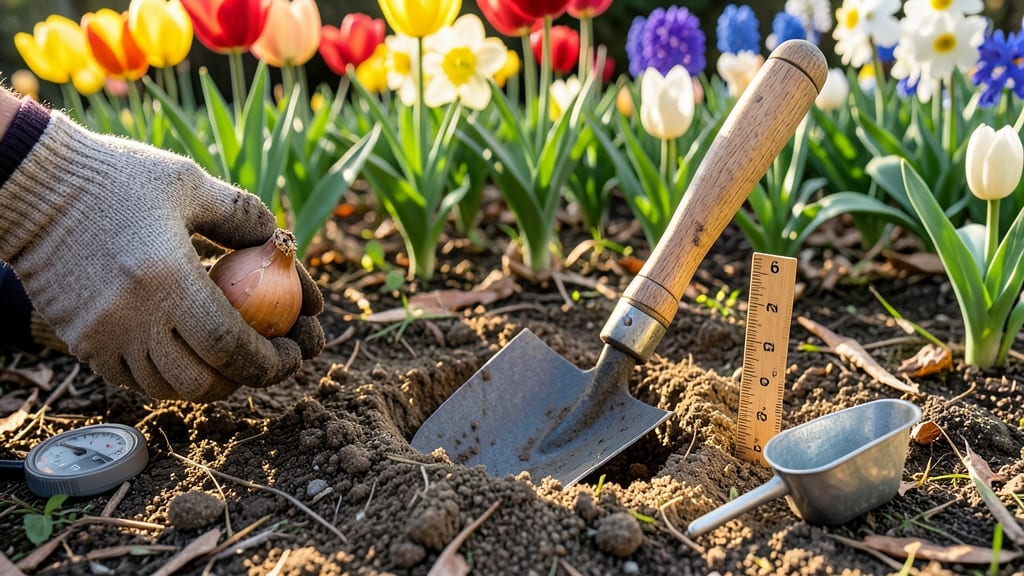
Planting flower bulbs in the fall six to eight weeks before your first frost is the secret to vibrant spring blooms that make your garden pop.
Timing your fall flower bulb planting perfectly can mean the difference between vibrant spring blooms and wasted effort—get it wrong, and frost will ruin your investment before it even sprouts.
Most gardeners in USDA Zone 6a (like me!) should aim for mid-September to early October, but the exact window depends on your local frost clock. Too early, and the bulbs may sprout before winter; too late, and they won’t root deeply enough to survive.
Below, I’ll break down the 6-week pre-frost rule, how to adjust for your climate, and the best bulbs to plant for early spring color—so you can enjoy perfect blooms without the guesswork.
The 6-Week pre-frost rule: exact timing by USDA hardiness zones
Mastering the 6-week pre-frost rule is your secret weapon for fall bulb planting success. This isn't just about avoiding frost—it's about giving bulbs like tulips and daffodils exactly 6 weeks of cool soil to establish roots before winter dormancy.
The USDA's hardiness zone map becomes your planting calendar, but even within zones, local microclimates can shift your deadline by weeks. For example, a Zone 5 gardener in the mountains might plant 2 weeks earlier than one in a valley, where frost lingers longer.
Your first step is to find your local average first frost date. Check resources like the National Weather Service or your state's agricultural extension service for precise data—these dates vary by 5-10 days even between neighboring towns.
Once you have that date, count backward 6 weeks to calculate your planting window. This method works for 90% of flower bulbs, including classics like hyacinths and alliums, but we'll adjust for exceptions later.
Here’s where most gardeners go wrong: they rely solely on the calendar month. October isn't a magic date—it’s just a common midpoint for Zone 6-7 gardeners. In Zone 3, you might plant in early September, while Zone 8 gardeners can wait until November.
The key is soil temperature, not air temperature. Bulbs need soil to stay above 40°F (4°C) for root growth, which often happens weeks after the first air frost.
Notice how the planting window expands in warmer zones? That’s because soil stays workable longer in Zone 9-10. In these areas, you can even plant some bulbs in early November—just aim for 4-6 weeks before your hard freeze (not just frost).
For example, Zone 10 gardeners in Southern California often plant paperwhite narcissus in December for holiday blooms. The rule stays the same, but the calendar shifts.
What if your fall is unusually early or late? Use your local frost clock (a simple thermometer buried 4 inches deep) to adjust. If soil temps drop below 50°F (10°C) before your 6-week window, plant earlier and add extra mulch.
Conversely, if your area has unseasonably warm falls, you can push planting closer to your frost date—just monitor soil moisture, as warm soils dry out faster. Daffodils and alliums are particularly forgiving in these cases.
Pro tip: Layer your planting for continuous color. Start with crocuses (they bloom earliest) 6-8 weeks before your frost date, then add tulips and hyacinths 2-3 weeks later. This staggered approach ensures you get blooms from March through May.
Just be sure to mark your planting locations—forgetting where you planted is a common mistake that leads to digging up new perennials in spring!
Remember, the 6-week rule is a guideline, not a law. Soil conditions matter more than the calendar. If your ground is waterlogged or rock-hard, wait for better conditions—even if it means planting a week late.
The goal is root establishment, not calendar perfection. With this zone-by-zone approach, you’ll have vibrant spring blooms that make every minute of fall planning worth it.
How to tell when your local soil is ready for bulbs (not just the calendar)
Counting down from the calendar might seem foolproof, but your soil has its own schedule—and ignoring it can leave bulbs struggling or even rotting before spring.
The 6-week pre-frost rule is a great starting point, but real-world conditions like soil temperature, moisture levels, and texture often dictate the actual window.
For example, in Zone 5, I’ve planted daffodils in early October when the calendar said "wait," only to see them thrive because the soil stayed warm longer than expected.
Instead of guessing, I rely on three key tests: a soil thermometer (45–55°F is ideal), a moisture check (damp but not soggy), and a visual inspection of soil color (dark brown or black means it’s ready).
These methods help me adjust for early frosts, late summers, or even urban heat islands where soil stays warmer longer. Let’s break down how to read your soil’s signals like a pro.
- The Finger Test for Temperature: Stick your finger 4 inches deep—if it feels cool but not frozen (like a chilled soda can), your soil is primed for bulbs. Below 40°F means wait; above 60°F risks early sprouting.
- Moisture Check: Grab a handful of soil—it should crumble slightly when squeezed but not drip water. Too dry? Water deeply before planting. Too wet? Wait 2–3 days or amend with compost.
- Visual Soil Color: Dark brown or black soil (rich in organic matter) is ideal. Gray or pale soil may need compost or a mulch layer to warm up faster. Pro tip: Wet soil looks darker—test after rain delays.
- Texture Test: Smooth, crumbly soil with visible worms or insects is perfect. Clay-heavy soil? Mix in sand or peat moss to improve drainage. Sandy soil? Add compost to retain moisture.
Don’t overlook mulching—it’s your secret weapon for extending the planting window. A 3-inch layer of straw or shredded leaves insulates soil, keeping it 5–10°F warmer in early fall and 5°F cooler in late fall.
I’ve used this trick in Zone 7 to plant tulips in early November, beating the first frost by a full week. Just avoid piling mulch directly against bulb stems to prevent rot.
What if you’ve missed the window? Don’t panic—some bulbs, like crocuses and snowdrops, tolerate late planting (even in early winter) because they’re frost-hardy. Others, like tulips and hyacinths, need chilling time and may bloom poorly if planted too late.
To hedge your bets, I prioritize early bloomers first, then fill gaps with late-season varieties like alliums.
Finally, trust your local weather patterns more than zone averages. I’ve lived in Zone 5 for 10 years, and my go-to rule is: "When mums bloom and nights dip to 45°F, it’s time to plant."
Keep a gardening journal to track your soil’s rhythm—next year, you’ll spot the signs before the calendar even flips to November.
Your soil is always talking—learn its language, and your bulbs will thank you with bold, early blooms that steal the show. 🌷