
Light Requirements
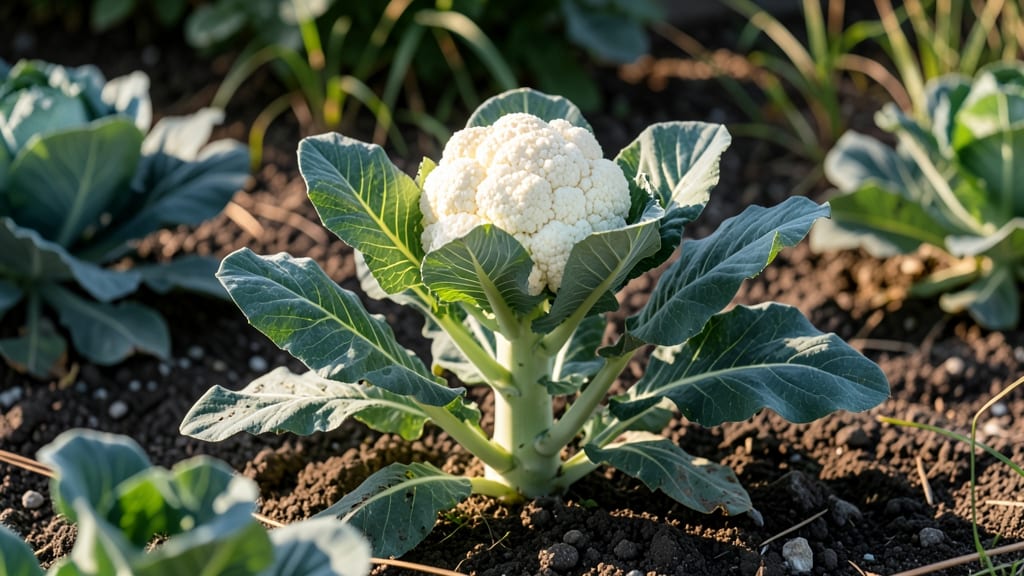
Growing perfect cauliflower heads 🥬 depends on meeting its sunlight requirements—at least 6 to 8 hours of direct light daily, with adjustments for heat and shade.
Too little sun and your plants stretch toward the sky, producing loose, bitter heads. Too much, especially in summer, and they bolt before you even see a curd. I’ve seen both mistakes firsthand—and the fix isn’t always obvious.
Here’s how to balance sunlight for dense, flavorful harvests, whether you’re in full sun or partial shade, and what to watch for when things go wrong.
You’ll learn the exact hours needed at each growth stage, how to spot sunlight stress, and simple tricks to optimize exposure without fancy equipment.

How many hours of sunlight does cauliflower need daily?
Cauliflower thrives in full sun, but its sunlight needs change dramatically from seedling to harvest. Too little light leads to small, loose heads, while too much can cause bolting or leaf scorch. Understanding these stages helps you fine-tune exposure for perfect curds every time.
My USDA Zone 6a garden taught me that even a few hours difference can mean the difference between a market-quality head and a sad, yellowing mess.
Most cauliflower varieties require 6-8 hours of direct sunlight daily during active growth. However, this isn't a one-size-fits-all rule—your local climate and seasonal intensity play huge roles.
For example, in hot southern climates, afternoon shade becomes essential to prevent heat stress, while northern gardeners might need to supplement light with grow lamps. Let's break down the exact needs by growth phase so you can optimize your setup.
⚠️ CRITICAL INSIGHT: Cauliflower's sunlight needs shift as it matures. Seedlings need gentler light to avoid burning, while heading plants demand maximum exposure. Ignoring this stage-specific approach is the #1 reason gardeners get poor curd formation. I once lost an entire Purple of Sicily batch because I didn't adjust their light exposure during the heading phase—don't make my mistake!
| Growth Stage | Ideal Sunlight (Hours/Day) | Partial Shade Adjustments | Key Risks |
|---|---|---|---|
| Seedlings (0-4 weeks) | 4-6 hours (gentle morning sun) | 3-4 hours max; use shade cloth | Leggy stems, weak roots |
| Vegetative Growth (4-6 weeks) | 6-8 hours (full sun) | 5-6 hours; supplement with grow lights | Slow growth, yellowing leaves |
| Heading Formation (6-8 weeks) | 8+ hours (direct sun) | 6-7 hours; avoid afternoon shade | Small, loose curds |
| Maturity (8-10 weeks) | 6-7 hours (protect from midday heat) | 5-6 hours; use row covers | Bolting, bitter flavor |
| Hot Climates (Summer) | 4-6 hours (morning sun only) | 3-4 hours with afternoon shade | Leaf burn, stunted growth |
Calculating your optimal sunlight starts with checking your local peak sun hours. Use tools like the NOAA Solar Calculator to find your region's average daily sunlight. For example, Phoenix, AZ gets 8+ hours of peak sun in summer, while Seattle, WA averages just 4-5.
If you're in a low-sun area, consider container growing near south-facing windows or using reflective mulch to maximize light.
For partial shade scenarios, focus on morning sunlight and avoid afternoon shade. My Northern California garden gets filtered light from oak trees—so I plant cauliflower where it gets direct morning sun (6 AM-10 AM) and dappled shade after noon.
This approach works surprisingly well for slow-bolting varieties like 'Snowball Y Improved'. If you must grow in deep shade, supplement with LED grow lights for 12-14 hours daily during heading.
Pro tip: Monitor leaf color to adjust sunlight dynamically. Deep green leaves mean your plants are happy, while yellowing between veins signals too much shade. I use a light meter app to track lux levels—aim for 10,000-20,000 lux during active growth.
This precision helps me avoid the common pitfall of overestimating natural light, especially in urban gardens with tall buildings.
Seasonal adjustments are key. In spring and fall, cauliflower can handle full sun all day as temperatures are mild. But during summer heatwaves, reduce exposure to morning sun only and provide drip irrigation shade cloth.
I once grew Romanesco in July with 30% shade cloth and got heads that were denser and sweeter than my unprotected plants—proof that smart adjustments work better than brute-force sun exposure.
Don't overlook microclimate factors. A south-facing wall can increase sunlight by 30%, while a north-facing slope might reduce it. I test
Signs your cauliflower isn’t getting enough (or too much) sunlight
If your cauliflower plants are struggling to form tight, dense heads, sunlight exposure could be the culprit. Too little light leads to weak growth, while excessive sun can scorch leaves and ruin your harvest. I’ve grown cauliflower for years, and I’ve seen these issues firsthand—here’s how to spot them early.
First, watch for pale or yellowing leaves on the lower stems. This is a classic sign of sunlight deficiency, where your plants aren’t getting the 6+ hours of direct sun they need daily.
The leaves may also appear thin and stretched, a condition called etiolation, as the plant reaches for light.
⚠️ WARNING: CAULIFLOWER SUNLIGHT CRISIS ⚠️ Too little sun = weak heads, poor flavor ⚠️ Too much sun = scorched leaves, bitter taste ⚠️ Ideal sunlight: 6–8 hours daily (adjust for climate) ⚠️ Fix it: Relocate plants, prune nearby shade, or use reflective mulch 🌱
On the flip side, cauliflower heads exposed to intense afternoon sun may develop brown or yellow patches on the curds. This happens when temperatures exceed 85°F (29°C), and the plants can’t tolerate the heat.
You might also notice bolting—where the plant sends up a flower stalk prematurely—due to stress from too much sun.
Another red flag is stunted growth or small, loose heads. When cauliflower doesn’t get enough light, it diverts energy to leaf production instead of head formation. If your heads are under 6 inches in diameter or feel soft and spongy, it’s a sign your plants are struggling to thrive.
To correct sunlight deficiencies, move your plants to a sunnier spot or use a reflective mulch like white gravel to bounce light onto the leaves.
For excessive sun, provide afternoon shade with a lightweight shade cloth (30–50% coverage) or plant near taller crops like corn or sunflowers to create natural shade.
Finally, keep an eye on the soil temperature. Cauliflower prefers 60–70°F (15–21°C) soil—too hot or cold can mimic sunlight issues. Mulch with straw to regulate temperature and ensure your plants focus on head development instead of survival.