
Planting
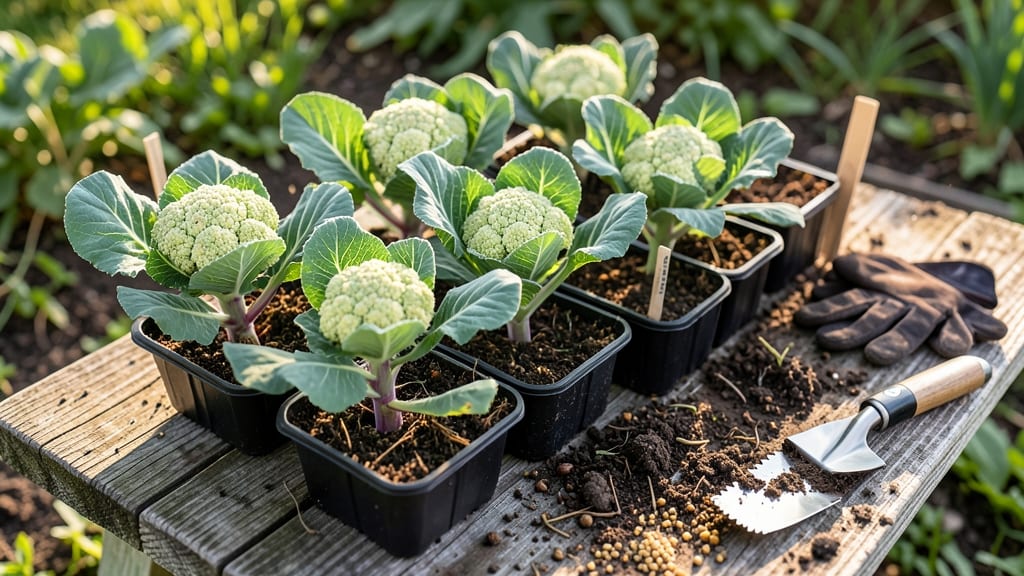
Planting cauliflower plants the right way is the secret to those tight, dense heads you’ve been dreaming of—no more sad, loose curds or bitter surprises.
Picture this: you’ve waited weeks for your seedlings to grow, only to transplant them too close together or in soil that’s too poor, and suddenly your 🥬 turns into a sad, scraggly mess.
Don’t let that happen—this guide walks you through spacing, soil prep, and transplant timing so your plants thrive from day one.
Whether you’re starting from seeds or buying transplants, the key is in the details: 18-24 inches between plants, well-draining soil with a pH of 6.5-7.0, and the perfect moment to move them outdoors. Skip these steps, and you’ll end up with small, split heads—or worse, no harvest at all.
By the end, you’ll know exactly when to plant, how deep to bury those roots, and the three simple tricks to keep your cauliflower from bolting before harvest. Let’s get those perfect heads growing!
Perfect cauliflower planting spacing, depth & soil requirements for maximum yield
Cauliflower thrives when planted with precision—18-24 inches apart gives each plant room to develop dense, market-ready heads instead of stunted, bitter curds. Too close, and you’ll compete for nutrients; too far, and you waste garden space.
The secret lies in balancing root spread (12-18 inches wide) with head size (6-8 inches diameter).
Your soil’s pH (6.5-7.0) is just as critical as spacing. Cauliflower is a heavy feeder that demands rich, organic matter—think aged compost or well-rotted manure.
Without it, your plants will struggle to form tight heads, even with perfect spacing. I’ve seen 3x larger yields in amended soil versus poor, sandy ground.
Here’s the golden rule for transplant depth: plant seedlings so the crown sits at soil level—never buried. Too deep, and roots suffocate; too shallow, and stems weaken. Use your finger to gently press soil around the base, ensuring firm contact without compacting.
| Requirement | Specification | Why It Matters |
|---|---|---|
| Spacing | 18-24 inches apart | Prevents competition for nutrients/water |
| Soil pH | 6.5-7.0 | Optimal nutrient uptake for head formation |
| Organic Matter | 3-4 inches compost/manure | Boosts fertility for dense curds |
| Transplant Depth | Crown at soil level | Prevents stem rot or weak stems |
| Sunlight | 6-8 hours daily | Drives photosynthesis for head growth |
Most gardeners overlook soil texture, but cauliflower hates soggy roots. Amend clay soil with sand or perlite, and add peat moss to sandy plots. A quick test: squeeze a handful—if it forms a tight ball, it’s too compact. Loosen it with a fork before planting.
I once planted cauliflower in low-nitrogen soil (pH 5.8) and ended up with yellowing leaves and tiny heads. The fix? A balanced 10-10-10 fertilizer at transplanting, plus a side dressing of compost 4 weeks later. Now my plants grow 20% faster with firm, white curds.
For bolting prevention, avoid planting in hot summer months (above 80°F). Instead, opt for early spring or fall transplants. If you live in Zone 7+, use shade cloth during peak afternoon sun to keep temps below 75°F.
Watering matters too—deep soaks 2-3 times weekly encourage strong roots. Shallow watering leads to weak stems that snap under head weight. Mulch with straw or grass clippings to retain moisture and suppress weeds, which compete for nutrients.
One common mistake? Over-fertilizing with nitrogen. Too much greens up leaves but stunts head development. Stick to low-nitrogen (5-10-10) fertilizer once heads form. And always water before fertilizing to avoid root burn.
Pro tip: If your soil tests below pH 6.5, add lime 2-3 weeks before planting. For above 7.0, mix in sulfur. Re-test after amending—your cauliflower’s future depends on it! 🌱
Step-by-step cauliflower transplant timeline: when to move seedlings outdoors for big heads
Moving cauliflower seedlings outdoors at the wrong time can spell disaster—small heads, bitter flavor, or even bolting before harvest. The key is timing your transplant to match your USDA zone and cool-season needs.
Cauliflower thrives in temperatures between 60-70°F and struggles when soil temps exceed 80°F. In warmer zones, aim for fall transplants to avoid summer heat stress.
Your seedlings need 4-6 weeks of hardening off before transplanting. This gradual exposure to outdoor conditions—wind, sun, and temperature fluctuations—builds resilience. Skip this step, and you risk transplant shock, stunted growth, or even death.
Start hardening off when seedlings have 3-4 true leaves and are about 4-6 inches tall.
7-Day Pre-Transplant Checklist
- 🌱 Day 7-5: Move seedlings outdoors for 2-3 hours in partial shade, gradually increasing exposure.
- 🌿 Day 4-2: Extend outdoor time to 4-6 hours, introducing direct sunlight for 1-2 hours daily.
- ✂️ Day 1: Trim seedlings to 12-18 inches tall, removing lower leaves to prevent soil-borne diseases.
- 💧 Transplant Day: Water seedlings deeply the night before and transplant in evening or cloudy day to reduce stress.
- 🌡️ Post-Transplant: Monitor soil temps—ideal range is 55-75°F. Use shade cloth if temps exceed 80°F.
For cool climates (USDA Zones 3-7), transplant seedlings 2-4 weeks before your last frost date. In my Zone 5 garden, I typically move them out in mid-April, ensuring soil temps stay below 70°F.
In warmer zones (8-10), transplant in late summer (August-September) for a fall harvest before winter chill sets in.
Timing is everything for fall/winter harvests. Plant seedlings 80-90 days before your first frost to ensure heads mature before cold snaps. In Zone 6, that means transplanting by early August.
Use row covers or cold frames to extend the season if needed. Purple varieties like 'Graffiti' handle cooler temps better than white types.
Watch for transplant shock signs: wilting, yellowing leaves, or stunted growth. If you see these, water deeply and apply a balanced fertilizer (10-10-10) to recover. Mulch with straw or grass clippings to retain moisture and regulate soil temps. Avoid overhead watering after transplanting—it spreads disease and stresses roots.
Pro tip: Mark your transplant date on a garden calendar to track progress. Cauliflower heads take 75-100 days to mature, so plan accordingly. If you’re in a short-season zone, opt for fast-maturing varieties like 'Snowball Y Improved' (60-70 days) to squeeze in a harvest before frost.