
Watering
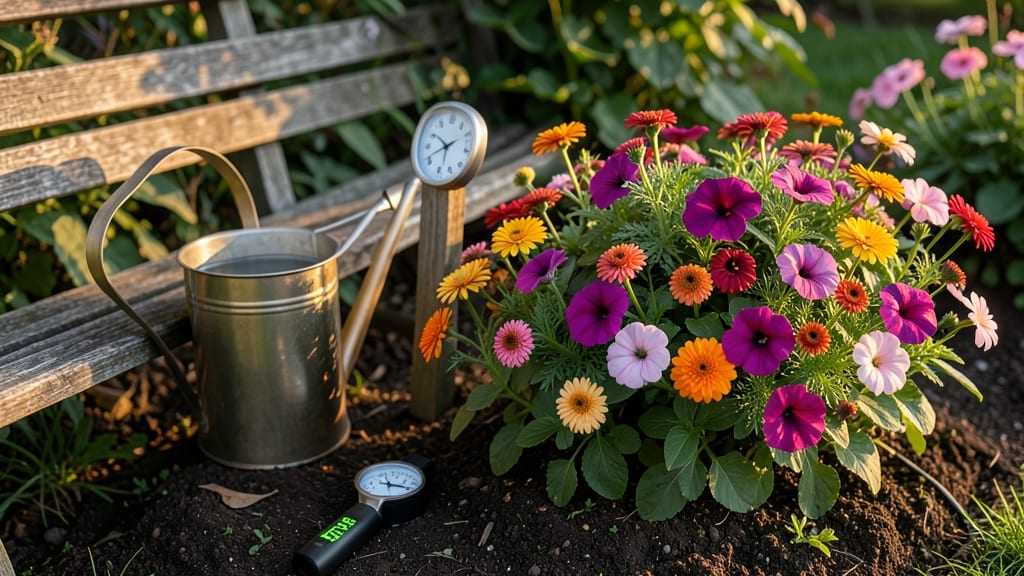
The best time to water flowers is early morning 🌸 — before the sun climbs too high, when roots can soak up moisture without waste.
Struggling to keep your flowers thriving despite your watering efforts? The secret isn’t just how much you water—it’s when you do it. Timing can mean the difference between vibrant blooms and wilting disappointment.
Morning watering lets the soil dry slightly by evening, reducing fungal risks while keeping roots hydrated. It also avoids the midday evaporation that turns your efforts into a steamy waste.
Below, I’ll break down the science, seasonal tweaks, and plant-specific tricks to turn your watering routine into the game-changer your flowers need for healthier growth and longer-lasting blooms.
Why morning watering maximizes flower health and growth
If you’ve ever wondered why your roses or petunias look perkier after morning watering, science has the answer. Morning watering isn’t just a gardener’s habit—it’s a strategic move that aligns with how plants naturally absorb moisture and thrive.
When you water in the early hours, you’re giving your flowers the best chance to soak up hydration before the sun peaks, reducing waste and stress on their roots.
The key lies in evaporation rates and fungal prevention. During the day, sunlight and wind accelerate water loss, meaning afternoon or evening watering often leads to wasted moisture.
Morning watering ensures roots get a steady supply while leaves stay dry, cutting down on powdery mildew and blight risks—common issues when foliage stays damp overnight.
Here’s the science: Plant transpiration (how they release water vapor) peaks in the afternoon. By watering in the morning, you’re replenishing what they’ve lost before the heat sets in. This creates a balanced moisture cycle, helping roots grow deeper and stronger.
Think of it like giving your flowers a refreshing sunrise shower—they wake up hydrated and ready for the day.
Another critical factor is soil temperature. Morning soil is cooler, allowing water to penetrate deeper without evaporating on the surface. This is especially vital for container gardens, where soil heats up faster and roots can dry out quickly.
Even drought-tolerant succulents benefit from morning watering—just less frequently—to avoid root rot from sitting in soggy soil.
| Time of Day | Evaporation Risk | Disease Risk | Root Development | Best For |
|---|---|---|---|---|
| Early Morning (6-9 AM) | Low (cooler temps) | Low (leaves dry quickly) | High (deep penetration) | All flowers, especially roses and hydrangeas |
| Midday (10 AM-2 PM) | High (intense sun) | Medium (leaves may stay wet) | Low (surface evaporation) | Avoid unless necessary (e.g., succulents) |
| Evening (6-9 PM) | Medium (cooler but humid) | High (leaves stay damp overnight) | Medium (limited absorption) | Only in dry climates (risky for tropical flowers) |
| Late Evening (After 9 PM) | Low (cool temps) | Very High (fungus thrives) | Low (roots inactive) | Avoid unless emergency watering |
Morning watering also syncs with natural plant cycles. Most flowers follow a circadian rhythm, absorbing nutrients and water most efficiently in the early morning. This is when their stomata (tiny leaf pores) open wide to take in CO₂ and release oxygen—ideal timing for hydration.
If you water at this window, you’re essentially feeding their natural rhythm, boosting photosynthesis and flower production.
Don’t overlook the psychological perk for gardeners, too! Starting your day with watering sets a positive routine. You’ll notice fewer pests like aphids (they hate damp leaves) and healthier soilmarigolds or lavender bounce back after morning watering is oddly satisfying—like giving them a daily pick-me-up.
For container plants, morning watering is non-negotiable. Pots dry out faster, and roots can’t seek moisture deep underground. Watering in the morning ensures they’re hydrated by midday when evaporation spikes. Pro tip: Use a self-watering globe for potted flowers to maintain moisture without over-saturating.
Seasonal adjustments matter, too. In summer heat, water slightly earlier (by 6 AM) to combat evaporation. In spring or fall, 8-9 AM works well.
Always check the top inch of soil—if it’s dry, it’s time to water. This simple check prevents both underwatering (wilting) and overwatering (root rot).
If you’re still skeptical, try this experiment: Water half your garden in the morning and half in the evening for two weeks. You’ll likely see brighter blooms, fewer yellow leaves, and stronger stems in the morning group.
That’s the power of timing—your flowers will thank you with longer-lasting blooms and healthier growth all season long.
Best morning watering techniques for different flower types
Not all flowers have the same watering needs, and morning watering isn’t a one-size-fits-all solution. The right timing, depth, and frequency depend entirely on your flower types.
For example, succulents and tropical blooms react completely differently to water. Let’s break down the best morning watering techniques for each category to keep your garden thriving.
Understanding soil moisture and root depth is key. Most flowers need water to reach 6-8 inches deep—this encourages strong root systems. However, annuals like marigolds may need shallower, more frequent watering, while perennials like daylilies can handle deeper, less frequent soakings. Let’s dive into the specifics for each type.
- Succulents (e.g., Aloe, Echeveria): Water deeply every 2-3 weeks—morning is best to prevent rot. Check soil dryness 2 inches down before watering.
- Annuals (e.g., Petunias, Geraniums): Water daily in summer, early morning to avoid fungal risks. Use 1 inch of water per week for optimal growth.
- Perennials (e.g., Lavender, Coneflowers): Water deeply 2-3 times per week in summer. Mulch to retain moisture and reduce evaporation.
- Tropical Flowers (e.g., Orchids, Hibiscus): Water every 2-3 days in morning, ensuring well-draining soil. Avoid soggy roots to prevent disease.
Signs of overwatering include yellowing leaves, mushy stems, or mold around the soil. If you notice these, cut back on frequency and let the soil dry out slightly between waterings. Underwatering, on the other hand, shows up as drooping leaves, crispy edges, or flowers wilting by midday.
Adjust your schedule based on these cues—your flowers will thank you with vibrant blooms.
For container-grown flowers, morning watering is even more critical. Pots dry out faster, so check moisture levels daily in hot weather. Water until it runs out the drainage holes—this ensures roots get the hydration they need without sitting in standing water.
Remember, consistency is key—stick to a routine to avoid stressing your plants.
Seasonal adjustments are also essential. In spring and fall, you can water slightly less frequently, while summer heat demands more frequent morning sessions. Always water at the base of the plant to keep foliage dry, reducing the risk of fungal diseases like powdery mildew.
A little attention to detail goes a long way in maintaining healthy, blooming flowers.
Experiment with these techniques and observe how your flowers respond. Over time, you’ll develop a watering rhythm that keeps your garden looking its best. Happy gardening—and may your mornings be filled with the joy of watching your flowers thrive! 🌸