
Planting
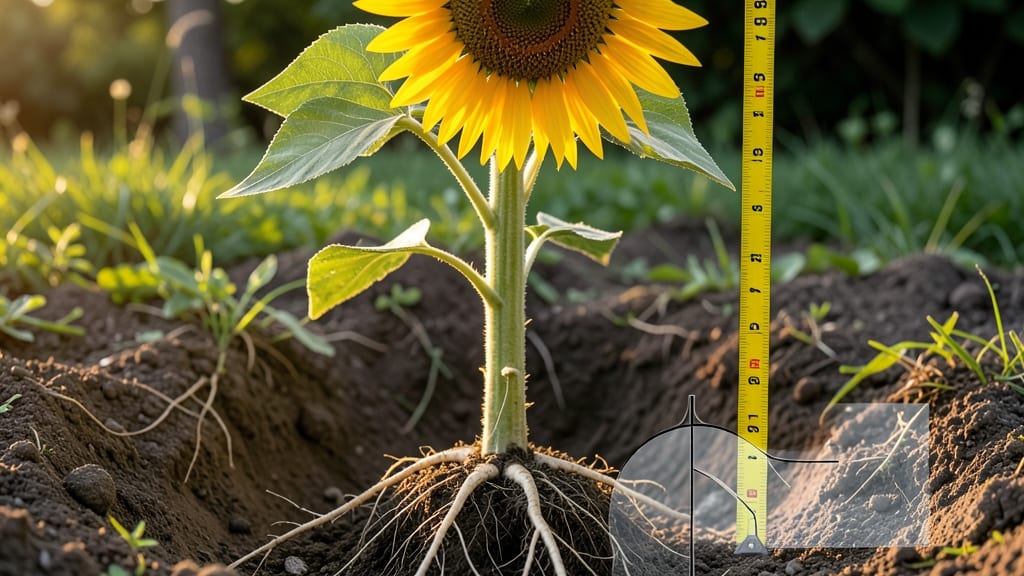
Sunflower roots grow deep—often 3 to 6 feet—to anchor those towering 🌻 stems against wind and storms.
But here’s the catch: shallow roots mean wobbly plants, while deep roots demand the right soil prep. If you’ve ever watched a sunflower lean dangerously in a breeze, you’ve seen the difference root depth makes.
In USDA Zone 6a, where spring planting kicks off in April, soil depth matters just as much as sunlight. Too little space underground, and your sunflowers won’t reach their full height or stand strong.
Below, I’ll break down how to test your soil depth, the best planting techniques for stable stems, and signs your sunflowers are struggling to root deep enough.


Sunflower root depth: how deep do they actually grow?
Sunflowers develop two distinct root systems that work together to support their towering stems. The primary taproot plunges deep into the soil, while lateral roots spread horizontally to absorb nutrients. This dual system explains why some varieties stand firm while others wobble—it’s all about root strength and soil conditions.
Understanding these systems helps you plant sunflowers with confidence, knowing they’ll anchor properly for their impressive height.
Most sunflower varieties grow roots that reach 3 to 6 feet deep, with some giant varieties like Mammoth Russian extending even deeper—up to 8 feet in ideal conditions. Dwarf varieties, such as Teddy Bear, typically have roots that stay shallower, around 1 to 3 feet.
The depth of these roots directly impacts stability, water uptake, and nutrient absorption, making soil preparation a critical step in your gardening routine.
Here’s a quick breakdown of sunflower root systems and how they vary by type:
| Variety Type | Root Depth Range | Taproot Length | Lateral Spread | Stability Notes |
|---|---|---|---|---|
| Dwarf (e.g., Teddy Bear) | 1–3 feet | 12–24 inches | 1–2 feet wide | Less stable; needs staking |
| Semi-Dwarf (e.g., Autumn Beauty) | 3–5 feet | 36–60 inches | 2–3 feet wide | Moderate stability; deep roots help |
| Standard (e.g., Pro Cutter) | 5–7 feet | 60–84 inches | 3–4 feet wide | Very stable; deep taproot anchors well |
| Giant (e.g., Mammoth Russian) | 6–8 feet | 72–96 inches | 4–5 feet wide | Extremely stable; needs loose, deep soil |
The taproot is the sunflower’s anchor, penetrating deep to access water and nutrients in lower soil layers. In loamy soil, taproots can extend twice as deep as in compacted or clay-heavy soil.
This is why gardeners in areas with dense soil often struggle with wobbly sunflowers—the roots simply can’t penetrate effectively. Amending your soil with compost or sand can improve root penetration and stability.
Soil type plays a huge role in root depth. Sandy soil allows roots to grow faster but drains too quickly, while clay soil can restrict root growth and cause roots to spread wider rather than deeper.
The ideal soil for sunflowers is loamy, which balances drainage and nutrient retention. If your soil is heavy, consider planting in raised beds or mounding soil around the base to encourage deeper root growth.
Lateral roots spread out horizontally, absorbing nutrients from the topsoil. These roots are crucial for early growth but don’t provide the same stability as the taproot. In container gardening, lateral roots help sunflowers thrive, but the lack of deep taproot support often means dwarf varieties perform better in pots.
If you’re growing sunflowers in containers, choose varieties like Sunspot or Moulin Rouge, which have shallower root systems.
One common myth is that sunflowers don’t need deep soil. However, for standard and giant varieties, a minimum of 24 inches of loose soil is essential to prevent flopping. If your garden bed is shallow, consider planting sunflowers near fences or trellises to provide additional support.
Even with deep roots, a stiff breeze can topple a sunflower if the taproot hasn’t had enough space to grow.
To encourage deeper root growth, start by loosening the soil to a depth of 18–24 inches before planting. Mix in organic matter like compost or well-rotted manure to improve soil structure.
Avoid over-fertilizing with nitrogen, as this promotes leafy growth at the expense of root development. Instead, use a balanced fertilizer (like 10-10-10) to support both foliage and root systems.
Signs of shallow or stressed roots include wilting even when soil is moist, yellowing leaves, or stems leaning excessively. If you notice these symptoms, your sunflowers may not have enough root depth.
To remedy this, water deeply to encourage roots to grow downward, and avoid disturbing the soil around the base of the plant, as this can damage developing roots.
In summary, sunflower root depth varies widely by variety, but most need at least 3 feet of soil to thrive. By understanding your soil type and choosing the right sunflower variety, you can ensure your plants stand tall and strong—just like nature intended. Happy gardening! 🌻
Optimal soil depth for sunflowers: what gardeners need to know
Sunflower roots need space to stretch—literally. While the taproot can grow 3 to 6 feet deep, most of the plant’s stability comes from the first 24 inches of soil.
Shallow planting (less than 12 inches) forces roots to spread wide instead of deep, leading to top-heavy, wobbly stems that snap in wind or rain.
I’ve learned the hard way—skipping soil prep once led to my 10-foot sunflowers leaning like drunkards by midsummer. The fix? Loose, nutrient-rich soil that encourages roots to dive deep from the start. Here’s how to get it right.
⚠️ Critical Depth Alert!
Sunflower roots grow 3–6 feet deep, but 24+ inches of loose soil is your minimum for stability. Shallow planting (<12") forces roots to spread sideways, creating weak stems that wilt or snap in wind. Test your soil depth with a trowel or dowel rod—if it’s compacted below 18", amend with compost or sand.
To test your soil depth, drive a wooden dowel or trowel into the ground until resistance stops it. Mark the depth at the soil surface. If you hit hardpan or rocks before 24 inches, your sunflowers will struggle.
The solution? Dig a trench 12–18 inches deep around the planting area and mix in compost or aged manure to break up compacted layers.
Another common mistake? Over-tilling the top 6 inches while ignoring deeper layers. Sunflower roots need aeration at depth, so use a broadfork or digging fork to loosen soil down to 18 inches.
This creates channels for roots to explore without battling compaction. I’ve seen giant varieties like ‘Mammoth’ thrive with this prep, while their shallow-planted neighbors flopped over by July.
For container-grown sunflowers, depth matters too. Choose pots with at least 18-inch depth—shallow containers restrict root growth, leading to stunted plants. If repurposing old pots, drill drainage holes and fill the bottom third with gravel or perlite to mimic loose garden soil.
Dwarf varieties like ‘Teddy Bear’ tolerate shallower pots (12 inches), but their stems still benefit from deep soil pockets.
Pro tip: Mulch heavily (3–4 inches) after planting to protect young roots from temperature swings. Organic mulch like straw also slowly enriches soil as it breaks down, encouraging deeper root penetration over time.
I’ve noticed my sunflowers develop thicker stems and stand straighter when mulched—proof that healthy roots below lead to stronger plants above.