
Light Requirements
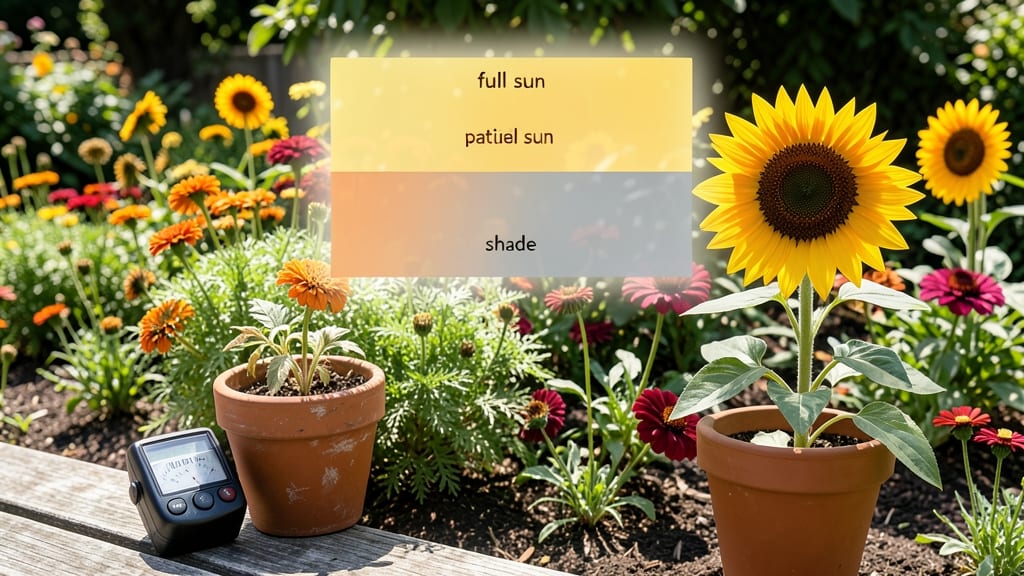
Flowers need sunlight for 6 to 8 hours daily to bloom their best 🌸, but too much or too little can ruin their growth.
Struggling to keep your flowers blooming beautifully? Sunlight is the #1 factor most gardeners get wrong—too little and they wilt, too much and they scorch. Here’s the exact sunlight formula your flowers need to thrive, broken down by type.
Some flowers, like sunflowers and roses, crave full sun, while others, such as impatiens or begonias, prefer partial shade. Without the right balance, you’ll end up with leggy stems, faded blooms, or even dead plants.
In this guide, I’ll show you how to measure sunlight in your garden, recognize the signs of over- or under-exposure, and adjust care based on your climate. By the end, you’ll know exactly how much sunlight your flowers need to stay vibrant and healthy all season long.

Sunlight requirements for common flowers: full sun vs. partial shade breakdown
If you’ve ever watched your roses struggle in shady spots or your sunflowers wilt under afternoon heat, you’re not alone. Sunlight is the secret ingredient for vibrant blooms, but not all flowers crave the same amount.
Some thrive in 6+ hours of full sun, while others prefer dappled shade or even full shade. Let’s break down the exact sunlight needs for your favorite flowers so you can place them perfectly for peak performance.
Understanding sunlight categories—full sun, partial shade, and full shade—is key. Full sun means 6+ hours of direct sunlight daily, partial shade is 3–6 hours, and full shade is less than 3 hours.
Your garden’s microclimate (like afternoon shade from a tree) can shift these needs, so flexibility is essential. Let’s dive into the specifics so you can match flowers to their ideal light conditions.
🌻 Full Sun Lovers (6+ hours): These bold beauties need unfiltered sunlight to produce their showstopping blooms. Think sunflowers, daylilies, and lavender. Without enough light, they’ll grow leggy and produce fewer flowers. For example, sunflowers can handle up to 8 hours of sun, while roses prefer morning sun and afternoon shade in hot climates.
| Flower Type | Sunlight Needs | Examples | Seasonal Adjustments |
|---|---|---|---|
| Full Sun (6+ hours) | Direct morning to afternoon sun | Sunflowers, Roses, Lavender, Marigolds, Zinnias | Use shade cloth in summer for afternoon protection |
| Partial Shade (3–6 hours) | Morning sun + afternoon shade | Impatiens, Begonias, Coleus, Fuchsias, Hydrangeas | Move containers to sunnier spots in winter |
| Full Shade (<3 hours) | Indirect light or filtered sun | African Violets, Peace Lilies, Ferns, Hosta, Astilbe | Avoid direct summer sun; use sheer curtains for indoor plants |
| Borderline Cases | 4–5 hours (adaptable) | Petunias, Geraniums, Snapdragons | Monitor leaf color; yellow = more sun needed |
For full sun lovers, like sunflowers and roses, the golden rule is 6+ hours of direct sunlight. However, in hot climates (like USDA Zone 9+), afternoon shade can prevent leaf burn.
I’ve seen sunflowers wilt dramatically in 90°F+ heat without relief. A trick I use? Plant them where they get morning sun and afternoon shade from a nearby tree or trellis.
If you’re growing partial shade plants, such as impatiens or coleus, aim for 3–6 hours of sun. These flowers often thrive under dappled sunlight, like through a canopy of leaves.
In my partial shade garden, I place these near the edge of a maple tree where they get morning sun and filtered light in the afternoon. Too much direct sun can scorch their delicate leaves.
For full shade plants, like hostas or astilbe, less than 3 hours of sunlight is ideal. These are perfect for north-facing gardens or under dense tree canopies. I once tried growing impatiens in full shade, and they flourished where coleus (a partial shade plant) struggled.
Observing these differences helps me design layered gardens where every plant gets the right light.
Seasonal sun intensity can change everything. In summer, the sun is more intense, so full sun plants might need afternoon shade. I use shade cloth (30–50% coverage) to protect roses and geraniums from wilting.
Conversely, in winter, days are shorter, so I move partial shade plants to sunnier spots or supplement with grow lights for indoor varieties.
Pro tip: Use a sunlight meter or the shadow test to measure your garden’s light. Place a stick in the ground and mark the shadow every hour. If the shadow is shorter than the stick for 6+ hours, that spot gets full sun.
This method helped me identify a south-facing wall that was actually partial shade due to nearby buildings.
Mistakes happen—like placing sun-loving marigolds in a shady corner or shade-tolerant ferns in full sun. Watch for signs: yellow leaves or stretched stems mean too little light, while brown leaf edges or wilting signal too much. Adjusting placement or using reflective surfaces (like white mulch) can sometimes help, but knowing
How to tell if your flowers are getting the right amount of sunlight
Flowers send you clear signals when their sunlight needs aren't being met. Leggy stems reaching toward light or yellowing leaves are classic red flags—both mean your plants are stretching for more sun than they're getting.
Even worse, brown crispy edges on leaves indicate sunburn from too much direct exposure. Since most flowers thrive with 6-8 hours of sunlight, knowing these signs can save your garden from stress.
Before diagnosing, test your garden's sunlight conditions. The easiest method is the shadow test: Place a stake in the ground where you plan to plant and mark the shadow every hour. After a full day, measure the shaded areas—this reveals how much direct light your spot actually receives.
For precise readings, use a sunlight meter or solar-powered light sensor (available at garden centers for under $20).
⚠️ callout-warning ⚠️
Most gardeners overestimate their garden's sunlight. 6+ hours of full sun means unobstructed rays from 10 AM–4 PM—trees, buildings, or even your neighbor's fence can block critical light. Partial shade (3-6 hours) is trickier: Morning sun is gentler than afternoon heat, so position shade-loving flowers like impatiens or coleus where they get filtered light.
🌱 Pro Tip: Move potted flowers to test spots for 2-3 weeks before committing—this avoids transplant shock.
Start by examining your flowers' leaf color. Healthy foliage should match the plant's natural hue—deep green for sun-lovers like marigolds or bright green with purple undersides for shade-tolerant begonias. Pale or yellow leaves mean insufficient light, while bronzed or white patches signal sun damage.
Check the undersides of leaves too: fuzzy or powdery coatings often appear on plants struggling with too much sun.
Pay attention to blooming patterns—this is where sunlight issues reveal themselves most dramatically. Full-sun flowers like dahlias or zinnias should produce bold, frequent blooms. If they're sparse or buds drop before opening, they're light-deprived.
Conversely, shade-loving flowers like foxgloves may refuse to bloom at all if exposed to harsh afternoon sun, opting instead to focus energy on leaf growth.
For container gardens, rotate pots weekly to ensure even sunlight exposure. South-facing windowsills get the most light, but west-facing spots can scorch delicate petals with intense afternoon rays.
If your flowers are in leggy, weak stems, they're stretching toward light—move them closer to a bright window or under grow lights (12-16 hours/day for optimal growth).
Remember, seasonal sun shifts affect exposure too. What's full sun in spring might become partial shade in summer as tree leaves fill in. Use shade cloth (30-50% coverage) to protect sensitive blooms during peak afternoon heat, especially in USDA Zone 7+ where temperatures can exceed 90°F.
Adjust gradually—sudden changes stress plants more than steady conditions.