
Light Requirements
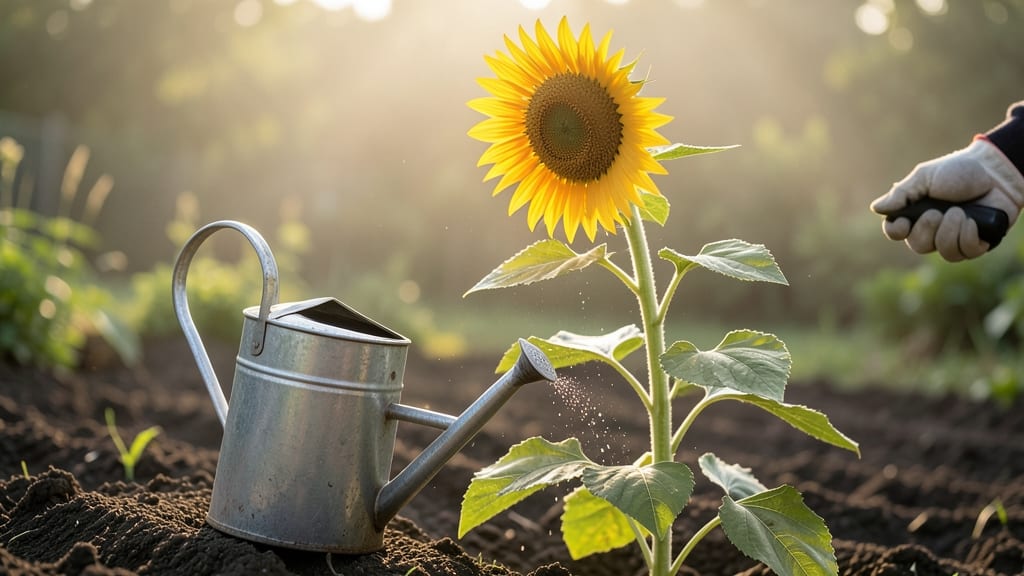
To water sunflowers properly, aim for 1-2 inches of moisture per week—deep soaks that encourage strong roots rather than shallow sprinkles that leave stems weak.
Sunflowers thrive when watered correctly—but overwatering or underwatering can turn your towering dreams into floppy stems. Discover the science-backed deep-soil method that ensures your sunflowers grow strong, tall, and resilient from seedling to bloom.
Most gardeners make the mistake of watering at the surface, which leads to shallow roots and top-heavy plants that snap in wind or rain. Instead, focus on saturating the soil 6-8 inches deep to train roots downward, where they’ll anchor your 🌻 giants for the long haul.
In this guide, I’ll break down exactly how much to water at each growth stage, how to check soil moisture without a guess, and when to adjust for heatwaves or drought. By the end, you’ll know the signs of over- and underwatering—and how to fix them before it’s too late.
The perfect watering schedule for sunflowers by growth stage
Sunflowers are thirsty giants—skimp on water and they'll wilt, drown them, and their stems crack. The key is stage-specific care that matches their rapid growth. Young seedlings need gentle moisture, while flowering plants demand deep hydration to support those heavy blooms.
Let's break down the exact watering schedule your sunflowers need at every stage, from sprout to seed.
Most gardeners fail at soil moisture consistency, leading to weak stems or fungal issues. The solution? A deep-soil method that trains roots to reach 12+ inches down. This ensures your sunflowers stand tall even in wind.
We'll cover how much to water, when to water, and visual cues to check moisture levels without guessing.
| Growth Stage | Watering Frequency | Depth per Session | Soil Moisture Target | Key Visual Cues |
|---|---|---|---|---|
| Seedling (0-3 weeks) | Every 2-3 days | 1-2 inches | Keep top 1 inch moist | Soil feels damp like a wrung sponge |
| Vegetative (3-6 weeks) | Every 3-4 days | 2-3 inches | Moisture to 6 inches deep | Lower leaves stay slightly crispy at edges |
| Flowering (6-10 weeks) | Every 4-5 days | 3-4 inches | Deep moisture to 12+ inches | Bud stems feel firm, not hollow |
| Maturity (10+ weeks) | Weekly (reduce in fall) | 2-3 inches | Top 2 inches dry between waterings | Seed heads feel dry to touch |
At the seedling stage (weeks 0-3), your sunflowers are most vulnerable. Water every 2-3 days with just 1-2 inches of moisture per session. Use a fine mist or gentle stream to avoid displacing seeds.
Check moisture by sticking your finger 1 inch deep—it should feel like a damp sponge. Overwatering now causes damping off, a fungal disease that kills seedlings overnight.
During the vegetative stage (weeks 3-6), your sunflowers enter their growth spurt. Increase depth to 2-3 inches and space waterings to every 3-4 days. This is when roots dive deep—never let the soil dry out completely, but avoid soggy conditions.
A simple test: Gently tug on a leaf. If it resists, you're golden. If it pulls away easily, water immediately.
The flowering stage (weeks 6-10) demands the most attention. Your sunflowers need 3-4 inches of water every 4-5 days to support those heavy blooms. Water at the base to prevent fungal issues on petals.
Look for wilting buds—this is your plant screaming for hydration. Pro tip: Morning watering reduces evaporation and keeps blooms dry for longer, preventing mildew.
In maturity (10+ weeks), reduce frequency to weekly but maintain 2-3 inches per session. Your goal now is to keep seed heads dry while ensuring roots stay hydrated.
Watch for cracked stems—a sure sign of uneven moisture. If you see this, mulch heavily around the base to stabilize soil moisture and prevent stress.
Climate matters! In hot, dry summers, increase frequency by 1-2 days and water early morning or late evening to cut evaporation. In cool, rainy springs, reduce sessions to every 5-7 days and let the top 1-2 inches dry between waterings.
Always prioritize deep, infrequent watering over shallow, frequent sprinkles—this builds stronger stems.
One common mistake? Watering the leaves. This spreads diseases like powdery mildew and rust. Always direct water to the soil surface, 2-3 inches from the stem.
For container-grown sunflowers, ensure pots have drainage holes and water when the top 1 inch feels dry. Overwatered potted sunflowers develop root rot in just 48 hours.
Use these visual cues to adjust on the fly:
- Happy soil: Dark, crumbly, and smells earthy
- Underwatered: Light, dry, and pulls away from roots
- Overwatered: Soggy, smells sour, and roots look mushy
Adjust your schedule based on these signs—your sunflowers will thank you with taller stems and bigger blooms!
Remember: Consistency is key. Sunflowers hate moisture swings. Stick to your stage-specific schedule, and you'll avoid the two biggest killers—weak stems from drought stress and rotting roots from overwatering. With this method, your sunflowers will grow strong, straight, and stunning from seed to seed head.
Deep-soil watering technique: how to train sunflowers for strength
Sunflowers need deep, infrequent watering to develop strong root systems and tall, sturdy stems. Unlike shallow watering, which encourages weak surface roots, this method trains your plants to grow deep roots that access moisture and nutrients from lower soil layers.
The key is 1-2 inches of water per session, delivered slowly to penetrate the soil deeply.
Using the deep-soil technique, you'll mimic natural rainfall patterns, reducing stress on your sunflowers while preventing common issues like stem cracking or wilting.
This method works best with soaker hoses or drip irrigation, which deliver water directly to the root zone without wetting the foliage—critical for preventing fungal diseases like powdery mildew.
- Step 1: Choose the Right Time Water your sunflowers early in the morning (between 6-9 AM) to allow foliage to dry quickly, reducing fungal risks. Avoid evening watering, as damp leaves overnight can lead to powdery mildew or rust.
- Step 2: Calculate Water Depth Aim for 1-2 inches of water per session—this means soaking the soil until moisture reaches 6-8 inches deep. Use a rain gauge or tuna can to measure accurately.
- Step 3: Use the Right Tools Soaker hoses or drip irrigation are ideal for deep-soil watering. Place them 2-3 inches away from the stem and adjust the flow to deliver water slowly (about 1-2 gallons per hour).
- Step 4: Water at the Base Direct water only to the root zone (the outer 12 inches of soil). Avoid wetting the leaves or stems, as this can cause fungal infections or bacterial spots.
- Step 5: Monitor Soil Moisture Check soil moisture by inserting your finger 2 inches deep. If it feels dry, it’s time to water. For sandy soil, you may need to water daily in hot climates, while clay soil can hold moisture longer.
- Step 6: Adjust for Growth Stages Seedlings (0-4 weeks): Water every 2-3 days with shallow soaks (½ inch). Vegetative (4-8 weeks): Increase to 1-2 inches per session, every 3-5 days. Flowering (8-12 weeks): Maintain 1-2 inches weekly, focusing on deep watering to support bloom development. Maturity (12+ weeks): Reduce to weekly deep watering unless in extreme heat.
Timing is everything when it comes to deep-soil watering. In hot, dry climates, you may need to water every 2-3 days, while cooler or humid conditions might only require weekly sessions.
Always water before 10 AM to minimize evaporation and give your sunflowers a full day to absorb moisture.
One of the biggest mistakes gardeners make is overwatering, which leads to root rot or weak stems. Instead, focus on consistency—deep, infrequent watering encourages stronger roots and better nutrient uptake.
If your sunflowers start drooping or yellowing, it’s often a sign of overwatering or poor drainage.
For container-grown sunflowers, adjust your watering schedule to every 2-3 days since pots dry out faster. Use well-draining soil with perlite or vermiculite to prevent waterlogging.
Mulch around the base with straw or wood chips to retain moisture and regulate soil temperature—this can reduce watering needs by 30%.
With the deep-soil technique, your sunflowers will develop stronger stems, larger blooms, and better disease resistance. Stick to this method, and you’ll enjoy taller, healthier sunflowers that stand proud in your garden—no floppy stems in sight! 🌻