
Light Requirements
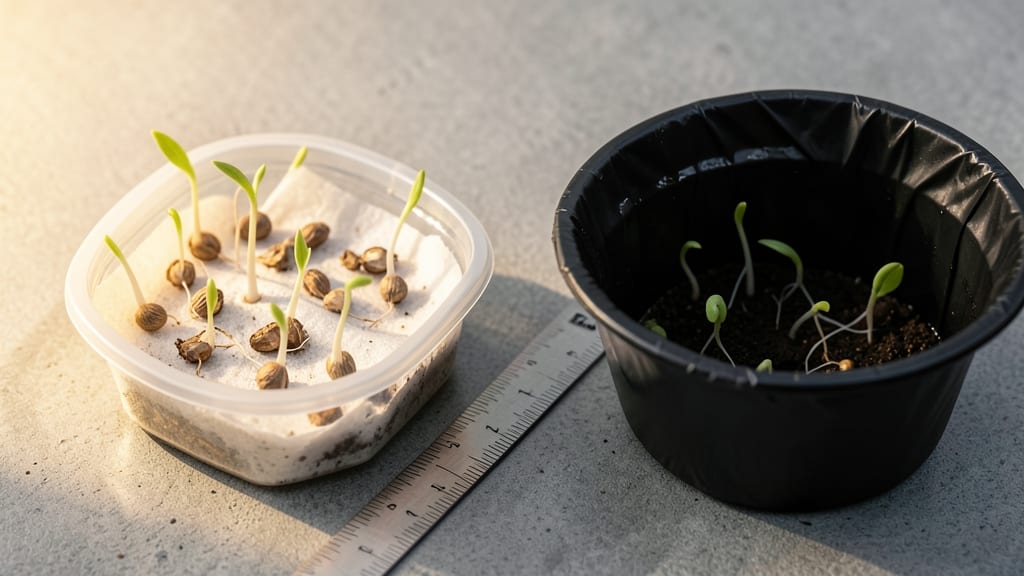
Sunflower seeds don’t need light to germinate—they’ll sprout just fine in the dark, as long as you get the moisture and warmth right. 🌻
Struggling to get your sunflower seeds to sprout? The answer to whether they need light to germinate might surprise you—and could be the missing piece in your gardening success.
Most gardeners assume seeds need sunlight to wake up, but sunflowers are different. Their thick seed coats protect the embryo, letting it break through soil without light.
That means you can start them indoors in a dark drawer or even outdoors under mulch, as long as the soil stays moist and warm.
In this guide, I’ll walk you through the fastest, easiest way to germinate sunflower seeds—whether you’re planting them in darkness or moving them to light later. You’ll learn how deep to bury them, what temperature speeds up sprouting, and why some seeds fail even when everything seems perfect.

Sunflower seed germination in darkness: what science says about light requirements
If you've ever wondered whether your sunflower seeds need light to germinate, you're not alone. Many gardeners assume seeds require sunlight to sprout, but the science tells a different story.
Sunflower seeds (Helianthus annuus) are actually hypogeal germinators, meaning they don't need light to break through the soil. Their energy comes from the seed's own food supply rather than photosynthesis.
The biological process of germination focuses on three critical factors: moisture, temperature, and oxygen. Light plays almost no role in the initial stages. In fact, many seeds—including sunflowers—can germinate just fine in complete darkness.
What matters most is creating the right conditions for the seed to activate its enzymes and begin root growth.
Here's where many gardeners go wrong: they assume that because sunflowers love sunlight as mature plants, the seeds need it too. But the truth is, sunflower seedlings only require light after they've developed their first true leaves.
Before that, they rely on the cotyledons (seed leaves) for energy, which is stored in the seed itself.
The seed structure of sunflowers plays a key role in their ability to germinate in darkness. Their large, energy-rich cotyledons provide everything needed for early growth.
This is why you can successfully start sunflower seeds indoors under grow lights or even in a dark closet, as long as the other conditions are met. The radicle (primary root) emerges first, followed by the hypocotyl (stem), and finally the cotyledons.
One common myth is that seeds need light to "know" when to germinate. In reality, seeds are triggered by moisture and temperature, not light. This is why sunflowers often sprout in late spring when soil warms up, regardless of daylight hours.
The confusion arises because gardeners associate sunlight with growth, but the initial germination process is entirely independent of it.
For those experimenting with dark germination, I recommend using a seedling heat mat set to 70-75°F (21-24°C). This mimics the warmth of spring soil and speeds up the process.
Place your seeds in a container with well-draining potting mix, cover them with about 1 inch of soil, and keep the mix moist but not waterlogged. You'll see sprouts in as little as 7 days, though 10-14 days is more typical.
Once your sunflower seedlings have their first true leaves (not the initial cotyledons), you can introduce them to light. At this stage, they'll need 6-8 hours of sunlight daily to prevent leggy growth.
But until then, darkness isn't just acceptable—it's ideal for focusing their energy on root development. This two-phase approach explains why sunflowers thrive when direct-sown outdoors after the last frost.
If you're still skeptical, try this experiment: plant half your sunflower seeds in a sunny windowsill and half in a dark cabinet. Keep both sets at the same temperature and moisture level.
You'll likely find that the seeds in darkness sprout just as successfully, proving that light isn't the limiting factor in the early stages. The real secret lies in creating the perfect balance of moisture, warmth, and oxygen.
Understanding this process can transform your germination success rate. Whether you're starting seeds indoors or direct-sowing outdoors, knowing that sunflowers don't need light to begin their journey gives you flexibility in timing and setup.
Just remember: the goal is to give your seeds the best possible start in the dark, then gradually introduce them to the light they'll love as they grow.
Step-by-step guide: how to germinate sunflower seeds in dark vs. light conditions
Sunflower seeds (Helianthus annuus) are fascinating because they can germinate without light, thanks to their stored energy reserves. However, the method you choose—dark or light—will impact your sprouting speed and seedling strength.
Let’s break down the best approach for each scenario, so you can maximize your germination success rate.
For dark germination, focus on moisture and warmth, while light exposure becomes critical once sprouts emerge. The key is understanding when to introduce light to avoid leggy or weak seedlings. Whether you're starting indoors or outdoors, these steps will ensure your sunflowers get off to a strong start.
Step-by-Step Germination Process
- Step 1: Prepare Your Seeds
Soak sunflower seeds in warm water for 4-6 hours to soften the outer shell. This speeds up germination by 24-48 hours. Use a paper towel or seed tray for soaking. - Step 2: Choose Your Method
Dark Germination: Use a seedling tray or paper towel in a dark, warm spot (e.g., 70-75°F). Keep moist but not soggy. Light Germination: Plant seeds 1 inch deep in well-draining soil under grow lights or in a sunny windowsill. - Step 3: Maintain Moisture
Keep the soil or paper towel consistently moist—not waterlogged. Use a spray bottle for gentle watering. Dark germination requires more frequent checks to prevent drying. - Step 4: Monitor for Sprouts
Sprouts typically appear in 3-10 days. For dark germination, wait until cotyledons (seed leaves) appear before exposing to light. For light germination, thin seedlings to 12 inches apart once they’re 2 inches tall. - Step 5: Introduce Light Gradually
If starting in darkness, move seedlings to bright, indirect light for 2-3 hours/day initially, then increase to full sun once they’re 3-4 inches tall. Avoid sudden exposure to prevent shock. - Step 6: Transplant Outdoors
Once seedlings have 2-3 true leaves and soil temperatures are above 55°F, transplant outdoors. Harden off seedlings by gradually increasing sunlight exposure over 5-7 days.
One common mistake is assuming sunflower seeds need light immediately. In reality, they can germinate in darkness, but light exposure after sprouting is critical for healthy growth.
For example, I once had a batch of seeds sprout in a dark closet, but the seedlings turned pale and weak until I moved them to sunlight. The lesson? Timing matters—introduce light at the right stage.
For outdoor planting, direct-sow seeds after the last frost when soil is 60°F+. Use a seed starter kit if you’re sowing early indoors. The key is consistency: whether in dark or light, maintain moisture and warmth until sprouts appear.
Once they do, light becomes non-negotiable for robust growth.
Pro tip: Use a seed heating mat (set to 75°F) to speed up germination, especially in cooler climates. This mimics the natural warmth sunflower seeds experience in their native habitats. Pair it with indirect light after sprouting, and you’ll see faster, stronger seedlings in no time.
Remember, sunflowers are hardy plants, but their early stages are delicate. Whether you choose dark or light germination, the goal is the same: healthy, vigorous sprouts ready to thrive in your garden.
With these steps, you’ll be well on your way to growing towering sunflowers that’ll brighten up your space. 🌻