
Light Requirements
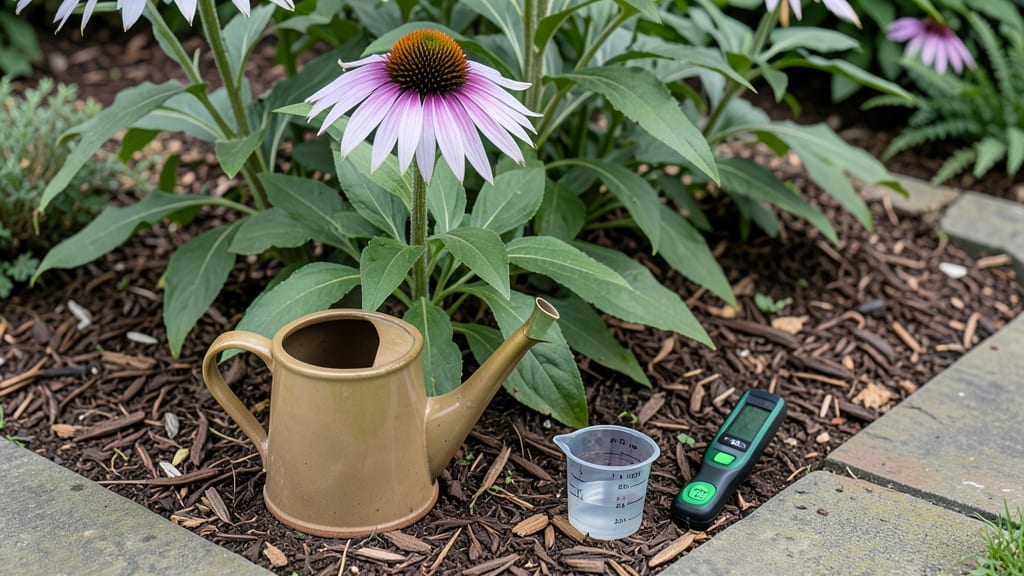
Do coneflowers need a lot of water? The answer is a resounding no—they thrive on only moderate watering once established.
If you’ve ever wondered whether these cheerful, long-blooming perennials require constant watering, you’re not alone. The truth is, coneflowers are famous for their drought tolerance, but proper watering still plays a key role in their health and vibrant blooms.
Newly planted coneflowers need consistent moisture to root well, but once established, they can handle dry spells with ease. Overwatering is actually a bigger risk than underwatering, leading to root rot or fungal issues.
In this guide, I’ll break down the ideal watering schedule, signs of over- or under-watering, and seasonal adjustments to keep your 🌼 coneflowers thriving without wasting a drop.
How much water coneflowers actually need (and when)
Coneflowers (Echinacea) are often called "drought warriors" for their ability to thrive with minimal water once established. But that doesn't mean they're completely water-independent! Proper watering at the right stages ensures strong roots, vibrant blooms, and long-term health.
The key is understanding their three distinct watering phases: germination, establishment, and maturity.
During the first 4-6 weeks after planting, coneflowers need consistent moisture to develop deep roots. This is when they're most vulnerable to drying out. Once they reach maturity (year 2+), they can handle dry spells like a pro—but only if their roots are well-established.
Seasonal shifts also matter: summer heat demands more frequent watering, while winter dormancy requires almost none.
Let's break down the exact watering schedule you should follow for each growth stage, plus seasonal adjustments to keep your coneflowers thriving without overdoing it.
| Growth Stage | Watering Frequency | Amount per Session | Key Notes |
|---|---|---|---|
| Germination (Seedlings) | Daily (light misting) | 1/4 inch soil moisture | Keep soil evenly moist, not soggy |
| Establishment (First Year) | 2-3 times per week | 1 inch total per week | Deep watering encourages root growth |
| Maturity (Year 2+) | Every 10-14 days | 1-1.5 inches per session | Drought-tolerant but blooms best with occasional deep water |
| Summer Heatwave | Every 5-7 days | 1.5-2 inches per session | Morning watering prevents evaporation |
| Winter Dormancy | Monthly (if no snow) | Light misting only | Prevents root desiccation |
For newly planted coneflowers, the first year is critical. I water mine 2-3 times per week during their first growing season, providing about 1 inch of water total per week.
The goal is to encourage deep root development—this means watering deeply (about 6-8 inches down) rather than giving frequent light drinks. Use your finger to check soil moisture: if the top 2 inches feel dry, it's time to water.
Once established, coneflowers can handle drought conditions remarkably well. In my zone 6 garden, mature plants go 3-4 weeks without supplemental water during average summers. However, for peak blooms, I still water every 10-14 days with 1-1.5 inches per session during their blooming period (June-August).
This simple adjustment can double your flower production!
Seasonal adjustments are where many gardeners go wrong. During summer heatwaves (when temperatures exceed 90°F/32°C), I increase watering to every 5-7 days and apply mulch to retain moisture. In fall and winter, I reduce watering to monthly light misting—just enough to prevent the soil from drying out completely.
This mimics their natural dormancy period and prevents root rot.
One common mistake is watering at night. Wet foliage overnight creates perfect conditions for fungal diseases like powdery mildew. Always water in the early morning (6-9 AM) so leaves have time to dry before evening.
I've seen coneflowers develop mildew after just two weeks of nighttime watering, so this simple habit change makes a huge difference.
Pro tip: Pair your watering schedule with mulching. A 2-3 inch layer of organic mulch (like shredded leaves or straw) around your coneflowers can reduce water needs by 30%.
It also helps regulate soil temperature and suppresses weeds. I apply mulch in early spring right after the last frost, and it lasts through the entire growing season with minimal replenishment.
Remember that coneflowers hate soggy soil. Their native prairie habitat means they're adapted to well-draining conditions. If your garden has heavy clay soil, consider amending it with compost or planting in raised beds.
This prevents waterlogging, which can lead to root rot and stunted growth. In my experience, well-draining soil means healthier plants with fewer watering headaches.
For container-grown coneflowers, the rules change slightly. Potted plants dry out 2-3 times faster than in-ground plants. I water mine every 3-5 days in summer, checking the soil moisture daily. The key is to ensure the entire root ball stays moist—not just the surface.
If the top inch feels dry, it's time to water thoroughly until water runs from the drainage holes.
By
Signs of overwatering vs. underwatering in coneflowers (with fixes)
Coneflowers are famously drought-tolerant, but even these hardy plants show clear signs when their water needs aren't met. Overwatering and underwatering both create stress, but the symptoms look surprisingly different. Learning to spot these signs early can save your plants and keep those iconic purple blooms thriving all season.
The key is understanding how soil moisture affects coneflowers. Too much water suffocates roots, while too little causes wilting. Both extremes weaken plants and make them vulnerable to pests or disease. Let's break down what to watch for and how to fix it before it's too late.
Overwatering vs. Underwatering in Coneflowers
Overwatering
- Yellowing leaves (especially lower leaves)
- Mushy stems at soil line
- Fungal spots (brown/purple patches)
- Slow growth despite moist soil
Underwatering
- Wilted leaves (even in morning)
- Crispy leaf edges
- Dry, brittle stems
- Premature bud drop
Yellowing leaves are your first warning sign of overwatering. Unlike underwatering, where leaves wilt, overwatered coneflowers develop a sickly yellow hue starting at the base. Check the soil - if it smells sour or feels waterlogged, you're overdoing it. Fungal diseases like powdery mildew often follow, creating white or brown spots on foliage.
When underwatered, coneflowers show dramatic wilting that doesn't recover by evening. The leaf edges become crispy and brown, while stems feel hollow when squeezed. In extreme cases, buds drop before opening. The good news? Coneflowers bounce back quickly when properly rehydrated with deep watering at the soil base.
To correct overwatering, improve drainage immediately. Amend heavy soil with compost or perlite, and ensure containers have drainage holes. For underwatered plants, water deeply in the morning to reduce evaporation. Mulch around the base helps retain moisture while preventing soil compaction.
Remember that established coneflowers only need 1-1.5 inches of water weekly once mature. The key is consistency - better to water deeply less often than frequent shallow drinks. Adjust your schedule based on rainfall and seasonal heat to keep those drought-resistant blooms happy all season.