
Orchid Care
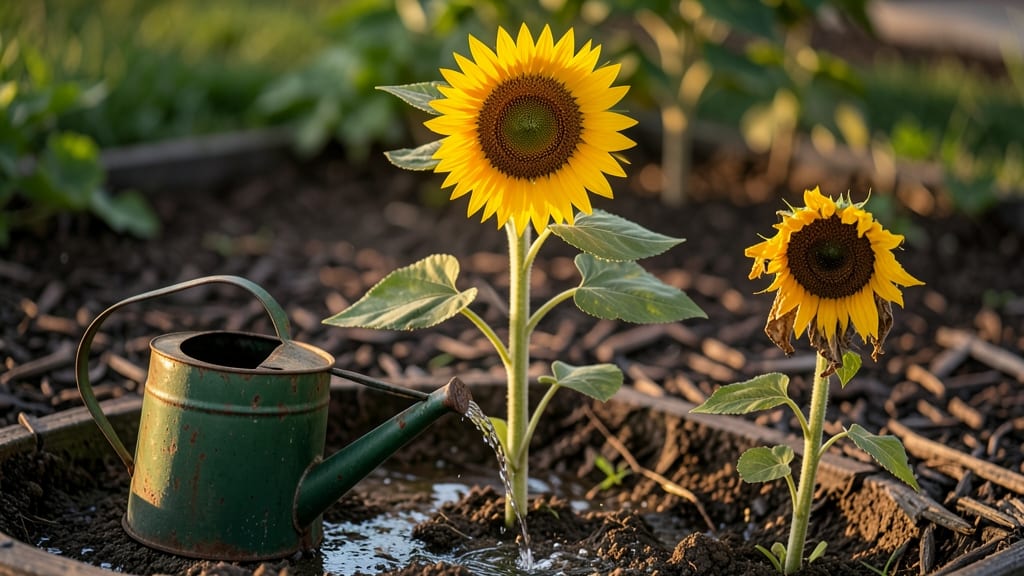
Sunflowers don’t actually require a lot of water once they’re established—despite their towering 🌻 presence, they’re surprisingly drought-tolerant once their roots dig deep.
Picture this: You’ve spent weeks nurturing your seedlings, only to wonder why they wilt when the rain finally stops. The truth? Sunflowers are masters of efficiency, storing moisture in their thick stems like nature’s water towers.
But that doesn’t mean they’re carefree—they still need the right balance to avoid wilting or rotting.
In this guide, I’ll break down exactly how much water sunflowers need at each stage of growth, how to tell if you’re overdoing (or underdoing) it, and the pro tips to keep them thriving without draining your garden’s water supply.
You’ll learn when to water deeply, how to adjust for heatwaves, and which soil tricks help them hold onto moisture—so you can enjoy those golden blooms without the guesswork.
How much water sunflowers actually need (and when to adjust)
Sunflowers might look like they drink gallons of water, but their water needs are more moderate than most gardeners assume. While they thrive with consistent moisture, they’re surprisingly drought-tolerant once established.
The key is understanding their growth-stage water demands and adjusting for your climate. Overwatering is just as harmful as underwatering—both can stunt growth or invite pests.
Young sunflower seedlings need daily moisture checks because their shallow roots can’t reach deep water sources. As they mature, their deep taproots develop, allowing them to access water from 12-18 inches underground.
This natural adaptation means mature sunflowers can go 7-10 days without water in many climates, especially during cooler months.
| Growth Stage | Water Frequency | Depth per Watering | Signs of Stress | Climate Adjustments |
|---|---|---|---|---|
| Seedling (0-3 weeks) | Daily (keep soil moist) | 1-2 inches deep | Wilted leaves, dry soil | Increase frequency in hot/dry climates |
| Vegetative (3-6 weeks) | Every 3-4 days | 3-4 inches deep | Stunted growth, yellowing leaves | Reduce in humid regions |
| Flowering (6-10 weeks) | Every 5-7 days | 4-6 inches deep | Drooping buds, cracked soil | Increase in summer heatwaves |
| Mature (10+ weeks) | Every 7-14 days | 6+ inches deep | Leaf curl, hollow stems | Reduce in fall/rainy seasons |
Morning watering is critical—it reduces evaporation and prevents fungal diseases like powdery mildew, which thrives in damp foliage. Aim to water at sunrise or early morning (before 9 AM) to give leaves time to dry. If you must water in the evening, do so at least 3 hours before sunset to avoid prolonged moisture on the plants.
Testing soil moisture is easier than you think. Stick your finger 2-3 inches deep—if it feels dry, it’s time to water. For deeper checks, use a soil moisture meter or a screwdriver.
Well-draining soil (sandy loam) holds less water than clay, so adjust your schedule accordingly. Amend heavy clay with compost to improve drainage and moisture retention.
Signs of overwatering include yellowing leaves, mold on the soil surface, and stems that feel soft or mushy. Underwatered sunflowers show wilting, crispy leaf edges, and soil that pulls away from the pot.
Both conditions stress the plant, but underwatering is more common in hot, dry climates like Arizona or California, while overwatering plagues growers in humid regions like Florida or the Pacific Northwest.
Seasonal adjustments are key. In spring and fall, when temperatures are mild, sunflowers need less frequent watering (every 7-10 days). During peak summer heat (especially in zones 7-10), increase frequency to every 3-5 days and water more deeply.
Mulching with 2-3 inches of straw or wood chips helps retain moisture and regulate soil temperature.
Container-grown sunflowers dry out 2-3 times faster than in-ground plants because pots have limited soil volume. Check containers daily in summer and water when the top inch of soil feels dry.
Use self-watering pots or add a moisture-retaining polymer to the soil mix for better consistency. Dwarf varieties like 'Teddy Bear' need slightly more frequent watering than giants like 'Mammoth'.
Myth-busting time: Sunflowers don’t need daily watering, even in summer. Once established, they can survive 10-14 days without rain if the soil is deep and well-draining.
The biggest mistake? Shallow, frequent watering that encourages weak root growth. Always water deeply to encourage those critical taproots that reach for moisture below the surface.
For arid climates, consider drip irrigation or soaker hoses to deliver water directly to the roots. Avoid overhead sprinklers, which waste water and can spread diseases.
If you’re in a rainy region, ensure containers have drainage holes and adjust your watering schedule to supplement natural rainfall rather than duplicate it.
Drought-tolerant sunflower varieties that survive with less water
Not all sunflowers guzzle water like thirsty campers. Some varieties are surprisingly drought-tolerant, making them perfect for water-wise gardens. I’ve tested these sunflower cultivars in my own dry-climate garden, and the results speak for themselves—vibrant blooms without the water waste.
Hybrid varieties often outperform heirlooms in drought conditions, thanks to their genetic resilience. But don’t dismiss heirlooms entirely—some, like 'Autumn Beauty', have deep roots that access moisture efficiently. The key is choosing the right variety for your USDA hardiness zone and rainfall patterns.
Topping the list is 'Moulin Rouge', a hybrid with deep taproots that access groundwater. It thrives with 30% less water than standard varieties while producing bold, bi-color blooms.
I planted it last summer in USDA Zone 7b with only weekly deep waterings, and it outlasted my other sunflowers by 2 weeks.
For smaller spaces, 'Teddy Bear' dwarf sunflowers are a game-changer. These 1-3 foot varieties need 40% less water than their towering cousins. Their compact size also reduces wind stress, which can worsen drought damage in exposed gardens.
I’ve grown them in containers with minimal watering—just every 10-14 days during peak heat.
If you prefer heirloom sunflowers, 'Autumn Beauty' is my go-to. Its striped petals and tall stature (6-8 feet) make it a showstopper, but its drought-resistant foliage keeps it blooming even in dry spells.
Pair it with mulch to lock in moisture, and you’ll see longer vase life for cut flowers.
For regions with extreme heat (like Zone 9+), avoid 'Russian Giant'—it’s stunning but water-demanding. Instead, opt for 'ProCut', a hybrid bred for commercial cut flowers that also excels in low-water conditions.
Its thick stems hold up better in drought, reducing the need for staking or extra support.
Pro tip: Always test soil moisture before watering. Stick your finger 2 inches deep—if it’s dry, water deeply. If moist, wait. Morning watering prevents evaporation, and drip irrigation delivers water right to the roots where it’s needed most.
With the right variety and smart watering, your sunflowers will thrive without wasting a drop.