
Flowers
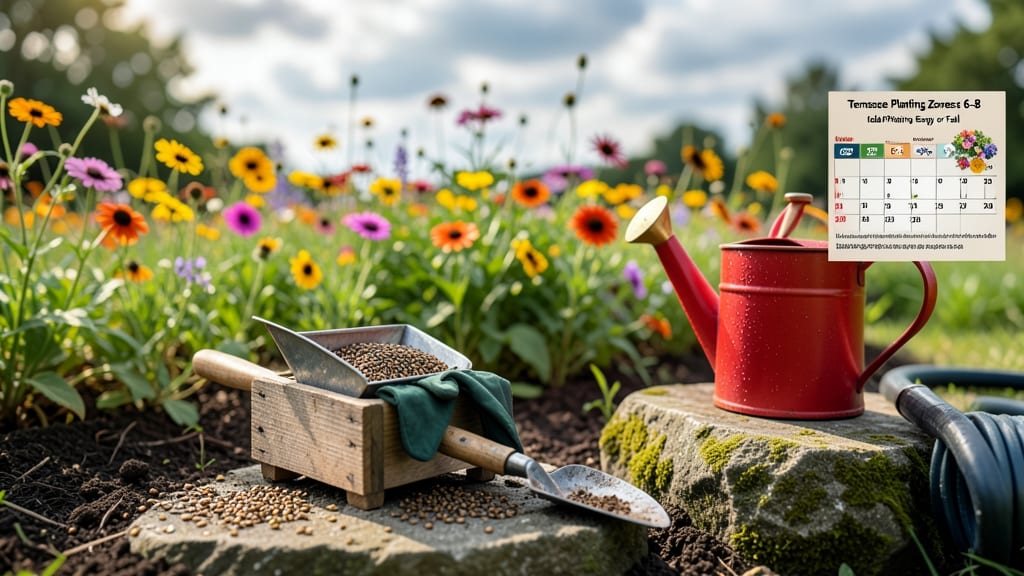
Planting wildflowers in Tennessee at the right time ensures vibrant blooms and thrives pollinators year-round, with spring and fall being the ideal windows for most native species.
Picture this: a Tennessee garden bursting with black-eyed Susans and purple coneflowers, drawing bees and butterflies from March through October. But miss the planting window, and you’ll end up with sparse blooms—or worse, weeds taking over. The key? Understanding your region’s frost dates and soil conditions.
From the cooler Appalachian Mountains (Zone 6a) to the warmer Gulf Coastal Plain (Zone 8a), Tennessee’s climate zones dictate when to sow seeds. In Zone 6a, wait until after the last frost (mid-March), while Zone 8a gardeners can start as early as February.
Fall planting in September-October also works for hardy perennials.
Below, I’ll break down the best months by region, top native wildflowers for your zone, and pro tips to extend blooms—so you’re not left wondering why your garden looks more like a lawn than a pollinator paradise.
Tennessee wildflower planting calendar by region: month-by-month guide for best blooms
Tennessee’s three distinct regions—East Tennessee’s cool mountain valleys, Middle Tennessee’s rolling hills, and West Tennessee’s humid coastal plains—each demand unique timing for wildflower success. Spring ephemerals like bloodroot and trillium thrive in East Tennessee’s USDA Zone 6a, while summer perennials such as black-eyed Susans shine in West Tennessee’s Zone 8a.
Aligning your planting schedule with these zones ensures year-round pollinator support and vibrant blooms.
Native wildflowers in Tennessee follow a bimodal planting rhythm: early spring (March-April) for cool-season species and fall (September-October) for hardy perennials. Last frost dates vary dramatically—March 15 in Zone 6a versus February 15 in Zone 8a—so adjust your calendar accordingly.
This guide breaks down the ideal month-by-month schedule for each Tennessee region, including soil prep tips and pollinator peak periods.
| Region | USDA Zone | Best Planting Months | Key Species | Pollinator Peak |
|---|---|---|---|---|
| East Tennessee | 6a-7a | March-April, September-October | Bloodroot, Trillium, Wild Columbine | April-May (spring ephemerals) |
| Middle Tennessee | 7a-7b | April-May, September | Purple Coneflower, Butterfly Weed | June-August (summer perennials) |
| West Tennessee | 8a | February-March, October | Black-Eyed Susan, Coreopsis | May-September (extended season) |
In East Tennessee, where cooler temperatures and higher elevations dominate, focus on spring ephemerals like bloodroot and trillium. These early bloomers emerge before canopy trees leaf out, ensuring they capture sunlight for their short 4-6 week bloom cycle.
Plant seeds in March after the last frost (typically March 15) or in early September for fall establishment. Soil prep here is critical—amend heavy clay with compost and sand to prevent waterlogging.
Middle Tennessee’s rolling hills (Zones 7a-7b) offer a transition zone perfect for staggered blooms. Start with purple coneflower and butterfly weed in April-May, then follow with fall-planted perennials like goldenrod in September. This region’s warmer microclimates allow for longer bloom seasons, with pollinators active from June through August. Use mulch to retain moisture during summer droughts.
West Tennessee’s coastal influence (Zone 8a) means earlier planting and longer growing seasons. Begin sowing black-eyed Susans and coreopsis as early as February, taking advantage of 60-90 frost-free days. Fall planting in October ensures spring blooms without competing with summer heat. This region’s humid climate demands well-draining soil—avoid low-lying areas prone to waterlogged conditions.
For all regions, succession planting is key to continuous pollinator support. In East Tennessee, sow late-summer annuals like cosmos in June to bridge the gap between spring ephemerals and fall perennials.
In West Tennessee, interplant short-lived perennials like salvia with long-blooming annuals like zinnias. Native milkweed should be planted by June 1 to support monarch butterflies during their migration.
Timing also matters for seed collection. Most Tennessee wildflowers produce viable seeds by late summer, but spring ephemerals like trillium may need stratification (cold treatment) before planting.
Harvest seeds when pods turn brown and rattle—typically August-September—and store them in a cool, dry place until spring. Direct sowing is ideal for most wildflowers, but transplants can be used for large-scale plantings.
Don’t overlook post-planting care. Young wildflowers need consistent moisture during germination, but once established, most tolerate drought conditions. In East Tennessee, protect seedlings from late spring frosts with row covers. In West Tennessee, watch for summer heat stress—provide light
Top 5 native Tennessee wildflowers for pollinators and their ideal planting windows
Tennessee’s native wildflowers are powerhouses for pollinators, offering continuous nectar from spring to fall. The key to a thriving meadow lies in strategic planting windows that align with each species' natural cycle.
For example, butterfly milkweed (Asclepias tuberosa) must be planted by late summer to establish roots before monarchs arrive in September.
Monarch butterflies time their migration perfectly with Tennessee’s late summer blooms. By planting milkweed in June or July, you ensure host plants are ready when caterpillars emerge. Pair this with purple coneflower (Echinacea purpurea), which blooms from June to October, creating a nectar buffet for migrating pollinators.
For continuous pollinator support, stagger plantings so blooms overlap. For instance, plant black-eyed Susans in spring and coreopsis in fall—this ensures non-stop nectar from May through October. Wild bergamot is a late-season hero, blooming when other flowers fade.
Timing matters most in Zone 6a, where late frosts can delay growth. Start milkweed indoors in March for an early edge, while coneflowers handle direct sowing after April 15. Always test soil moisture before planting—dry spells in May can stress young seedlings.
Pro tip: Mix annuals like cosmos with perennials for instant color. Annuals bloom 60 days after planting, filling gaps while perennials establish. This two-tiered approach maximizes pollinator visits from June to October.
Remember, monarchs need milkweed—without it, their populations decline. By planting butterfly milkweed in June, you’re not just adding beauty; you’re saving a species. Pair it with coneflowers and Susans for a pollinator paradise that lasts all season.