
Companion Plants
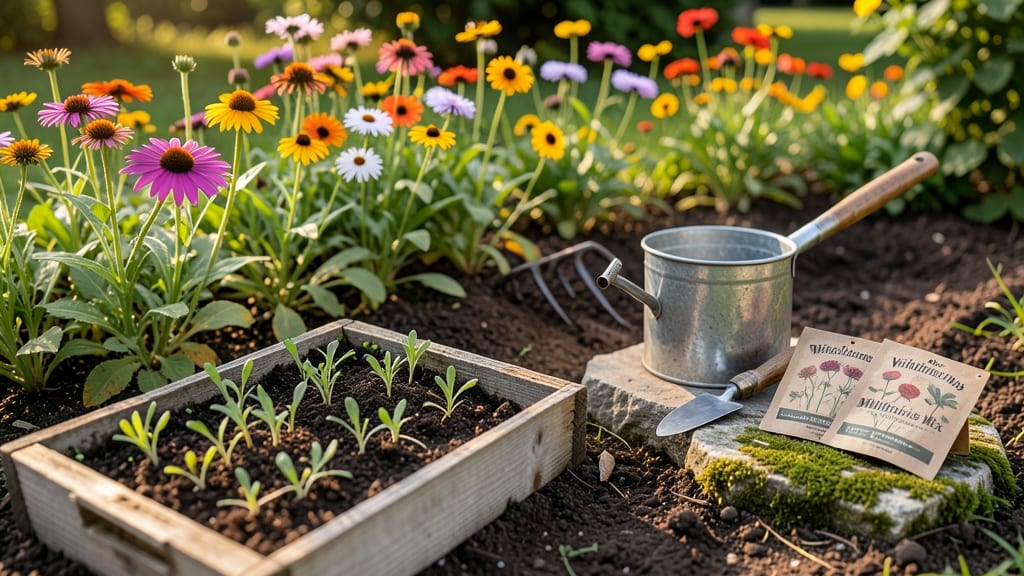
Planting wildflower seeds in Ohio at the right time means the difference between a vibrant pollinator haven and a patch of disappointment.
Ohio’s wildflowers aren’t just beautiful—they’re lifelines for pollinators, and planting them at the wrong time can mean the difference between a thriving meadow and a failed experiment. Timing is everything, especially in Ohio’s variable climate.
If you’ve ever scattered seeds in late spring only to watch them wither under summer heat, you know how critical the window is. The best months for Ohio’s native wildflowers are early spring and fall, when soil is cool and moisture is reliable.
In this guide, I’ll break down the exact planting windows for Ohio’s top native species, soil prep tips for clay-heavy areas, and how to use frost dates to your advantage—so your wildflower meadow blooms like clockwork.
Ohio’s ideal wildflower planting windows by season (with frost date maps)
Ohio’s variable climate makes timing critical for wildflower success. The two best windows—early spring and late summer/fall—align with Ohio State University’s planting calendar to avoid frost damage and maximize germination.
I’ll break down the optimal months for each region, from Toledo’s cooler zones to Columbus’s transitional areas.
Spring planting in Ohio starts after the last frost date, typically mid-April in most areas (earlier in southern Ohio, later near Toledo). Fall planting, however, offers a 6-week window before the first frost—usually mid-September to early October.
This timing lets seeds establish roots before winter dormancy, giving them a head start in spring.
Here’s how Ohio’s USDA Hardiness Zones 5b–6a impact planting:
- Zone 5b (northern Ohio): Last frost April 20–May 1, first frost October 10–20
- Zone 6a (central/southern Ohio): Last frost April 1–15, first frost October 20–November 1
For precision timing, use Ohio State University’s Planting Calendar (available at ohioline.osu.edu). Enter your ZIP code to see local frost dates and soil temperature thresholds—critical for wildflower germination. Pro tip: Native species like purple coneflower and black-eyed Susan thrive when planted 4–6 weeks before the first frost.
Regional microclimates add another layer. Urban areas (e.g., Columbus) often experience heat islands, delaying first frosts by 1–2 weeks compared to rural zones. Meanwhile, Toledo’s lake-effect can bring earlier frosts, so err on the side of planting earlier in fall.
Always check 7-day forecasts before sowing—unpredictable rain can wash seeds away.
Fall planting is my top recommendation for Ohio’s drought-prone summers. Seeds sown in September germinate slowly, develop deep roots, and emerge stronger in spring. Plus, you’ll avoid competition from weeds that explode in May and June.
For spring planting, wait until soil temps reach 50°F—use a soil thermometer to confirm.
Ohio’s clay-heavy soils can delay warming in spring. If your area has slow-draining clay, amend with compost or sand before planting. This improves seed-to-soil contact and water absorption, especially critical for small wildflower seeds like lupine or wild bergamot.
A light raking after sowing ensures seeds aren’t buried too deep.
Don’t overlook seed stratification for fall-planted seeds. Many Ohio natives (e.g., coreopsis) need cold exposure to break dormancy. If sowing in late fall, lightly mulch with straw to protect seeds from washing away during thaws.
For spring planting, soak seeds in lukewarm water for 24 hours before sowing to kickstart germination.
Track your wildflower progress with Ohio’s Pollinator Habitat Program
How to prep Ohio soil for wildflower success (even in clay-heavy areas)
Ohio’s soil can be a wildflower gardener’s biggest challenge—especially if you’re dealing with clay-heavy or compacted ground. The good news? With the right prep, even the toughest Ohio soil can become a pollinator paradise.
Native wildflowers thrive when soil has good drainage, organic matter, and the right pH balance—typically 6.0 to 7.0 for most species. Let’s break down how to transform your plot into the perfect wildflower haven.
First, test your soil before planting. Ohio’s diverse regions—from sandy soils in northwest Ohio to clay-rich areas in central Ohio—require different amendments. A simple soil test kit (available at garden centers) will tell you your pH level and organic matter percentage.
Aim for at least 3% organic matter for wildflower success. If your soil is clay-heavy, focus on loosening compaction and improving drainage.
🌱 Ohio Soil Prep Checklist for Wildflowers
- ☑️ Test soil pH (ideal: 6.0–7.0)
- ☑️ Add compost (2–3 inches, mix into top 6 inches of soil)
- ☑️ Loosen compacted clay with a broadfork or gypsum (for heavy clay)
- ☑️ Avoid planting after heavy rain (wait 2–3 days for soil to dry)
- ☑️ Choose native seed mixes suited to your soil type
For clay soil, mix in sand and compost in equal parts to create a loamy texture. A 50/50 blend of compost and native topsoil works wonders for drainage while retaining moisture.
If your soil is too sandy, amend it with peat moss or coconut coir to improve water retention. Avoid synthetic fertilizers—wildflowers prefer low-nitrogen conditions to encourage blooming over leafy growth.
Timing matters too! Avoid planting after heavy rains—wet, compacted soil can smother seeds. Instead, aim to prep your soil 2–4 weeks before your target planting window (early spring or late summer).
If you’re sowing in fall, do it 4–6 weeks before the first frost (typically mid-September in Ohio) to allow seeds to germinate and establish roots before winter.
Once your soil is prepped, scatter seeds lightly over the surface and press them into the soil with a rake or board. For clay-heavy areas, consider mulching lightly with straw to protect seeds from erosion.
Water gently but deeply—1 inch per week—until germination occurs (usually 2–4 weeks for most native wildflowers). After that, reduce watering to encourage deep root growth.
Pro tip: Plant native wildflower mixes like Ohio Prairie Wildflowers or Butterfly Garden Blend, which are tailored to thrive in compacted or clay soils. These mixes include species like purple coneflower and black-eyed Susan, both of which handle Ohio’s variable moisture levels like pros.
With the right soil prep, your wildflower meadow will be buzzing with pollinators in no time! 🌼