
Companion Plants
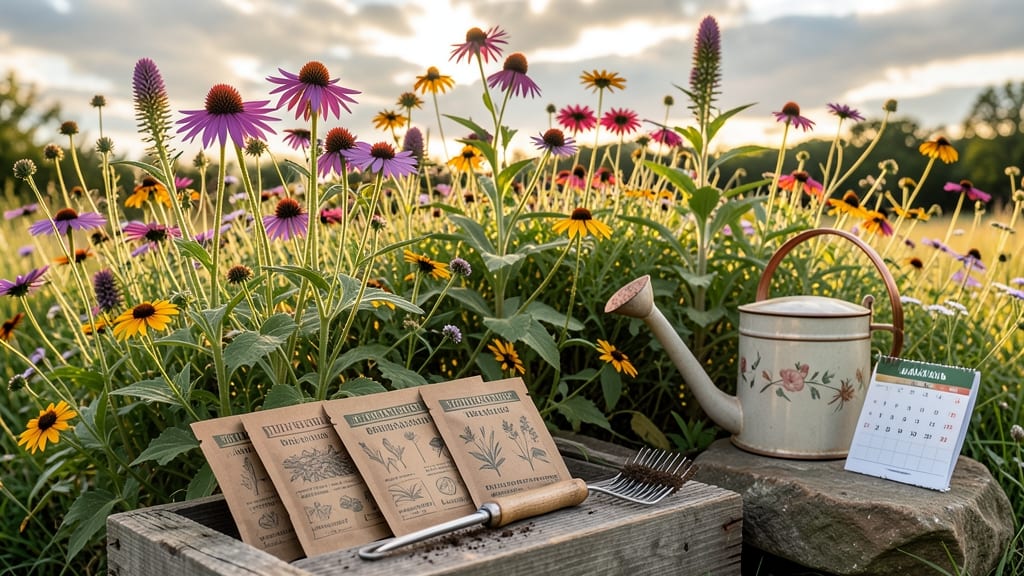
Planting wildflower seeds in Missouri at the right time means the difference between a vibrant meadow and a season of disappointment.
Missouri’s unpredictable spring weather can turn a beautiful wildflower meadow into a gamble—unless you plant at the perfect time. Timing your wildflower seeds right ensures vibrant blooms year after year, but when exactly should you start?
For Missouri gardeners in USDA Zones 5b-6a, the ideal windows are early spring (March-April) or early fall (September-October). These periods align with soil temperatures and frost-free forecasts that give seeds the best chance to germinate without being wiped out by late freezes.
Below, I break down the exact frost-date rules by zone, how to adjust for microclimates, and the top wildflower mixes that thrive in Missouri’s varied landscapes—so you can skip the guesswork and enjoy a pollinator-friendly garden all season.
Missouri wildflower planting calendar by USDA zones 5-6 (with frost-date rules)
Missouri’s USDA Zones 5b-6a offer two prime windows for planting wildflower seeds: early spring and early fall. The key to success lies in understanding your last frost date (typically mid-April) and first frost date (usually mid-October).
Planting too early risks frost damage, while waiting too long may delay blooms or reduce seedling success.
Most wildflower seeds thrive when soil temperatures reach 50-60°F. In Missouri, this usually aligns with March-April for spring and September-October for fall. Perennials often benefit from fall planting, as cooler temperatures encourage root establishment before winter dormancy. Annuals, however, can handle both seasons if timed correctly.
Soil preparation is just as critical as timing. Loosen the top 2-3 inches of soil to improve seed-to-soil contact, and remove weeds to reduce competition. For clay-heavy soils common in Missouri, amending with compost or sand can improve drainage and germination rates.
| Month | Planting Window | Ideal Soil Temp (°F) | Best For | Notes |
|---|---|---|---|---|
| February | Late February (Zone 6a only) | 45-55°F | Hardy perennials | Risk of frost; cover seeds if needed |
| March | Mid-March to early April | 50-60°F | Annuals & perennials | Avoid if frost predicted within 2 weeks |
| April | After last frost (mid-April) | 60-70°F | All wildflowers | Best success with consistent moisture |
| September | Early to mid-September | 60-70°F | Perennials & biennials | Seeds need 6-8 weeks to germinate |
| October | Early October (before first frost) | 50-60°F | Cold-hardy annuals | Light mulch helps retain moisture |
For spring planting, aim to sow seeds 4-6 weeks before your area’s last frost date. In Missouri, this typically means late March to early April. If you’re in Zone 5b, err on the later side to avoid early frosts.
Annual wildflowers like black-eyed Susan and coneflower thrive when planted in spring, while perennials such as butterfly weed benefit from both spring and fall sowing.
Fall planting offers distinct advantages. Seeds sown in September-October germinate slowly over winter, establishing deep roots before spring growth. This method reduces competition from weeds and often yields earlier blooms the following year.
Focus on perennial mixes or wildflower blends designed for fall planting, as they’re better adapted to cooler temperatures.
Adjust your planting timeline based on microclimates. Urban areas may experience 2-3°F warmer temperatures than rural zones, while low-lying spots can stay 5°F cooler longer. Use a soil thermometer to verify conditions before sowing. If soil temperatures dip below 45°F, delay planting until conditions improve.
Watering is critical during the first 2-3 weeks after planting. Keep soil consistently moist (not soggy) to encourage germination. Once seedlings emerge, reduce frequency to once weekly, allowing soil to dry slightly between waterings. Overwatering can lead to fungal diseases or seed rot, especially in Missouri’s humid summers.
After establishing your wildflower meadow, minimal maintenance is required. Mulch lightly with straw or leaves to retain moisture and suppress weeds. Avoid fertilizing, as wildflowers thrive in low-nutrient soils. Instead, focus on deadheading spent blooms to encourage continuous flowering throughout the season.
Missouri’s diverse ecosystems—from prairies to wetlands—support a wide range of wildflowers. Choose native species like purple coneflower or wild bergamot for pollinator-friendly meadows. These plants are adapted to Missouri’s climate and require less water and care once established.
🌼
How to adjust planting times for Missouri’s microclimates (shade, wetlands, OR urban areas)
Missouri’s diverse landscapes—from urban sidewalks to wetland edges—create unique growing conditions that demand flexible planting strategies. While the general rule for wildflower seeds is early spring or fall, your local microclimate can shift these timelines by 2-4 weeks.
Shaded areas stay cooler longer, while urban heat islands warm up faster, both affecting germination rates and frost risk.
Understanding these variations helps you avoid late frost damage or drought stress in exposed sites. For example, a south-facing urban garden might support earlier spring planting (late February), while a shaded woodland area could extend your fall planting window into early November.
Let’s break down how to adapt your schedule for Missouri’s most common microclimates.
- Shaded Areas: Delay spring planting until mid-April (soil warms slower). Fall planting can extend to early November due to slower cooling.
- Urban Heat Islands: Plant wildflower seeds 2-3 weeks earlier (late February) in full-sun urban spots. Use drought-tolerant mixes like black-eyed Susan or coneflower.
- Wetlands/Low Spots: Wait until after last frost (mid-April) to avoid waterlogged soil. Choose native wetland species like swamp milkweed.
- Protected Microclimates: Extend fall planting to late October in sheltered areas (e.g., near buildings). Monitor for early frosts with local alerts.
- Late Frost Risk: Use row covers or wait for consistent 50°F nights in high-risk zones (e.g., northern Missouri).
For shaded microclimates, prioritize partial-sun wildflowers like wild columbine or foxglove, which thrive with 3-4 hours of sunlight. These species also tolerate cooler soil temperatures, making them ideal for late spring plantings.
Test soil moisture weekly—shaded areas retain dampness longer, increasing the risk of fungal diseases if overwatered.
In urban gardens, heat and reflected sunlight can push planting dates 2-3 weeks earlier than rural areas. Opt for drought-resistant wildflowers like purple coneflower or butterfly weed, which establish quickly in well-draining urban soils.
Mulch with gravel or straw to reduce water evaporation and suppress weeds competing with seedlings.
Wetland or low-lying areas require the most caution. Avoid planting until after the last frost (typically mid-April in Missouri) to prevent seeds from rotting in saturated soil. Native species like swamp sunflower or Joe-Pye weed thrive in these conditions but need well-aerated soil.
Amend clay-heavy areas with compost or sand to improve drainage before sowing.
Always monitor your local frost forecast and adjust planting dates accordingly. Tools like the National Weather Service’s frost prediction maps or local Cooperative Extension offices provide real-time data.
For example, if your area faces a late frost risk (common in USDA Zone 5b), consider using row covers or starting seeds indoors for a head start.
By tailoring your planting schedule to Missouri’s microclimates, you’ll maximize germination success and bloom longevity—whether you’re transforming an urban alley into a pollinator haven or restoring a shaded woodland edge.
Start small, observe your site’s unique conditions, and adjust as needed for a thriving wildflower garden year after year. 🌿