
Companion Plants
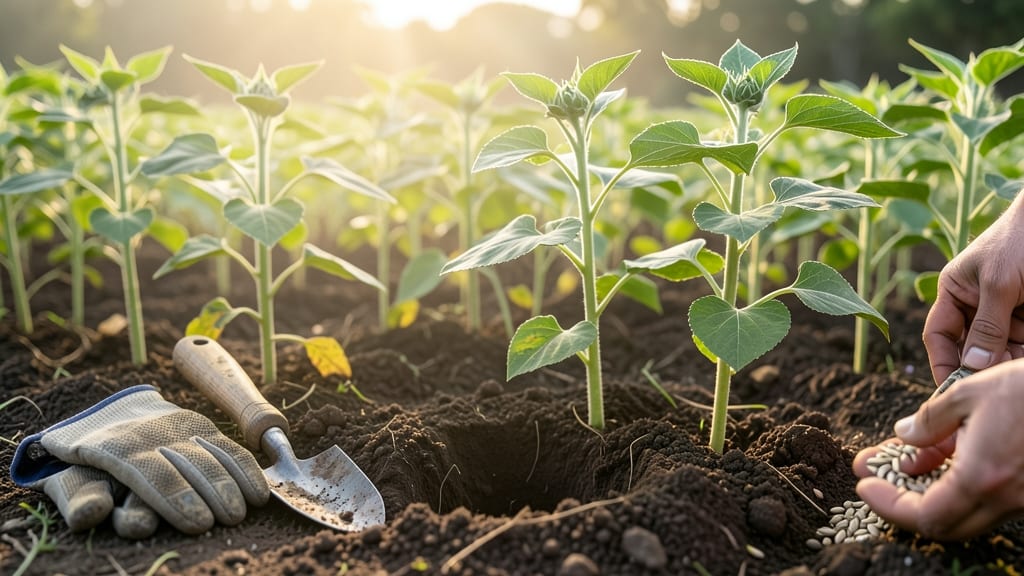
Plant sunflower seeds in Zone 6 after your last frost date—typically between mid-April and early June—to give those towering 🌻 stalks the long, frost-free growing season they crave.
Timing is everything: too early, and a late frost will nip your seedlings in the bud; too late, and you’ll miss the full summer bloom.
Zone 6’s 165 frost-free days mean you’ve got a narrow window to get seeds in the ground—whether you’re growing dwarf varieties for containers or giants for a dramatic backyard centerpiece.
Most gardeners in 6a-6b skip the indoor-starting hassle and plant directly outdoors, but soil temperature matters just as much as calendar dates. Aim for 50°F+ soil to ensure quick germination and strong roots before summer’s heat sets in.
Below, I’ll break down the exact planting timeline, soil prep tips, and how to adjust for your specific microclimate—so you can go from seed to 12-foot sunflowers without a hitch.
Zone 6 sunflower planting timeline: frost dates and soil temperature guide
Sunflowers in Zone 6 thrive when planted after the last frost date, but timing varies based on your specific microclimate and variety. The average last frost date for Zone 6 is around April 15, but this can shift ±10 days depending on elevation and location.
Always check your local frost-free date for precision.
Sunflower seeds germinate best in soil temperatures above 50°F, making mid-April to early June the ideal window for direct sowing. For transplanting seedlings, wait until soil warms to 55°F+—typically late May in most of Zone 6. This ensures strong root development before summer heat arrives.
Here’s a quick reference for Zone 6 sunflower planting based on frost dates and soil conditions:
For early summer varieties like 'Teddy Bear' (50-60 days to maturity), you can start sowing as early as mid-April if your soil is workable. These compact varieties tolerate cooler soil better than towering giants like 'Mammoth' (100-120 days), which need warmer soil and longer growing seasons.
If you’re in a high-altitude area within Zone 6 (e.g., 3,000+ feet), delay planting until late May—cooler nights and shorter growing seasons demand patience. Use a soil thermometer to confirm temperatures before sowing; sunflowers won’t germinate below 50°F, even if the air feels warm.
Pro tip: Mulch newly planted sunflower beds with straw or shredded leaves to retain soil warmth and moisture. This extends the planting window by 1-2 weeks in cooler pockets of Zone 6. Just avoid piling mulch directly against stems to prevent rot.
Zone 6 gardeners often overlook late summer planting, but varieties like 'Italian White' thrive when sown in early July. These sunflowers bloom in fall, adding late-season color and attracting pollinators like bees and butterflies before frost.
Always monitor your local weather forecasts for unexpected late frosts, especially in Zone 6a (colder sub-zone). A frost watch after planting? Cover seedlings with row covers or old bedsheets secured with bricks or stakes.
Remember, sunflowers are fast growers—some varieties reach 6 feet in just 60 days. The key to success in Zone 6 is planting at the right time to maximize their growth window before the first frost of October 15.
How to adjust planting for Zone 6’s microclimates and sunflower variety needs
Zone 6’s diverse landscapes—from city sidewalks to mountain valleys—create microclimates that demand flexible planting strategies. Urban gardens often face heat islands that warm soil faster, while rural areas may linger near frost pockets.
High-altitude spots in Zone 6 can delay spring by weeks. Your sunflower’s maturity timeline (30–120 days) must align with these conditions to avoid stunted growth or missed blooms.
Sunflowers come in three height categories: dwarf (30–50 days), semi-dwarf (60–90 days), and giant (90–120 days). Dwarf varieties like 'Teddy Bear' (2–3 ft) thrive in containers or small urban plots, while giants like 'Mammoth' (10–14 ft) need rural spaces with deep soil and no wind exposure.
Adjust your planting window by 1–2 weeks based on these factors.
- Urban Gardens: Plant dwarf varieties (May 1–15) near south-facing walls to capture reflected heat. Use black plastic mulch to warm soil 2–3°F faster.
- Rural Areas: Start giant varieties (April 20–May 5) in low-lying spots where frost lingers. Monitor soil temperature—wait until it hits 55°F+ for 5+ days.
- High-Altitude (500–1,500 ft): Delay planting by 2–3 weeks (May 10–25). Choose early-maturing varieties (60–70 days) to avoid early fall frosts.
- Container Gardening: Plant semi-dwarf varieties (May 1–10) in 10+ gallon pots with heat-absorbing fabric wrapped around the base. Water daily until established.
- Wind-Prone Areas: Use stake supports for tall varieties and plant in sheltered spots (e.g., near fences). Avoid open fields where stem breakage risks occur.
For dwarf sunflowers, aim for a late May–early June planting to ensure they bloom before September’s first frost. These varieties (e.g., 'Sunspot') mature in 50–60 days, making them ideal for extended-season gardens or fall harvests.
In contrast, giant sunflowers need a mid-April start to reach maturity before October’s chill.
Soil temperature is your best indicator for adjusting timing. Use a soil thermometer to confirm 50°F+ at 2-inch depth before planting. In cool microclimates, cover seeds with row fabric for 1–2 weeks to speed germination.
For hot urban areas, shade young seedlings with 50% shade cloth to prevent bolting (premature flowering).
Pro tip: Group sunflowers by maturity zone in your garden. Plant early varieties (e.g., 'Autumn Beauty') on the north side of your plot to capture morning sun, and late varieties (e.g., 'Russian Giant') on the south side for afternoon warmth.
This staggered approach extends your harvest window by up to 6 weeks.
Remember, sunflowers are forgiving but not infinitely adaptable. If your local last frost is later than average (e.g., May 1 in high-altitude Zone 6), opt for short-season varieties like 'Moulin Rouge' (65 days).
For early blooms, try 'Early Bird' (55 days) and plant it in protected microclimates like greenhouses or cold frames.