
Flowers
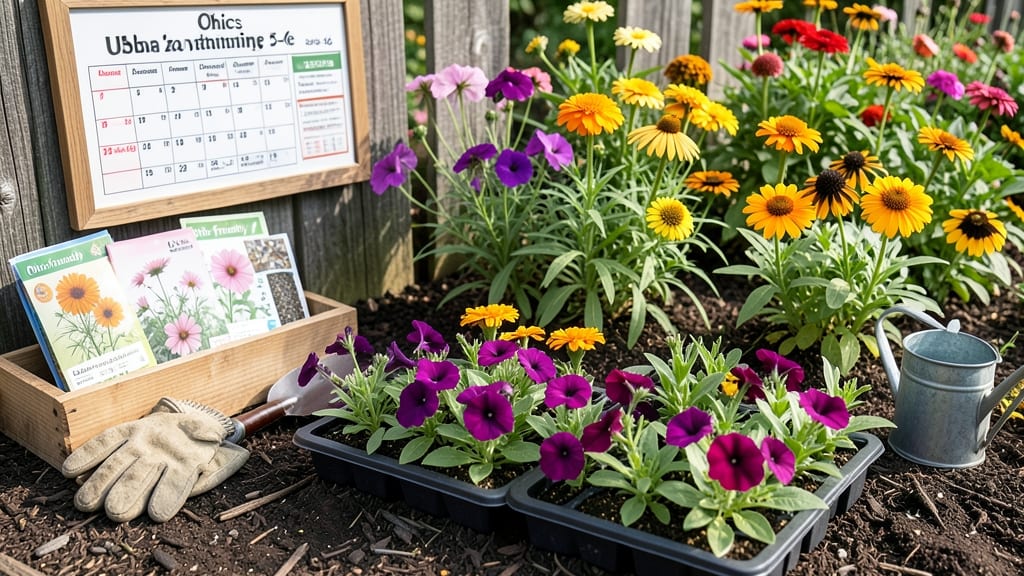
You should plant flowers in Ohio between mid-April and early May, when the soil warms and frost risks fade—timing that makes all the difference between a thriving garden and a sad, stunted one.
Ohio’s unpredictable spring weather can turn a beautiful flower garden into a gamble—unless you plant at the perfect time. Miss the frost-free window, and your blooms may never reach their full potential.
For Ohio gardeners, the last frost date (around April 15 in most areas) is your cue to start planting annuals like petunias and marigolds, while perennials and bulbs often need an earlier start indoors.
But here’s the catch: Northern Ohio’s cooler climate demands a slightly later approach than Southern Ohio’s milder zones.
In this guide, I’ll break down the exact planting windows for your region, share soil prep tricks to jumpstart growth, and reveal how to protect young flowers from late frosts—so you can enjoy bold blooms from May to October.
Ohio’s frost-free planting zones: when to start flowers by region
Ohio’s USDA Hardiness Zones 5b-6b create a perfect playground for gardeners, but knowing the exact frost-free dates is the key to unlocking vibrant blooms.
The state’s last average frost dates range from early April in southern Ohio to mid-May in northern regions, making timing everything for your annuals, perennials, and bulbs.
Whether you’re in Cincinnati’s Zone 6b or Cleveland’s Zone 5b, planting too early risks frost damage, while waiting too long may shorten your bloom season.
To avoid guesswork, I rely on local weather tools like the National Weather Service or Old Farmer’s Almanac for real-time updates. These resources provide city-specific frost dates and help adjust for Ohio’s infamous late spring freezes.
For example, Columbus (Zone 6a) typically sees its last frost around April 15, while Toledo (Zone 5b) may wait until May 1. Understanding these variations ensures your petunias, marigolds, and coneflowers thrive from day one.
Here’s how I break down Ohio’s planting zones for flowers by region, including the best times to start seeds indoors, transplant seedlings, and plant bulbs:
| Region & Zone | Last Frost Date | Best Time to Plant Annuals | Best Time for Perennials | Bulb Planting Time |
|---|---|---|---|---|
| Southern Ohio (Cincinnati, Columbus) - Zone 6b | April 1-15 | After April 15 (transplant seedlings) or March 15 (start indoors) | Early spring (March) or fall (September-October) | Fall (October-November) for spring blooms |
| Central Ohio (Columbus, Dayton) - Zone 6a | April 15-20 | After April 20 (transplant) or March 1 (start indoors) | Early spring (March) or fall (September-October) | Fall (October-November) for spring blooms |
| Northern Ohio (Cleveland, Toledo) - Zone 5b | May 1-10 | After May 10 (transplant) or April 1 (start indoors) | Early spring (April) or fall (September) | Fall (October-November) for spring blooms |
🌱 Pro Tip: Use a soil thermometer to confirm soil temps are 60°F+ before planting warm-season flowers like zinnias or geraniums.
For annual flowers, I start seeds indoors 4-6 weeks before the last frost date. For example, in Cincinnati (Zone 6b), I begin sowing marigolds and petunias in early March.
Transplant seedlings outdoors only after the soil warms and nighttime temperatures stay above 50°F. Cool-season annuals like pansies and snapdragons can handle earlier planting, even if frost is still possible.
When it comes to perennials, early spring or fall planting works best.
In Columbus (Zone 6a), I divide daylilies and hostas in early April or September to give roots time to establish before winter. Hardy perennials like coneflowers and black-eyed Susans can even handle fall planting, as they’ll establish roots before dormancy.
Always water deeply after planting to reduce transplant shock.
Don’t overlook bulbs, which are planted in fall for spring blooms.
In Toledo (Zone 5b), I tuck tulips and daffodils into the ground by November 1 to ensure they bloom by May. Summer-blooming bulbs like dahlias go in after the last frost, around May 10 in northern Ohio.
Use a bulb planter for precise depth—typically 2-3 times the bulb’s height.
Ohio’s microclimates can shift frost dates by 1-2 weeks, so I always check local weather alerts before planting. Urban areas like Cleveland may experience urban heat islands, delaying frost slightly, while rural areas in northeastern Ohio can be colder.
Adjust your schedule by 10-14 days if your yard is in a shadier or windier spot, as these factors can extend frost risks.
To stay ahead of Ohio’s unpredictable weather, I use a frost calendar from my local Cooperative Extension office. These resources often include historical frost data and real-time updates from nearby weather stations.
For example, the Ohio State University Extension provides county-specific frost dates that account for elevation and local topography. Bookmark these tools now—your gardening success depends on them!
Finally, remember that succession planting can extend your bloom season. In Cincinnati, I plant fast-growing annuals
Best flowers to plant in Ohio by season: timing for maximum blooms
Ohio gardeners know timing is everything—especially when it comes to flowers. Planting too early risks frost damage, while waiting too long can shorten the blooming season.
The key is matching each flower type to Ohio’s cool springs and hot summers, with last frost dates varying from early April in southern Ohio to mid-May in the north. Let’s break down the best flowers for each season and their precise planting windows.
For annuals like petunias and marigolds, you’ll want to start seeds indoors 6-8 weeks before your last frost or transplant hardened-off seedlings after Memorial Day. Perennials such as coneflowers and black-eyed Susans thrive when divided in early spring or fall, while bulbs like tulips need to be planted in fall for spring blooms.
Let’s dive into the exact timing for each type.
- 🌱 Early Spring (March): Plant cool-season bulbs (daffodils, crocuses) and hardy perennials (peony, bleeding heart). Soil temps should reach 40-50°F.
- 🌿 Late Spring (April-May): Transplant annuals (petunias, impatiens) and sow heat-loving seeds (marigolds, zinnias) after last frost (April 15 in south, May 10 in north).
- ☀️ Summer (June-July): Succession plant fast-growing annuals (cosmos, sunflowers) for continuous blooms. Divide crowded perennials after flowering.
- 🍂 Fall (September-October): Plant fall-blooming bulbs (chrysanthemums, asters) and spring bulbs (tulips, hyacinths) by October 15 for best results.
Heat-tolerant varieties like zinnias and lantana are perfect for Ohio’s summers, while cool-season flowers such as pansies and snapdragons can handle early spring or fall planting. For example, I always plant marigolds in May to deter pests naturally, and they thrive in the 90°F+ heat that Ohio summers bring.
Their bright blooms also attract pollinators all season long.
Don’t forget about perennial care—dividing coneflowers in early spring or fall gives them space to grow and bloom more abundantly. I’ve found that black-eyed Susans planted in April will reward me with golden-yellow blooms from July to September.
Their drought tolerance makes them a low-maintenance favorite for Ohio’s variable rainfall.
For bulbs, timing is critical. Tulips and daffodils must be planted in fall (October), about 6 weeks before the ground freezes. This gives their roots time to establish before winter.
In contrast, spring-blooming bulbs like alliums can be planted in early spring for a late-spring show. I always mark my calendar for October 15—the deadline for most bulbs in Ohio.
Pro tip: Use row covers or cold frames to extend your planting season. This lets you start tender annuals like begonias 2-3 weeks earlier than the last frost date. Just remember to remove covers once temperatures rise above 50°F to avoid overheating.
With the right timing, you can enjoy continuous blooms from spring to frost—even in Ohio’s unpredictable climate!