
Flowers
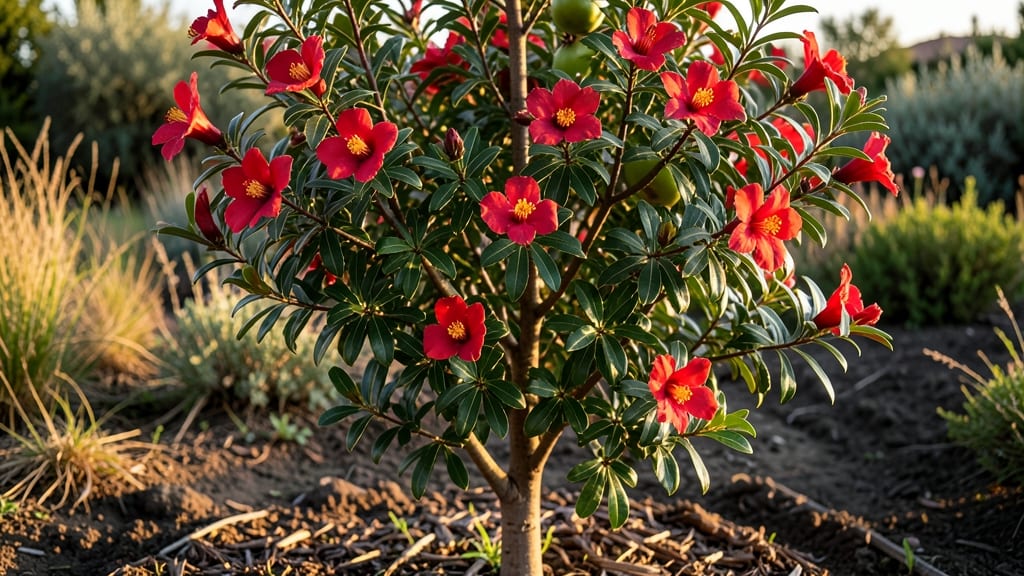
Pomegranates flower in late spring to early summer 🍇, but the exact timing shifts depending on your USDA zone—miss it by even a few weeks, and you could watch those showy blooms fade without ever seeing fruit.
If you’ve ever planted a pomegranate expecting instant drama, you know how disappointing it can be when the flowers don’t appear—or worse, they bloom but vanish overnight. The truth? These trees are finicky about timing, and their blooms arrive like clockwork once you know the rules.
In warmer zones like 9 or 10, expect flowers as early as April, while gardeners in cooler areas (Zone 7) might not see them until June.
The key? Chill hours in winter and consistent warmth in spring, both of which I’ll break down by region so you can predict your tree’s exact window.
Here’s what you’ll learn: how to read your climate’s cues, why some trees bloom late (or not at all), and the simple adjustments that guarantee vibrant flowers and a harvest of those jewel-like fruits by fall.
Pomegranate flowering timeline by USDA hardiness zones
Pomegranate trees (Punica granatum) are stunning ornamental plants that produce vibrant red flowers before their signature fruits develop. However, their flowering timeline varies dramatically depending on your USDA hardiness zone.
In warmer zones like Zone 10, blooms may appear as early as late winter, while gardeners in Zone 7 typically see flowers in late spring. Understanding these differences helps you anticipate—and even encourage—those show-stopping blooms.
Climate plays a critical role in pomegranate flowering. Heat waves can stress trees in Zones 9-10, delaying blooms, while late frosts in Zone 7 may damage emerging flowers. Additionally, younger trees (under 3 years old) often bloom sparingly compared to mature specimens.
Knowing your zone’s typical frost dates and temperature patterns helps you plan for the best flowering results.
Here’s a detailed breakdown of when to expect pomegranate flowers across USDA Zones 7-11, including key climate considerations for each region:
| USDA Zone | Typical Flowering Window | Climate Risks | Care Tip |
|---|---|---|---|
| Zone 7 | Late May – June | Late frosts after buds form | Mulch heavily in winter |
| Zone 8 | April – May | Unpredictable spring temps | Prune dead wood in early spring |
| Zone 9 | March – April | Heat stress in summer | Water deeply during droughts |
| Zone 10 | February – March | Prolonged dry spells | Use drip irrigation |
| Zone 11 | January – February | Salt buildup in soil | Flush soil with fresh water |
In Zone 7, where winters are colder, pomegranates often require chill hours (300–500 hours below 45°F) to trigger blooming. If your area experiences unusually warm winters, consider planting a dwarf variety like ‘Wonderful’ or ‘Eversweet’, which adapt better to fluctuating temperatures.
These varieties also produce flowers slightly earlier than standard types.
Gardeners in Zones 9-10 enjoy the advantage of earlier blooms, sometimes as early as January. However, these regions must contend with intense summer heat, which can cause flowers to drop before pollination.
To mitigate this, provide afternoon shade during peak heat months (July–August) and ensure consistent deep watering to prevent stress.
If you’re in Zone 11, where winters are nearly frost-free, pomegranates may bloom year-round in ideal conditions. However, salt buildup in soil from irrigation can stunt growth and reduce flowering. Use mulch to retain moisture and flush the soil annually with fresh water to remove excess salts.
Regardless of your zone, pruning in late winter (before buds swell) encourages stronger flowering. Remove dead or crossing branches to improve air circulation, which reduces the risk of fungal diseases that can weaken blooms.
For container-grown pomegranates, ensure pots have drainage holes and use a well-draining cactus/succulent mix to prevent root rot.
Pro tip: Track your local last frost date and plant pomegranates in a south-facing location to maximize sunlight exposure. In cooler zones (Zone 7), consider microclimate protection, like planting near a sunny wall or using row covers during late frosts to safeguard emerging flowers.
How to predict your pomegranate’s exact flowering window
Predicting when your pomegranate tree will bloom isn’t just guesswork—it’s a mix of science and local conditions. The flowering window depends on three key factors: your USDA zone, the tree’s age and maturity, and the chill hours it received over winter.
Younger trees (under 3 years) may bloom later or more sparsely, while mature trees (5+ years) typically flower reliably in late spring to early summer. For example, in Zone 9, blooms often appear in March–April, while Zone 7 gardeners usually see them in May–June.
Chill hours—those 40–70°F winter nights—are critical. Most pomegranates need 200–500 chill hours to trigger blooms. If your region skips winter cold snaps, your tree might delay flowering or produce fewer flowers.
For instance, a dwarf pomegranate in Zone 10 may bloom as early as February, while a standard tree in Zone 8 waits until April. Local weather patterns also play a role: early warm spells can confuse the tree, causing blooms to appear too soon and risk frost damage.
🌱 Key Factors for Predicting Pomegranate Blooms
- 📍 USDA Zone: Zones 7–11; earlier blooms in warmer zones (e.g., Zone 10: Feb–Mar, Zone 7: May–Jun).
- ❄️ Chill Hours: 200–500 hours below 45°F required; insufficient chill = delayed or no blooms.
- 🌿 Tree Age: Younger trees (1–3 yrs) bloom later; mature trees (5+ yrs) flower reliably.
- ☀️ Local Weather: Early warmth can trigger premature blooms; late frosts may damage buds.
- 💧 Watering: Reduce water in late winter to signal dormancy; increase in spring to support blooms.
- ✂️ Pruning: Prune in late winter to remove dead wood and encourage new growth for flowers.
To fine-tune your predictions, track your local last frost date and adjust care accordingly. For example, if your area typically sees frost in mid-April, hold off on heavy spring pruning until after that date to protect emerging buds.
Similarly, reduce winter watering in late fall to help the tree enter dormancy—this mimics natural conditions and ensures stronger blooms the following spring.
If you’re in a warmer zone (like Zone 10), your pomegranate might bloom earlier, so monitor for frost warnings and protect buds with frost cloth if needed.
Adjusting your watering schedule can also nudge your pomegranate into blooming on time. In late winter, reduce irrigation to encourage dormancy, then increase watering in early spring (about 1–2 gallons per week) to support bud development. Avoid overwatering, which can lead to root rot and stress the tree.
Pair this with a balanced fertilizer (like 10-10-10 NPK) in early spring to provide the nutrients needed for vibrant blooms. For container-grown pomegranates, ensure the pot has drainage holes and use a well-draining potting mix to prevent soggy roots.
Pruning plays a surprising role in bloom timing. Prune your pomegranate in late winter or early spring (just before buds swell) to remove dead or crossing branches. This not only improves airflow but also redirects the tree’s energy toward flower production.
Avoid heavy pruning in summer or fall, as this can stress the tree and delay next year’s blooms. For dwarf varieties, a light pruning to shape the tree can encourage more compact, flower-laden branches.
Remember, the goal is to open up the canopy so sunlight reaches the center, where many buds form.
If your pomegranate still isn’t blooming when expected, check for common issues like nutrient deficiencies (especially phosphorus for flowers) or pests like aphids that suck sap and weaken the tree.
In Zone 7 or colder, young trees may need winter protection, such as wrapping the trunk with burlap to prevent frost cracks. For Zone 10+, where chill hours are scarce, consider a chill-hour supplement like a refrigerator setup for potted trees during winter to meet their requirements.
With these strategies, you’ll not only predict your pomegranate’s flowering window but also create ideal conditions for a bountiful display of those striking red blooms. Keep a gardening journal to track bloom dates year after year—this helps you refine your approach and anticipate future cycles. Happy gardening! 🌷