
Orchid Care
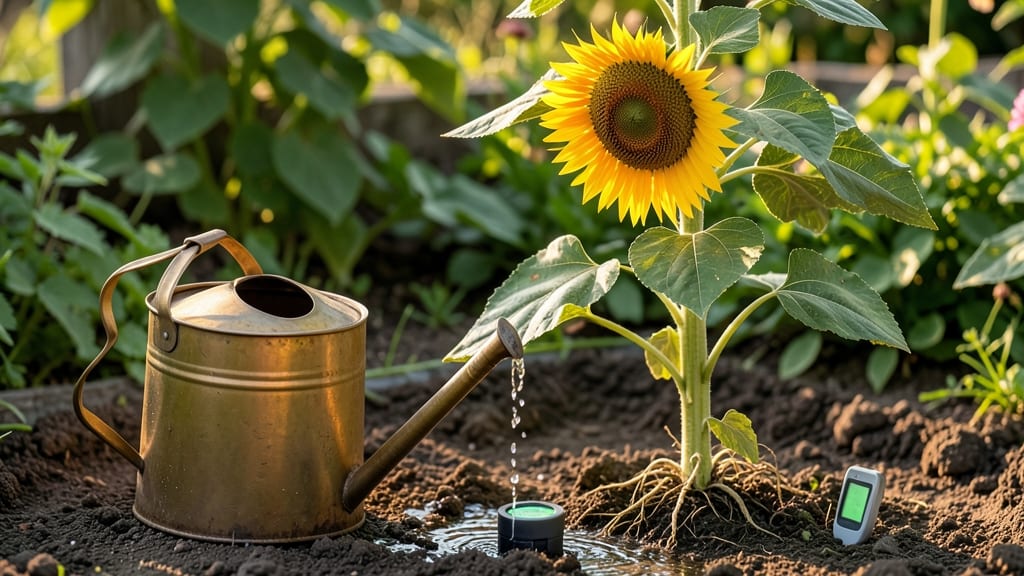
Giving sunflowers the right amount of water is the secret to growing those towering 🌻 stalks that reach for the sky.
Too little and your plants wilt before they bloom; too much and you risk rot that kills them before they mature. I’ve learned the hard way that sunflowers don’t just need water—they need deep, consistent hydration to build the strong roots that support their massive height.
From seedlings to fully grown giants, their water needs change dramatically. In this guide, you’ll learn exactly how much to water, when to adjust for heat or rain, and how to avoid the most common mistakes that leave sunflowers stunted or struggling.
Whether you’re a beginner or a seasoned gardener, mastering the art of watering will turn your garden into a vibrant display of sunflowers that thrive from soil to sky.
How much water do sunflowers need for optimal growth?
Sunflowers thrive with the right watering strategy, but their needs change dramatically from seedling to maturity. Too little water causes wilting and stunted growth, while overwatering leads to root rot and weak stems. The key is deep, infrequent watering that encourages strong root development—especially during their rapid growth phases.
As a gardener, I’ve learned that sunflowers are surprisingly drought-tolerant once established, but their early stages demand consistent moisture. Seedlings need daily attention, while mature plants can stretch their watering intervals.
Let’s break down the exact schedule you should follow for each growth stage to ensure your sunflowers reach their towering potential.
Here’s a quick reference for watering needs by stage—this will help you visualize the differences at a glance:
During the seedling stage (0-3 weeks), your sunflowers are most vulnerable. This is when you should water daily to maintain consistently moist soil.
I use a spray bottle for delicate seedlings, ensuring water reaches the roots without disturbing the soil. Overhead watering can lead to fungal issues, so aim for the base of the plant.
Once your sunflowers reach the vegetative growth phase (3-6 weeks), you can space waterings to every 2-3 days. The goal here is to encourage deep root development. I recommend using a soaker hose or drip irrigation to deliver water slowly and deeply.
Check soil moisture by sticking your finger 2 inches deep—if it’s dry, it’s time to water.
When your sunflowers enter flowering (6-10 weeks), they’ll demand more water as they channel energy into bud production. Water every 3-5 days, aiming for 6-8 inches deep.
This stage is critical—underwatering can cause buds to drop, while overwatering may lead to weak stems that snap under the weight of the blooms. I water in the early morning to reduce evaporation and fungal risks.
Mature sunflowers (10+ weeks) are the most drought-tolerant, but they still need deep watering every 7-10 days. At this point, focus on 8-12 inches of soil depth to support the plant’s massive root system.
If you notice the seed head drying prematurely, it’s a sign the roots aren’t getting enough water. Mulching around the base helps retain moisture and regulate soil temperature.
One common mistake I see is shallow watering, which only wets the top inch of soil. Sunflowers need deep hydration to develop strong taproots. To test, dig down with a trowel after watering—if the soil below 4 inches is dry, you’re not watering deeply enough.
Use a moisture meter for precision, especially in sandy soils that drain quickly.
Watch for these visual cues to adjust your watering: wilting leaves indicate underwatering, while yellowing lower leaves or mushy stems signal overwatering. If your sunflowers start leaning or the buds fail to open, it’s often a sign of inconsistent moisture.
Consistency is key—stick to your watering schedule and adjust based on weather conditions, like increased frequency during heatwaves.
Pro tip: Group sunflowers with other deep-rooted plants like corn or tomatoes to create a microclimate that retains moisture. And always water
Deep-watering techniques to prevent sunflower wilting
Sunflowers thrive when their roots dive deep into moist soil, but shallow watering leads to wilting and stunted growth. The key is deep-soil hydration—watering until moisture reaches 12-18 inches deep—to encourage strong root systems that support those towering stems.
I’ve learned that consistent deep watering is far more effective than frequent light sprinkles, which only wet the surface and leave roots thirsty.
Whether you’re using drip irrigation, a soaker hose, or a simple watering can, the goal is the same: saturate the soil without creating soggy conditions. Morning watering is ideal because it allows foliage to dry before evening, reducing fungal risks.
My sunflowers in clay soil needed 30 minutes of deep watering twice weekly, while sandy soil required more frequent but shorter sessions.
How to Deep-Water Sunflowers Like a Pro
- Step 1: Water early morning (6-9 AM) to avoid evening moisture. Use a watering wand or hose with a gentle spray nozzle to control flow.
- Step 2: Insert a soil probe (or screwdriver) near the plant. Water until moisture reaches 12-18 inches deep—this takes 10-30 minutes depending on soil type.
- Step 3: For drip irrigation, place emitters 6-12 inches from stems and run for 1-2 hours to ensure deep saturation. Adjust flow based on soil drainage.
- Step 4: Use a moisture meter (like the Xiaomi Mi Flower Care) to check soil moisture. Aim for 40-60% moisture at root level—never soggy.
- Step 5: Mulch heavily (3-4 inches of straw or wood chips) to retain moisture and prevent surface evaporation. Replenish mulch every 4-6 weeks.
- Step 6: Adjust frequency by season: every 2-3 days in summer, every 5-7 days in fall. Seedlings need daily shallow watering until established.
One of my biggest mistakes was relying on visual wilting to gauge water needs. By the time leaves droop, roots are already stressed. Instead, I now check soil moisture daily during heatwaves.
A simple trick: squeeze a handful of soil—if it crumbles easily, water; if it stays clumpy, wait. Overwatering is just as harmful as underwatering, leading to root rot and yellowing leaves.
For container-grown sunflowers, I’ve found self-watering pots with drainage holes work wonders. Fill the reservoir every 2-3 days in summer, ensuring water reaches the bottom. Avoid saucers that trap excess water—sunflowers hate wet feet! Terracotta pots dry out faster than plastic, so adjust your schedule accordingly.
Pro tip: Group sunflowers with thirsty companions like beans or corn to create a microclimate that retains moisture longer.
My 3-foot-tall ‘Teddy Bear’ variety thrived when planted near zucchini plants, which shared the same watering needs. Deep watering isn’t just a technique—it’s a relationship between your plants and the soil.
Remember, sunflowers are resilient once established. With deep-soil hydration, they’ll reward you with vibrant blooms and towering stems that seem to touch the sky. Start with these techniques, and soon your garden will be a sunflower sanctuary where every plant stands tall and proud. 🌻