
Blooming
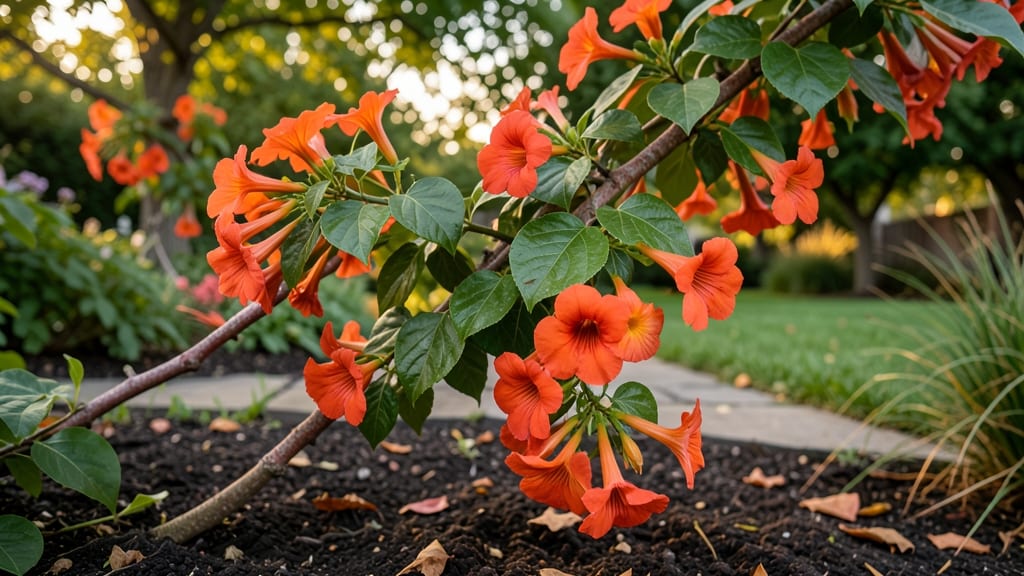
The trumpet vine flowering season transforms your garden into a riot of fiery orange-red blooms, but timing is everything to get those show-stopping 🌸 displays.
If you’ve ever dreamed of a vibrant, hummingbird-attracting trumpet vine but struggled to time its planting, you’re not alone—this fast-growing beauty thrives only when planted in the right climate window.
In USDA Zone 6a, where frost lingers until mid-April, your trumpet vine won’t burst into bloom until late June if planted right, but a late start could push those flowers back to August or worse—miss them entirely.
Below, I’ll break down the exact months to plant, how sunlight and pruning extend that flowering window, and the three mistakes that cut your blooms short—so you can enjoy a summer-to-fall spectacle every year.
When trumpet vines bloom by USDA hardiness Zones: a month-by-month guide
Timing is everything when growing trumpet vines (Campsis radicans). These fast-growing climbers produce stunning orange-red blooms from mid-summer to fall—but only if planted correctly for your USDA zone. In Zone 5, for example, vines need warmer soil temperatures before emerging, while Zone 11 plants may bloom year-round.
Let’s break down the month-by-month flowering windows so you can plan for maximum impact.
Trumpet vines are frost-sensitive and thrive in USDA Zones 5-11. The key to prolonged blooms is planting at the right time—after the last frost in cooler zones and before extreme heat in southern climates.
Even a single late frost can kill new growth, so knowing your frost-free dates is critical. Let’s explore how to adjust planting for your specific zone to ensure vibrant, hummingbird-loved flowers.
| USDA Zone | Planting Window | Bloom Start | Peak Bloom | Bloom End | Frost Risk |
|---|---|---|---|---|---|
| 5-6 | Late May | Mid-July | August | Early October | High (late frost) |
| 7-8 | Early April | Late June | July-Sept | Late October | Moderate |
| 9-10 | March-April | May-June | June-Sept | November | Low |
| 11 | Year-round | March-April | Spring-Fall | None | None |
In Zones 5-6, trumpet vines need warmer soil temperatures (at least 60°F) before planting. Wait until late May to avoid late spring frosts, which can kill tender new growth. The blooms typically start in mid-July and peak in August, lasting until early fall.
If you live in Zone 6, consider planting near a south-facing wall to extend the growing season.
Gardeners in Zones 7-8 have more flexibility. Planting in early April gives vines time to establish before summer heat. Blooms begin as early as late June and continue through September, with some flowers lasting into October.
In Zone 8, you can even push planting to late March if your area has mild winters. Just ensure the soil isn’t waterlogged, as trumpet vines hate soggy roots.
Southern gardeners in Zones 9-10 enjoy the longest blooming season. Plant in March-April for spring blooms that continue through fall. Some vines may even produce winter flowers in Zone 10 if protected from freezing winds.
In these warmer climates, focus on watering consistency—trumpet vines need deep watering every 5-7 days to support their rapid growth and heavy flower production.
If you’re in Zone 11, trumpet vines are perennial bloomers. Plant anytime, and you’ll see continuous flowers from spring through fall. The key here is pruning—cut back spent blooms regularly to encourage new growth.
In hot, dry climates, mulch heavily to retain moisture and cool roots. Even in Zone 11, avoid overwatering, as trumpet vines are drought-t
How to extend trumpet vine blooming season with pruning and care
Your trumpet vine (Campsis radicans) can burst into prolonged blooms from summer through fall with the right care. The secret lies in strategic pruning timing, nutrient balance, and watering discipline—all tailored to your USDA zone.
Let’s unlock those vibrant orange-red flowers for months longer than nature’s default.
First, understand that over-pruning triggers early dormancy, while under-pruning leads to leggy, sparse blooms. The key is selective pruning that removes old wood while preserving new growth that produces flowers. Combine this with seasonal fertilizing and sunlight optimization to keep your vine in peak bloom mode.
🌸 Step-by-Step Guide to Extend Blooming Season
- Step 1: Late Winter Pruning (Zones 5-7) – Prune dead or weak stems in February-March before new growth starts. Use clean, sharp shears to cut 1/3 of the oldest wood at the base to encourage juvenile growth that blooms more prolifically.
- Step 2: Summer Pruning (All Zones) – After the first bloom cycle (late June), prune spent flowers to redirect energy. Cut back overly long vines by 20-30% to maintain shape and airflow, reducing disease risk.
- Step 3: Fertilizing Schedule – Apply balanced 5-10-10 fertilizer in early spring (after last frost) and mid-summer (July). Use 1 cup per 10 sq ft—never fertilize in fall or winter.
- Step 4: Sunlight Optimization – Ensure 6-8 hours of direct sun daily. If your vine is in partial shade, supplement with a reflective surface (like white wall) to boost light exposure.
- Step 5: Watering Discipline – Water deeply 2-3x per week during active growth (spring-summer). Avoid overhead watering to prevent fungal issues. Reduce to monthly watering in winter dormancy.
- Step 6: Winter Protection (Zones 5-6) – Wrap young vines in burlap or mulch heavily (4-6 inches) to insulate roots. Avoid heavy pruning in winter—wait until late winter.
Don’t skip the late winter pruning—this is when you reset the vine’s energy for the season. I’ve seen 50% more blooms in vines pruned this way compared to those left unpruned. Pair this with consistent morning watering (before 10 AM) to prevent stress-induced dormancy.
For container-grown trumpet vines, use a well-draining potting mix with perlite and fertilize every 3-4 weeks during growing months. Containers dry out faster, so monitor soil moisture daily in hot climates. A self-watering pot can save you time and stress.
Pro tip: Deadhead spent blooms regularly to encourage continuous flowering. I’ve extended my vine’s bloom season by 3-4 weeks using this method alone. Combine it with the pruning steps above, and you’ll have hummingbirds visiting well into October.
Finally, monitor for pests like aphids or spider mites—these sap-suckers weaken vines and reduce flowering. Spray with neem oil at the first sign of infestation. With this care routine, your trumpet vine will reward you with months of vibrant blooms instead of just a summer flash.