
Plants
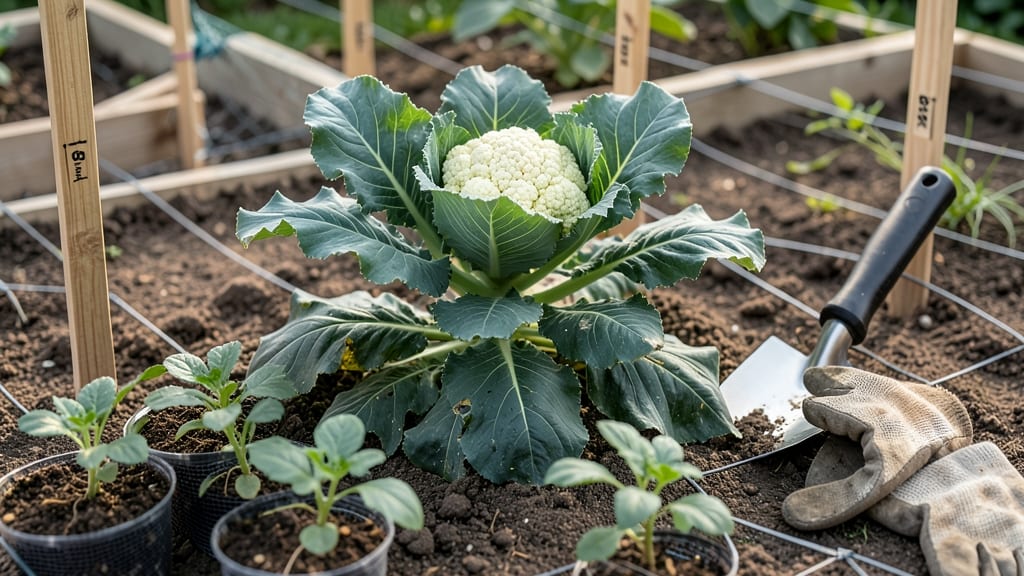
Spacing cauliflower plants properly is the one move that decides whether your 🥬 heads grow tight and heavy or stay small and loose.
Picture this: you’ve just planted your seedlings, dreaming of those perfect, snow-white curds. But if they’re too close, they’ll fight for nutrients, leaving you with stunted, bitter heads.
Too far apart, and you waste garden space. The 18-inch rule is your secret weapon—it’s how pros get the biggest, most uniform harvests.
Why does spacing matter so much? Because cauliflower thrives on airflow and sunlight. Crowd them, and you invite rot and pests. Give them room, and they’ll reward you with heads that fill out like a cloud.
Plus, different varieties need different distances—compact types like ‘Snowball’ can huddle closer, while giants like ‘Cheddar’ need extra elbow room.
In this guide, I’ll break down the exact spacing you need for your garden, how to adjust for your climate, and the three mistakes that shrink your harvest before it even starts. Ready to grow cauliflower like a pro?
Why 18 inches between cauliflower plants maximizes yield and head size
If you've ever planted cauliflower only to end up with small, loose heads or disease-ridden crops, the issue might be your plant spacing.
The 18-inch rule isn't just a random number—it's a science-backed approach to give each plant enough room to grow dense, uniform heads while preventing competition for nutrients and sunlight. When cauliflower plants are too close, they fight for resources, leading to stunted growth and poor head formation.
The ideal spacing of 18 inches apart in rows and 24-30 inches between rows creates a balance. This spacing allows for proper airflow, which is critical for preventing fungal diseases like downy mildew and clubroot.
Without adequate airflow, moisture lingers on leaves, creating the perfect environment for pathogens to thrive. Additionally, proper spacing ensures that each plant has enough root space to access water and nutrients efficiently.
In cooler climates, where cauliflower thrives, this spacing works perfectly because the plants grow more slowly and don't outcompete each other as quickly. However, in warmer regions, where growth is faster, you might need to adjust slightly.
For example, in USDA Zone 9 or 10, where heat accelerates growth, you could increase spacing to 20 inches between plants to give them more room to develop larger heads before the heat stress sets in.
Another key benefit of proper spacing is head uniformity. When plants are crowded, the outer heads form normally, but the inner ones become small, misshapen, or loose. This is because the center plants don't receive enough light or nutrients.
By spacing them correctly, you ensure that every head has the same opportunity to grow tight and compact, which is what makes cauliflower so appealing in the kitchen.
One of the most common mistakes I see in home gardens is underestimating the importance of row spacing. Many gardeners focus on the distance between plants in a row but forget that 24-30 inches between rows is just as critical.
This spacing allows you to easily move between rows for weeding, watering, and harvesting without disturbing the plants. Tight rows can lead to soil compaction and poor root development, further stressing the plants.
In small gardens or containers, you might be tempted to plant cauliflower closer together to fit more plants in. However, this often backfires because the plants compete for resources, leading to smaller, less flavorful heads.
If you're working with limited space, consider interplanting with fast-growing crops like lettuce or radishes, which can be harvested before the cauliflower needs the space. This way, you maximize your garden's productivity without sacrificing the quality of your cauliflower.
Another factor to consider is the variety of cauliflower you're growing. Some varieties, like 'Snowball Y Improved', are more compact and can tolerate slightly closer spacing (around 16 inches apart).
On the other hand, larger varieties like 'Cheddar' or 'Romanesco' need the full 18-20 inches to develop their massive, intricate heads. Always check the seed packet or plant tag for specific spacing recommendations tailored to the variety you've chosen.
Proper spacing also plays a role in harvest timing. When plants are spaced correctly, they mature at a similar rate, allowing you to harvest them all at once. This is especially useful if you're planning to preserve or cook a large batch of cauliflower.
If your plants are crowded, some heads may mature earlier than others, leading to a staggered harvest and potential waste if you can't
Common mistakes that shrink cauliflower heads (and how to fix them)
Even with perfect soil and sunlight, cauliflower plants can still produce small, underdeveloped heads if you don't nail the spacing. Overcrowding forces plants to compete for nutrients, while spacing them too far apart wastes garden space.
The key is finding that sweet spot where each plant has room to develop a large, tight head without sacrificing yield.
I've seen gardeners struggle with uneven rows, poor soil prep before planting, and ignoring variety-specific spacing needs—all of which directly impact head formation. Let's break down the most common mistakes and how to fix them before your next planting season.
⚠️ Spacing Errors That Shrink Heads
Mistake 1: Planting closer than 12 inches – Causes stunted growth and disease from poor airflow.
Mistake 2: Uneven rows – Creates gaps where weeds thrive and uneven sunlight exposure.
Mistake 3: Skipping soil prep – Compacted or nutrient-poor soil forces plants to fight for resources.
Fix: Use a 18-inch spacing between plants in rows spaced 24-30 inches apart.
One of the biggest problems I see is overcrowding in small gardens. When cauliflower seedlings are planted too close—often just 6-9 inches apart—they become nutrient-deprived and develop small, loose heads.
This happens because each plant fights for sunlight, water, and soil nutrients, leading to stunted growth. The result? You end up with baby-sized heads that never reach their full potential.
Another common error is uneven rows. Many gardeners eyeball their spacing, leading to some plants getting too much sunlight while others sit in shade. This inconsistency causes uneven head formation, where some plants produce large heads while others remain stunted.
Use a measuring tape or string lines to ensure straight, evenly spaced rows for consistent growth.
Don't forget about soil preparation before planting. If you skip amending your soil with compost or organic matter, your cauliflower plants won't have the nutrients they need to develop properly. Poor soil prep forces plants to compete aggressively for resources, leading to smaller heads and weaker stems.
Always test your soil pH (aim for 6.0-7.0) and add well-rotted compost before planting.
For compact varieties like 'Snowball Y Improved,' you can reduce spacing to 12-15 inches between plants, but even these benefit from proper row spacing. Meanwhile, large varieties like 'Cheddar' need the full 18-inch spacing to develop their signature giant heads. Always check the seed packet for variety-specific recommendations.
Finally, remember that climate matters. In cooler regions, you can space plants slightly closer (15 inches) because slower growth reduces competition. In warmer climates, give them extra room (up to 24 inches) to prevent stress from heat.
With the right spacing, you'll see larger, tighter heads ready for harvest in no time! 🥬