
Planting
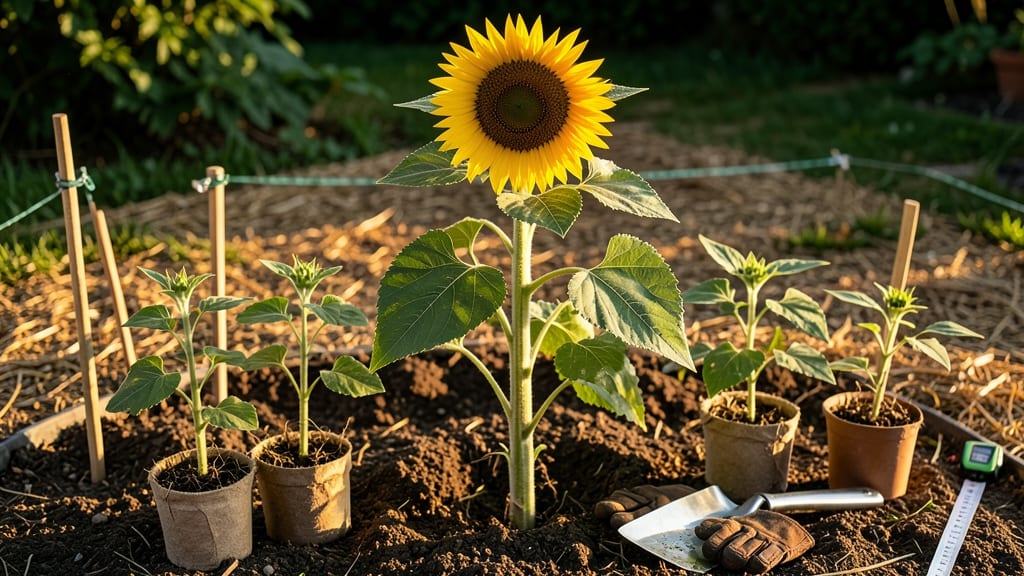
Spacing mammoth sunflowers correctly ensures those towering 🌻 blooms reach their full potential without fighting for resources.
Picture this: You’ve waited all spring for your mammoth sunflowers to burst into glory, only to find them leaning, struggling, or worse—toppling over like overgrown weeds. The fix? Proper spacing from day one.
It’s not just about fitting them into your garden; it’s about giving them room to grow strong stems, vibrant blooms, and the energy to reach 10–14 feet tall.
Too close, and you’ll end up with weak stems, stunted growth, and a higher risk of disease. Too far apart, and you’ll waste space that could be filled with thriving plants. The sweet spot? 18–36 inches between plants, depending on your soil and sunlight.
But here’s the kicker: spacing isn’t one-size-fits-all. Soil type, sunlight, and even your garden’s layout play a role in how much room these giants truly need.
In this guide, I’ll walk you through the exact spacing rules for mammoth sunflowers, common mistakes to avoid, and creative strategies to maximize your yield—even in small gardens. Let’s get those sunflowers standing tall and proud!
Optimal mammoth sunflower spacing: how far apart should they be?
Growing mammoth sunflowers is like nurturing a skyscraper in your garden—but if you crowd them, you’ll end up with weak stems, stunted blooms, and a tangled mess. The secret to towering, healthy sunflowers lies in spacing.
Mammoth varieties need ample room to develop their 10-14 foot stems and giant blooms (up to 12 inches wide!). Proper spacing ensures strong stems, vibrant flowers, and fewer pests.
Most gardeners default to the 18-36 inch spacing range for mammoth sunflowers, but the exact distance depends on your variety, soil type, and climate. For example, 'Russian Giant' needs 36 inches apart for its massive 14-foot stems, while 'Autumn Beauty' can handle 18-24 inches.
Container growing? Cut spacing to 12-18 inches with deeper pots (at least 18 inches deep).
Here’s the golden rule: Soil fertility and sunlight exposure directly impact how much space your sunflowers need. In poor soil, plants compete aggressively for nutrients, so increase spacing to 36 inches.
In rich, well-drained soil, you can reduce it to 24 inches. Meanwhile, dry climates require wider spacing (30+ inches) to prevent moisture competition.
| Factor | Optimal Spacing (Inches) | Notes |
|---|---|---|
| Standard Varieties (e.g., 'Mammoth Russian') | 30-36 | Tallest stems; needs max airflow |
| Mid-Size Varieties (e.g., 'Autumn Beauty') | 18-24 | Balanced height; good for borders |
| Container Growing (18"+ pots) | 12-18 | Use dwarf varieties; prune lower leaves |
| Poor Soil or Drought Conditions | 30-36 | Reduces competition for water/nutrients |
| Rich Soil with Fertilizer | 18-24 | Supports denser planting without crowding |
| Row Spacing (Between Rows) | 24-36 | Allows airflow and easy access for care |
Why does spacing matter so much? Crowded sunflowers develop weak stems that snap in wind or rain, and their blooms stay small due to nutrient competition.
In my Zone 6a garden, I once planted 'Russian Giants' just 12 inches apart—resulting in 8-foot stems with 6-inch blooms instead of the expected 14-foot giants. The fix? Thinning to 30 inches the following year doubled their height and bloom size!
For in-ground planting, use a trowel or spacing guide to mark rows. Plant seeds 1 inch deep and thin seedlings to your target spacing once they’re 4-6 inches tall.
In containers, limit to one mammoth sunflower per 18"+ pot—these plants are heavy! Use a support stake early to prevent toppling as they grow.
Pro tip: Stagger your planting by 2-3 weeks if you’re growing multiple rows. This creates a natural succession of blooms and prevents overcrowding at peak growth.
In my urban garden, I planted two rows of 'Autumn Beauty' with 18-inch spacing and 24-inch row spacing—the staggered timing kept them from competing for sunlight.
Watch for these red flags that your sunflowers are too close: yellowing leaves, leaning stems, or small, sparse blooms. If you spot these, thin immediately or transplant seedlings to wider spacing. Remember, mammoth sunflowers are sun worshippers—give them room to reach for the sky!
Finally, consider your companion plants. Pair mammoth sunflowers with shallots or borage (which deter pests) or marigolds (which improve soil). Avoid planting near potatoes or tomatoes, as they compete for the same nutrients.
With the right spacing, your mammoth sunflowers will reward you with dramatic, sun-drenched blooms that turn every garden into a showstopper.
🌻
Common spacing mistakes that stunt mammoth sunflower growth
Overcrowding your mammoth sunflowers might seem harmless, but it’s the fastest way to turn your towering dreams into a tangled mess. When plants compete for nutrients, water, and sunlight, they develop weak stems that snap under their own weight or produce smaller blooms than their full potential.
The worst part? These issues often show up too late to fix easily.
Even experienced gardeners make spacing mistakes, like assuming "more plants = more blooms" or ignoring how quickly sunflowers grow. A 12-inch gap at planting can become a 6-inch nightmare by summer, leaving you scrambling to salvage your garden.
The key is understanding how spacing affects stem strength, disease resistance, and even pollination success.
These 3 red flags mean your mammoth sunflowers are too close:
- 🌿 Yellowing leaves (nutrient starvation from competition)
- 🪴 Leaning stems (reaching for sunlight, risking breakage)
- 🌧️ Fungal spots (poor airflow = disease hotspots)
Fix it now: Thin plants to 18-24 inches apart and stake remaining stems to prevent snapping.
One of the biggest mistakes is planting in rows too close together. Many gardeners follow old guidelines meant for dwarf varieties, giving mammoth sunflowers only 12 inches of space.
This forces their roots to compete aggressively, leading to stunted growth and pale, weak stems that can’t support their own weight. Even worse, crowded plants develop shallow root systems, making them vulnerable to drought and wind damage.
Another common error is ignoring mid-season growth. Sunflowers can grow 3-4 inches per week in ideal conditions, so that "plenty of space" you gave them at planting can disappear fast.
By mid-summer, what looked like a 2-foot gap might shrink to 1 foot as leaves spread. To prevent this, monitor your plants weekly and thin them if stems start touching.
If you’re growing mammoth sunflowers in containers or small gardens, spacing mistakes are even costlier. Cramming too many plants into a pot forces them to compete for water, leading to root rot from overwatering or wilting from underwatering.
The solution? Limit to 1 plant per 5-gallon container and use trellises to save space while keeping stems upright.
Don’t wait until your sunflowers are leaning like drunken skyscrapers to fix spacing issues. The best time to act is now—whether you’re planting new seeds or salvaging an overcrowded patch.
Thin your plants early, stake them properly, and give them the 18-36 inches of space they crave. Your future blooms will thank you with giant, healthy flowers that steal the show.