
How To
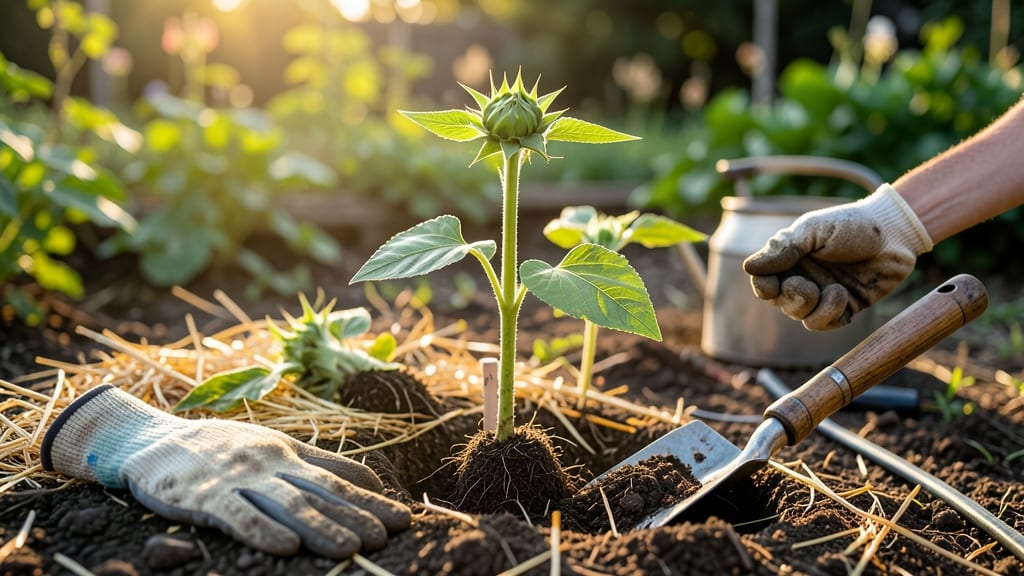
To plant a sunflower seedling correctly means giving it the best shot at reaching 10 feet or taller—and avoiding the heartbreak of a floppy, weak stem. You’ve nurtured those little sprouts indoors, but now comes the critical moment: transplanting them into the soil.
One wrong move, and your sunflower could struggle to stand, leaving you with a sad, drooping 🌻 instead of the towering beauty you envisioned.
Timing is everything—planting too early risks frost damage, while waiting too long can stunt growth. In Zone 6a, aim for April to May, after the last frost, when the soil is warm and workable.
But even the right timing won’t save you if you bury the seedling too deep or crowd it with neighbors. The secret to strong, sturdy sunflowers lies in the details: depth, spacing, and support.
You’ll learn exactly how deep to plant those seedlings—1 to 2 inches is ideal—and how far apart to space them for maximum airflow and sunlight.
We’ll also cover the best ways to support them as they grow, because even the hardiest sunflower needs a little help reaching for the sky. With the right technique, your seedlings won’t just survive—they’ll thrive, growing tall and proud for all to admire.
From soil prep to watering tips and troubleshooting common issues like wilting or pests, this guide gives you everything you need to set your sunflowers up for success. Let’s get those seedlings in the ground the right way—so you can enjoy a summer full of bright, happy blooms.


Optimal sunflower seedling planting depth and spacing for maximum growth
Sunflower seedlings need the right start to grow into those towering giants we all admire. The secret lies in two critical factors: planting depth and spacing.
Too shallow or crowded, and your sunflowers will struggle—too deep or spread out, and you’ll waste space. Let’s get this right from the beginning.
When planting sunflower seedlings, the ideal depth is 1-2 inches below soil level. This ensures strong root development without risking rot. Deeper planting can suffocate young roots, while shallow planting leaves them exposed to drying winds and temperature swings.
For spacing between plants, aim for 12-24 inches apart, depending on your sunflower variety. Dwarf varieties can handle the closer end of this range, while standard and giant varieties need the full 24 inches to prevent competition for nutrients and sunlight.
Now, let’s talk row spacing. Space your rows 2-3 feet apart to allow for easy access and airflow. Proper spacing isn’t just about aesthetics—it’s about giving your sunflowers room to develop strong stems and avoid fungal diseases that thrive in crowded, humid conditions.
If you’re growing giant sunflower varieties, like Mammoth or Russian Giant, give them extra space—up to 36 inches apart. These varieties can reach 12-15 feet tall, and their massive seed heads need room to develop without bending or breaking under their own weight.
For container gardening, use large pots (at least 12 inches wide and deep) and plant one seedling per container. This mimics the spacing requirements while working within limited space. Just ensure your container has drainage holes to prevent waterlogging.
After planting, gently water the soil to settle seedlings in place. Avoid overwatering, which can lead to root rot, but keep the soil consistently moist until seedlings are established. Mulching around the base with straw or wood chips helps retain moisture and suppress weeds.
One common mistake is planting sunflower seedlings too close together to save space. While this might work for dwarf varieties, it often results in weak, leggy stems that struggle to support the weight of the flower heads.
Proper spacing ensures each plant gets the nutrients and sunlight it needs to grow strong.
Finally, consider your sunflower variety when planning spacing. Dwarf varieties like Teddy Bear can thrive in tighter spaces, while tall varieties need room to stretch toward the sky. Always check the seed packet for specific recommendations to tailor your approach.
Step-by-step guide: when and how to transplant sunflower seedlings
Transplanting sunflower seedlings at the right time and with the right technique is the secret to those towering, healthy stalks you dream of. The key? Timing after last frost and gentle handling to avoid shocking delicate roots.
I’ve transplanted hundreds of seedlings—here’s my foolproof method that’s saved more than a few wilted dreams.
Sunflowers thrive when moved outdoors after your local last frost date, typically mid-April to early May in most U.S. zones. Check your USDA zone (like Zone 6a) and wait until soil temps hit at least 55°F (13°C).
Cold soil shocks roots, stunting growth. I always test by pressing my finger into the soil—if it feels cool but not freezing, it’s ready!
-
1. Harden Off Seedlings
Move seedlings outdoors for 3-5 days in partial shade. Start with 1-2 hours, then gradually increase to full sun exposure. This toughens stems and prevents transplant shock. -
2. Prep the Soil
Choose a sunny, well-draining spot with 6+ hours of sunlight. Loosen soil to 12 inches deep and mix in 2 inches of compost for nutrients. Sunflowers hate soggy roots! -
3. Dig Holes Gently
Space holes 12-24 inches apart (check your variety—dwarf types need 12 inches, giants 24 inches). Dig holes twice as wide as the root ball but only 1 inch deeper than the container level. -
4. Remove Seedlings Carefully
Water seedlings 1 hour before transplanting to keep roots moist. Tip containers sideways and slide seedlings out—never pull by stems! Shake off excess soil to check for root-bound plants (if roots circle, loosen gently). -
5. Plant at the Right Depth
Place seedlings so the soil line matches the container line. Press soil lightly around roots but don’t compact—sunflowers need air pockets for root expansion. Water immediately to settle soil. -
6. Add Support Early
Insert 3-foot stakes or cage supports now to prevent lodging (falling over) later. Tie stems loosely with soft cloth strips—tight ties strangle stems as they grow! -
7. Water Deeply & Mulch
Give each plant 1 gallon of water to encourage root growth. Top with 2 inches of mulch (straw or grass clippings) to retain moisture and suppress weeds. Avoid mulching too close to stems—keep it 3 inches away.
After transplanting, watch for wilting leaves—this is normal for the first 24-48 hours as roots adjust. If leaves stay droopy beyond 48 hours, your seedlings may be underwatered or shocked. Give them another deep watering and shade them with a cloth cover for a day or two.
Pro tip: I always transplant sunflowers on a cloudy day to reduce stress from direct sunlight. If you must transplant in full sun, do it in the late afternoon so seedlings have time to recover overnight. Within a week, you’ll see new growth—proof your hard work paid off!
Remember, sunflowers are fast growers but need consistent care in those first weeks. With this method, your seedlings will establish strong roots and reach for the sky—literally! Soon, you’ll be harvesting those giant, sun-drenched blooms you’ve been dreaming of. 🌻