
Flowers
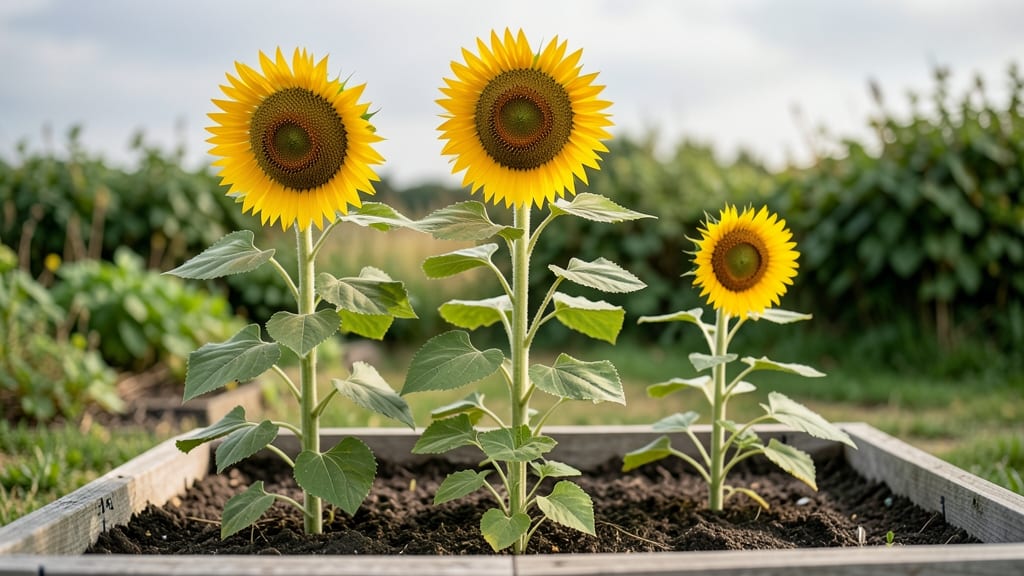
Growing sunflowers per square foot means balancing space for their towering stems and vibrant blooms—too close, and you’ll end up with weak, tangled plants instead of the striking 🌻 displays you dream of.
Sunflowers aren’t just beautiful—they’re powerhouses of growth, but cramming too many in your garden can turn towering stems into tangled disasters. Get the spacing right, and you’ll harvest vibrant blooms year after year without the struggle.
Most gardeners assume one plant per square foot works for all varieties, but dwarf sunflowers thrive with 2-3 plants per square foot, while giants like Russian Mammoth need 1 plant per 2-3 square feet to stand tall and proud.
Below, I’ll break down the exact spacing rules by sunflower type, how to adjust for soil and climate, and creative planting tricks to maximize your garden’s potential—no overcrowding, no wasted space.
Optimal sunflower spacing by variety: giant vs. dwarf vs. standard
Sunflowers thrive when given room to stretch their towering stems toward the sun—but crowding turns vibrant blooms into weak, leaning stalks. The key to success? Variety-specific spacing that balances sunlight, air circulation, and root growth.
Whether you're growing Mammoth sunflowers that reach skyscraper heights or Teddy Bear dwarf varieties perfect for containers, precise spacing prevents competition and ensures every plant gets the nutrients it needs.
Most gardeners focus on square footage, but the real magic happens in the height-to-spacing ratio. Tall varieties need wide berths to avoid toppling, while dwarf sunflowers can huddle closer without issues. Even soil depth plays a role—deep-rooted giants need loose, aerated soil to support their weight.
Let’s break down the exact spacing rules for each type, so you can design a sunflower garden that’s both aesthetically stunning and structurally sound.
| Variety | Height Range | Spacing (ft) | Plants/Sq Ft | Soil Depth Needs |
|---|---|---|---|---|
| Giant (Mammoth, Russian Giant) | 12–16 ft | 3–4 ft apart | 1 per 9–16 sq ft | 18+ inches deep |
| Standard (Autumn Beauty, ProCut) | 6–10 ft | 2–3 ft apart | 1 per 4–9 sq ft | 12–18 inches deep |
| Dwarf (Teddy Bear, Little Becka) | 1–3 ft | 1–1.5 ft apart | 4–9 per sq ft | 6–12 inches deep |
| Semi-Dwarf (Moulin Rouge, Giant Single) | 3–6 ft | 1.5–2 ft apart | 2–4 per sq ft | 12–15 inches deep |
For giant sunflowers like Mammoth or Russian Giant, spacing them 3–4 feet apart isn’t just a suggestion—it’s a necessity. These varieties can grow taller than a two-story house, and their deep taproots need room to anchor. Planting them too closely leads to stem weakness and blight from poor air circulation.
I once grew Mammoths just 2 feet apart, and by midsummer, half had toppled over like drunk giants. The lesson? Follow the spacing guidelines, or risk ending up with a sunflower jungle instead of a sunflower forest.
On the opposite end of the spectrum, dwarf sunflowers like Teddy Bear or Little Becka are the perfect solution for small spaces, containers, or cutting gardens. You can pack 4–9 plants per square foot without issues, thanks to their compact stature and shallow roots.
These varieties thrive in 6–12 inches of soil depth, making them ideal for raised beds or window boxes. My balcony garden features a mix of Teddy Bears and nasturtiums, and the dwarf sunflowers bloom nonstop from July to frost—no overcrowding, no drama.
Standard sunflowers, like the classic Autumn Beauty or ProCut varieties, strike a balance with 2–3 feet of spacing. This gives them enough room to grow 6–10 feet tall while preventing competition for sunlight. I recommend planting them in staggered rows to maximize sunlight exposure for each plant.
For example, place one row north-to-south, then offset the next row by 1.5 feet. This trick ensures every sunflower gets its full 6–8 hours of sunlight, even in dense plantings.
One common mistake I see is ignoring soil depth when spacing sunflowers. Giant varieties need 18+ inches of loose, well-draining soil to support their massive roots. If your soil is heavy clay, amend it with compost or sand before planting.
For dwarf varieties, even 6–12 inches of soil works, but avoid planting them in shallow containers where roots can’t spread. Pro tip: Use a soil probe to check depth before planting—it’s a game-changer for heavy soils.
Another pro move? Thin seedlings early to maintain proper spacing. Many gardeners plant seeds too densely, hoping to thin later, but sunflower seedlings are competitive from day one. If you’re growing giants, thin to one seedling per 12-inch circle once the first true leaves appear.
For dwarfs, you can keep 2–3 seedlings per square foot initially, then thin to the strongest plants. This prevents overcrowding and ensures each plant has the resources it needs to thrive.
For container gardening, dwarf varieties are your best bet. A 5-gallon pot can comfortably hold 1–
How to adjust sunflower spacing for soil type and climate
Your sunflowers’ spacing isn’t one-size-fits-all—soil type and climate play huge roles in how much room each plant needs. In sandy soil, roots spread quickly, so you can plant 1-2 sunflowers per square foot for dwarf varieties.
But in clay-heavy soil, roots struggle to penetrate, so space them 1 plant per 2 square feet to prevent competition.
Climate matters too: In hot, dry regions like the Southwest, wider spacing (2-3 square feet per plant) helps conserve moisture. Meanwhile, in cooler, wetter zones like the Pacific Northwest, you can plant slightly closer (1.5 square feet per plant) since water isn’t a limiting factor.
Here’s how to adjust spacing based on your growing conditions:
If your sunflowers start leaning or developing weak stems, it’s a sign they’re overcrowded. Thin seedlings to the recommended spacing within 2-3 weeks of germination to avoid stunted growth. In high-wind areas, increase spacing by 20-30% to prevent stems from snapping.
For container gardening, use 1 sunflower per 5-gallon pot with well-draining soil. In raised beds, space dwarf varieties 1 plant per square foot but increase to 1.5 square feet for standard types to allow airflow and reduce fungal risks.
Pro tip: Test your soil’s drainage by digging a hole, filling it with water, and timing how long it takes to drain. If it takes more than 6 hours, amend with sand or perlite to improve spacing efficiency.