
Blooming
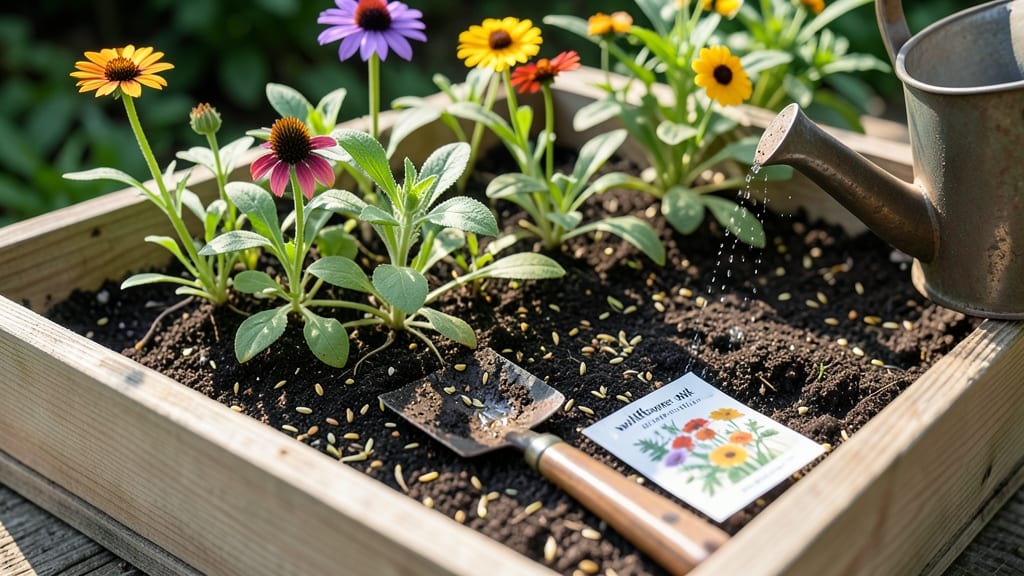
Wildflowers take anywhere from 5 days to 4 weeks to sprout, depending on the seed type and growing conditions — and yes, that range can feel maddeningly vague until you know the tricks.
Picture this: you’ve scattered your 🌼 wildflower seeds in early spring, watered them gently, and now you’re staring at bare soil, wondering if they’re ever coming up.
The truth? Some varieties like cosmos pop up in just a week, while others, like black-eyed Susans, play the waiting game for a full month.
What you can control is the soil temperature, moisture, and even how deep you plant them. A little prep work—like scarifying hard seed coats or chilling seeds for stratification—can shave days (or even weeks) off that sprouting timeline.
In this guide, I’ll break down the fastest and slowest wildflower species, the critical factors that speed up germination, and exactly what to do if your seeds seem stuck in limbo. No more guessing—just actionable steps to get those first green shoots breaking through.
Wildflower sprouting times by seed type: fastest to slowest varieties
If you've ever scattered wildflower seeds and eagerly waited for green shoots, you know timing is everything. Some varieties pop up in just 5 days, while others take up to 6 weeks to emerge.
Understanding these differences helps you plan your garden for maximum impact—whether you're creating a pollinator paradise or a low-maintenance meadow. I’ll break down the fastest and slowest wildflower varieties, plus how climate affects sprouting.
Annual wildflowers like cosmos and zinnias are the speed demons of the garden, often sprouting in 5-14 days under ideal conditions. Perennials, however, tend to be slower, with many taking 14-28 days or longer.
Your USDA hardiness zone also plays a role: Southern gardens may see faster germination in mild winters, while Northern zones might experience delays until soil warms in spring.
Here’s a quick reference for the most popular wildflower types, ranked from fastest to slowest sprouting:
| Wildflower Type | Sprouting Time | Best Climate Zones | Pro Tip |
|---|---|---|---|
| Cosmos | 5–14 days | Zones 3–10 | Scatter seeds after last frost for instant color. |
| Zinnias | 7–21 days | Zones 3–10 | Soak seeds overnight to speed up germination. |
| Sunflowers (annual) | 7–28 days | Zones 2–11 | Plant in full sun for faster emergence. |
| Black-Eyed Susan (perennial) | 14–28 days | Zones 4–9 | Stratify seeds in cold, moist conditions for 2 weeks. |
| Coneflower (Echinacea) | 14–35 days | Zones 3–9 | Scarify seeds with sandpaper to break dormancy. |
| Goldenrod | 21–42 days | Zones 3–9 | Plant in early spring for best results. |
| Milkweed (Butterfly Magnet) | 28–60 days | Zones 4–10 | Keep soil consistently moist until sprouts appear. |
For Northern gardens (Zones 3–6), wait until soil temperatures reach at least 50°F (10°C) before planting. In Southern zones (7–10), you can start as early as February, but avoid late-winter planting if frost is possible.
I’ve found that cosmos and zinnias are my go-to fast bloomers for instant color, while black-eyed Susans and coneflowers reward patience with long-lasting blooms.
If you’re mixing seeds, aim for a balanced sprouting schedule by combining fast and slow varieties. For example, pair cosmos (7 days) with goldenrod (21 days) to ensure continuous blooms. In my experience, well-prepared soil—loose, weed-free, and amended with compost—cuts germination time by nearly 30% across all species.
Don’t overlook seed depth either. Tiny seeds like lupine or phlox should barely be covered (just press into soil), while larger seeds like sunflowers can be planted ½ inch deep.
Over-deep planting is a common mistake that delays sprouting. For perennials like milkweed, a light scarification (scratching the seed coat) can shave off 10–14 days of waiting time.
Regional
5 Critical factors that speed up or delay wildflower germination
Wildflower seeds don’t sprout on a strict schedule—they respond to your garden’s conditions. Some varieties like cosmos may pop up in 5-10 days, while others like black-eyed Susans can take 3-4 weeks.
The difference? Five key factors control germination speed, and mastering them means faster blooms and fewer empty spots in your meadow. Let’s break down what truly moves the needle.
First, soil temperature is non-negotiable. Most wildflower seeds need soil that’s 60-75°F to germinate. Cool-season types like lupines tolerate 50°F, but warm-season favorites such as sunflowers stall below 65°F.
Use a soil thermometer to check—if it’s too cold, wait or use a seedling mat to warm the bed. Timing matters: Plant cosmos after your last frost when soil warms naturally.
Next, moisture levels can make or break germination. Seeds need consistent dampness—not soggy soil—to activate. I’ve seen zinnia seeds rot in overwatered beds, while dry conditions left them dormant. Aim for lightly moist soil (like a wrung-out sponge) and water gently with a spray nozzle to avoid displacing seeds.
Mulch lightly with straw to retain moisture without suffocating sprouts.
Don’t overlook seed depth, either. Tiny wildflower seeds (like poppies) need only 1/8-inch coverage, while larger ones (coneflowers) can handle 1/4-inch. Planting too deep forces seeds to push through compacted soil, delaying sprouts.
Use your finger to create shallow furrows or scatter seeds on top—then press lightly with a board to ensure soil contact without burying.
- 🌡️ Soil Temp: 60-75°F ideal; cool-season types tolerate 50°F. Use a seedling mat if soil is cold.
- 💧 Moisture: Keep soil lightly moist (not soggy). Water with a spray nozzle to avoid washing seeds away.
- 🌱 Depth: Tiny seeds (poppies) need 1/8" coverage; larger seeds (coneflowers) can handle 1/4".
- ☀️ Sunlight: Full sun (6+ hours) speeds germination. Shady spots delay sprouts by 1-2 weeks.
- ❄️ Stratification: Cold-moist treatment breaks dormancy for perennials like black-eyed Susans.
Sunlight exposure is another game-changer. Wildflowers crave full sun (6+ hours daily), and shading them—even with nearby plants—can delay germination by 1-2 weeks. I’ve watched coreopsis seeds sprout in 7 days in sunny beds but linger for 3 weeks in partial shade. Clear competing weeds before planting, and avoid casting shadows from structures or taller plants.
Finally, pre-sowing treatments like scarification (nick seeds with sandpaper) or stratification (mimicking winter cold) can cut weeks off germination time. Perennial wildflowers often need stratification—place seeds in a moist paper towel in the fridge for 4-8 weeks before planting.
Annuals like marigolds usually skip this step, but testing a few seeds with stratification can reveal hidden speed boosts.
Pro tip: Combine these factors for predictable results. For example, scarify coneflower seeds, plant them at 1/4-inch depth in 70°F soil, keep them moist, and place in full sun—they’ll sprout in 10-14 days instead of 3 weeks.
Small tweaks add up to a blooming meadow faster than you’d expect.