
Planting
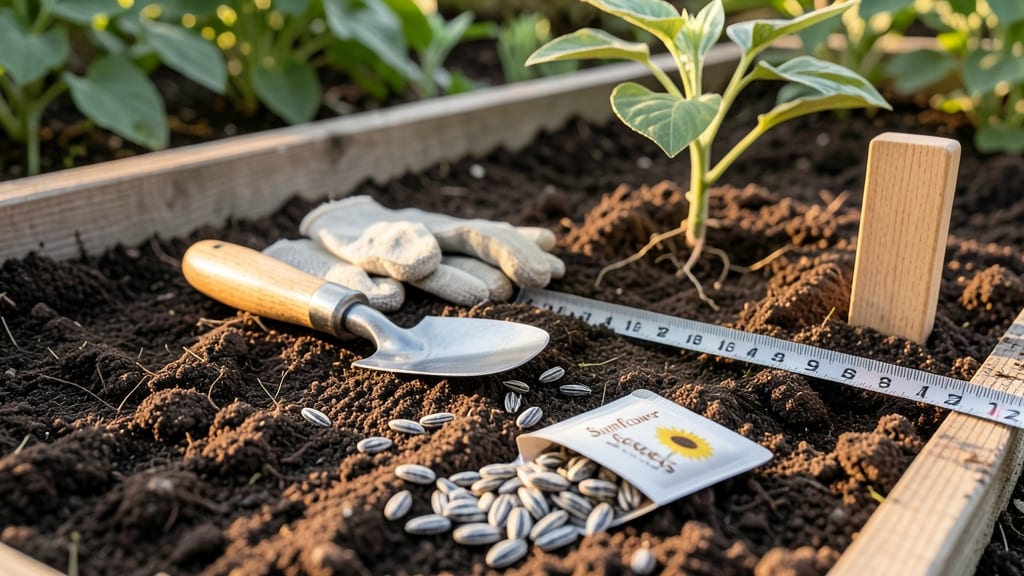
To plant sunflower seeds with the right spacing, start by checking your variety—tall giants need 24–36 inches between plants, while dwarf types thrive just 6–12 inches apart.
Sunflowers aren’t just beautiful—they’re a gardener’s powerhouse, offering towering stalks, edible seeds, and wildlife-friendly blooms.
But getting those iconic golden faces to thrive starts with one critical question: How far apart should you plant sunflower seeds? Get spacing wrong, and you’ll end up with crowded, weak stalks—or worse, a forest of floppy stems competing for sunlight.
Spacing isn’t just about aesthetics—it’s the foundation for strong stalks, bigger blooms, and even higher seed yields. Whether you’re growing 14-foot giants or compact 3-foot dwarfs, the right distance ensures each plant gets enough sunlight, air circulation, and nutrients to reach its full potential.
In this guide, I’ll break down spacing rules by variety, share pro tips for adjusting spacing based on soil, climate, or containers, and even show you how to pair sunflowers with companion plants for a thriving garden. Let’s get those seeds planted the right way!
Sunflower seed spacing rules by variety: optimize growth for height and yield
Sunflowers are one of the most rewarding plants to grow, but their spacing needs vary dramatically by variety. Giant sunflowers like 'Russian Giant' need room to develop their massive stalks and heavy blooms, while dwarf varieties like 'Teddy Bear' thrive in tight clusters.
Getting this right ensures stronger stems, larger blooms, and higher seed yields—not to mention fewer floppy stems that topple in summer storms.
Proper spacing also reduces competition for nutrients and sunlight, which directly impacts disease resistance and pollinator attraction. Crowded sunflowers are more prone to powdery mildew and stem rot because airflow is restricted.
Meanwhile, over-spaced plants may produce smaller blooms or fewer seeds. Let’s break down the exact spacing rules for each sunflower type to maximize your garden’s potential.
Why spacing matters: Sunflowers are fast-growing annuals that can reach maturity in just 80–100 days. Their roots spread widely, and their stalks grow taller than most garden plants. Without proper spacing, you’ll see weaker stems, smaller blooms, and lower seed production. Even container-grown sunflowers need adjusted spacing to avoid root-bound stress.
| Variety Type | Spacing (inches) | Row Spacing (inches) | Mature Height | Best For |
|---|---|---|---|---|
| Dwarf (e.g., 'Teddy Bear', 'Moulin Rouge') | 6–12 | 12–18 | 2–4 ft | Containers, borders, cut flowers |
| Semi-Dwarf (e.g., 'Autumn Beauty', 'ProCut') | 12–18 | 18–24 | 4–6 ft | Cutting gardens, pollinator support |
| Standard (e.g., 'Moulin Rouge', 'Evening Sun') | 18–24 | 24–30 | 6–10 ft | Back of borders, seed production |
| Giant (e.g., 'Mammoth', 'Russian Giant') | 24–36 | 36–48 | 10–14 ft | Large gardens, seed harvesting |
Note: Adjust spacing wider for poor soil or windy areas to prevent lodging.
For dwarf sunflowers, like the popular 'Teddy Bear' variety, you can plant seeds just 6–12 inches apart in a grid pattern. These compact varieties are perfect for container gardening or small-space gardens, where they’ll produce cheerful blooms without taking over.
Just be sure to thin seedlings to maintain this spacing—overcrowding leads to pale, leggy stems and fewer blooms.
When growing semi-dwarf varieties, such as 'Autumn Beauty', aim for 12–18 inches between plants and 18–24 inches between rows. These medium-height sunflowers strike a balance between space efficiency and bloom size, making them ideal for cutting gardens or pollinator-friendly borders.
They also handle light pruning well, so you can encourage bushier growth if needed.
Standard and giant sunflowers demand the most space—24–36 inches apart—to support their heavy, top-heavy blooms. Varieties like 'Mammoth' or 'Russian Giant' can reach 12–14 feet tall, so their root systems need room to anchor. Plant these along fences or trellises to prevent them from flopping over. If you’re growing them for seed production, wider spacing ensures better air circulation, reducing the risk of fungal diseases.
If you’re planting sunflowers in containers, reduce spacing to 6–12 inches apart for dwarf varieties but limit each pot to 1–2 plants. Giant sunflowers won’t thrive in containers—their root systems are too large.
Instead, opt for 5-gallon pots for semi-dwarf types like 'ProCut', ensuring the pot has drainage holes to prevent root rot.
One final tip: soil quality affects spacing needs. In poor soil, plants compete more aggressively for nutrients, so you can plant slightly closer together (e.g., <
Pro tips to adjust sunflower spacing for soil, climate, and containers
Your sunflowers' final height and health depend heavily on how you adjust their spacing based on your local conditions. In poor soil, for example, I actually plant seeds closer together (4–6 inches apart) to encourage competition for nutrients.
This forces each plant to grow stronger stems, which is especially helpful in clay-heavy soils where roots struggle to spread. The trade-off? You’ll sacrifice individual bloom size, but you’ll get more plants overall.
Conversely, when your soil is rich in organic matter—like compost-amended garden beds—I recommend wider spacing (18–24 inches) for standard varieties. This gives roots room to establish deep, allowing them to produce larger blooms and heavier seed heads.
I’ve seen 'Mammoth Russian' sunflowers reach 12+ feet when given this extra space, compared to just 8 feet in crowded conditions.
⚠️ CALLOUT WARNING ⚠️ Overcrowding sunflowers creates a recipe for disaster.
Plants spaced too closely (less than 6 inches apart) suffer from poor air circulation, leading to: - Fungal diseases (like powdery mildew) thriving in damp foliage - Pest infestations (aphids and spider mites love crowded stems) - Weak, leggy stalks that snap under wind or rain Pro Tip: Thin seedlings to recommended spacing within 2 weeks of germination to prevent these issues.
If you’re unsure, err on the side of wider gaps—your sunflowers will thank you with stronger growth! 🌱
Container gardening changes the game entirely. For 5-gallon pots, I limit myself to 1–2 sunflower plants per container, using dwarf varieties like 'Teddy Bear' (which max out at 2–3 feet).
Larger containers (15+ gallons) can handle one semi-dwarf variety (4–6 feet tall), but avoid planting more than one—roots will compete aggressively for moisture and nutrients. Always use a well-draining mix with added perlite to prevent root rot in confined spaces.
Climate plays a surprising role too. In hot, dry regions (like USDA Zone 9+), I space seeds 12–18 inches apart to reduce water competition. The wider gaps let soil retain moisture longer, which is critical during summer droughts.
Meanwhile, in cooler climates (Zones 3–5), I can get away with tighter spacing (6–12 inches) because the growing season is shorter, and plants mature faster before heavy rains arrive.
Don’t forget about wind exposure—another often-overlooked factor. If your garden is in a windy area, increase spacing to 24–36 inches for tall varieties. The extra room lets stalks sway without toppling, and it reduces the risk of stem breakage during storms.
I’ve learned this the hard way after watching 'Russian Giant' sunflowers collapse in a single gust! For extra support, mix in bamboo stakes at planting.
Finally, consider your harvest goals. If you’re growing sunflowers for seed production, prioritize wider spacing (18–24 inches) to maximize seed head size. But for cut flowers or pollinator gardens, tighter grids (6–12 inches) work beautifully—just be prepared to thin later if plants get too crowded.
The key is flexibility: adjust based on your soil’s fertility, your climate’s challenges, and whether you’re growing for beauty or bounty. 🌻