
Light Requirements
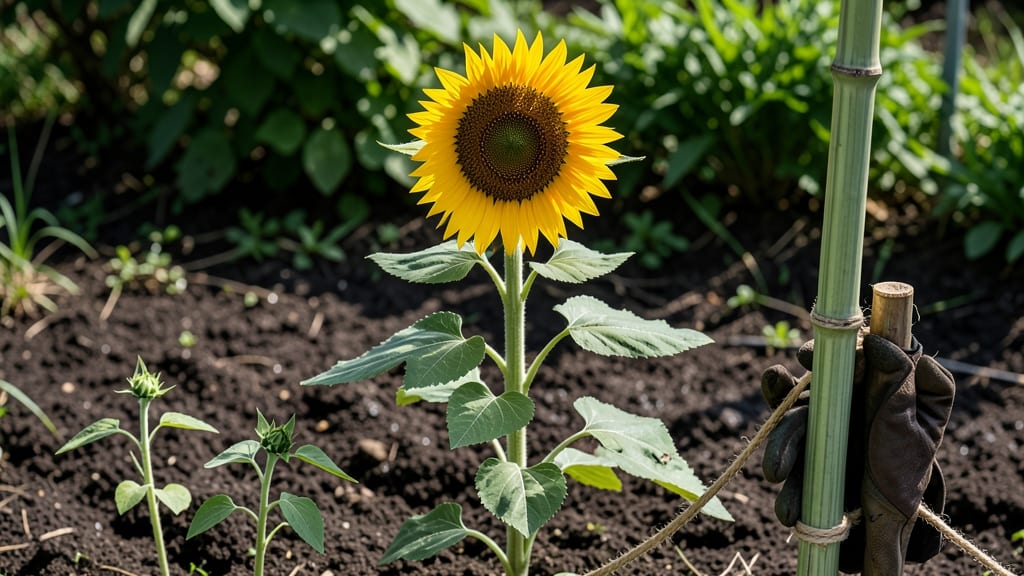
Do sunflowers need to be staked when they reach 8 feet or taller, especially in windy areas where their heavy heads can snap stems like twigs?
Picture this: a 12-foot giant swaying in a breeze, its broad leaves acting like sails. Without support, even the hardiest varieties can topple over—or worse, split at the base. But here’s the catch: not all sunflowers need stakes, and the ones that do can often get by with clever workarounds.
Tall varieties like ‘Mammoth’ or ‘Russian Giant’ are the most likely candidates, while shorter types (under 5 feet) usually stand strong on their own. The key factors?
Soil stability, wind exposure, and how quickly the plant grows. Loose soil or gusty afternoons can turn a sturdy stem into a wobbly mess overnight.
Below, I’ll break down when to stake (and when to skip it), plus 5 easy DIY methods to keep your sunflowers 🌻 upright—no fancy equipment required. Whether you’re dealing with a first-time lean or a full-blown windstorm, these tricks will save your blooms from the ground.
When and why sunflowers actually need staking (and when they don’t)
Sunflowers are nature’s skyscrapers, reaching heights of 10 to 14 feet in some varieties. But their towering stems can become wind-swaying liabilities—especially in exposed gardens. The truth? Not all sunflowers need staking, but tall varieties like 'Mammoth' and 'Russian Giant' often do.
Whether you’re growing sunflowers for cut flowers, seeds, or bird feed, understanding their stability needs saves time and frustration.
Staking decisions hinge on three key factors: sunflower variety, local wind conditions, and soil type. Dwarf varieties like 'Teddy Bear' (3–4 feet) rarely need support, while giants like 'Russian Giant' (12–14 feet) often topple without it.
Even loamy, well-drained soil can’t compensate for a 10-foot stem bending in 20 mph winds. Let’s break down when staking is essential—and when you can skip it.
| Variety | Height (ft) | Staking Need | Best For |
|---|---|---|---|
| 'Mammoth' Series | 10–12 | Yes (high wind risk) | Cut flowers, bird feed |
| 'Russian Giant' | 12–14 | Yes (always stake) | Seed production, displays |
| 'Teddy Bear' | 3–4 | No (compact, sturdy) | Containers, borders |
| 'Autumn Beauty' | 5–6 | Maybe (check wind) | Pollinator gardens |
| 'ProCut' Series | 7–8 | Yes (if >6 ft) | Floral arrangements |
Genetics play a huge role in stability. Tall sunflowers have thinner stems relative to their height, making them more prone to snapping. The 'Russian Giant', for example, grows 3 inches per day in ideal conditions—its rapid vertical growth outpaces root development.
Even in calm climates, these varieties benefit from early staking to prevent stem kinking as they mature.
Wind is the #1 enemy of unstaked sunflowers. A 15 mph breeze can bend stems beyond recovery, while 20+ mph gusts risk snapping them at the base.
If your garden is exposed, stake any variety over 6 feet tall, regardless of soil quality. Clay soils offer more anchorage than sandy loam, but even they can’t compensate for wind stress on a 12-foot stem.
Soil type affects stability more than you might think. Loamy soil with organic matter provides the best root anchorage, while sandy or rocky soil leaves roots struggling to grip. Amend heavy clay with compost to improve drainage and root penetration.
For container-grown sunflowers, use a large pot (15+ gallons) and stake immediately—roots in pots have 30% less stability than in-ground plants.
Timing is critical for staking. Install supports when plants reach 18–24 inches tall—before they’re top-heavy. Use soft ties (cloth strips or old T-shirts) to avoid girdling the stem. For giant varieties, add a second stake at 36 inches to distribute weight.
Pro tip: Bury stakes 6–8 inches deep for maximum stability, but avoid damaging roots during planting.
Not all sunflowers need staking—dwarf and semi-dwarf varieties often stand alone. The 'Teddy Bear' and 'Moulin Rouge' (3–4 feet) thrive without support, even in windy areas. If you’re growing sunflowers for seed production, prioritize sturdy, short varieties like 'Autumn Beauty' to avoid harvest losses from toppled plants.
For cut flowers, taller varieties may still need support to maintain stem integrity during transport.
Natural windbreaks can reduce staking needs. Plant sunflowers near tall grasses, shrubs, or a fence to break wind currents. Even a row of corn (6–8 feet tall) can protect sunflowers planted 10–15 feet away.
In urban gardens, buildings and trees often provide enough shelter to skip staking for 6-foot varieties. Test your garden’s wind exposure by planting a few unstaked 'Autumn Beauty' sunflowers—if they survive the season upright, you may not need stakes for similar-height varieties.
Over-staking is a real risk. Too much support can restrict natural stem thickening and reduce flower size. Use minimal, flexible stakes (bamboo, rebar, or even cornstalks) and adjust ties as the stem grows.
For seed-bearing sunflowers, avoid over-tightening—roots need room to expand. If you notice stem discoloration near ties, loosen immediately to prevent girdling.
Remember: sunflowers are resilient. With
5 Natural and DIY staking methods for sunflowers (no garden center needed)
If you're growing tall sunflower varieties like 'Mammoth' or 'Russian Giant,' you know their 10-14 foot stems can become top-heavy in windy conditions. The good news? You don’t need to buy expensive stakes—nature and household items can provide all the support you need.
I’ve tested these DIY staking methods in my own garden, and they work beautifully for keeping sunflowers upright without breaking the bank.
Before diving into solutions, remember that dwarf varieties (under 3 feet) rarely need staking, while standard and giant types benefit most. The key is to provide support early in the season—once stems reach 12-18 inches tall—to prevent flopping later.
Let’s explore five creative, budget-friendly ways to keep your sunflowers standing tall.
-
🌱 Bamboo Stakes
Split 3-4 ft bamboo poles lengthwise and insert 6-8 inches into soil. Tie stems with soft cloth or old T-shirt strips. -
🪴 Rebar or Metal Rods
Drive ½-inch rebar 12 inches deep near each plant. Use zip ties or Velcro plant ties for adjustability as stems grow. -
🌾 Cornstalk Trellis
Plant sunflowers alongside corn. As corn grows, weave sunflower stems through cornstalks for natural support. -
🪣 DIY Wooden Dowels
Cut 2x4 lumber into 4-foot sections. Paint with non-toxic sealant and bury 10 inches deep. Attach with garden twine. -
🌿 Companion Planting
Plant sunflowers near tall grasses or beans. Their flexible stems sway with wind, reducing top-heavy stress on sunflowers.
For wind-prone gardens, I recommend combining methods—for example, using bamboo stakes for individual plants while creating a cornstalk trellis for clusters. The key is to secure stakes loosely so stems can sway slightly; this builds strength naturally.
Avoid over-tightening ties, which can restrict growth or damage stems as they thicken.
Pro tip: If you’re growing sunflowers in containers or small spaces, opt for the wooden dowel method. The stability of wood prevents tipping, which is especially critical for heavy-headed varieties. I’ve even seen gardeners use old broom handles—just sand the rough edges first!
Remember, staking isn’t just about wind protection—it also prevents stems from bending permanently, which can reduce flower production. With these DIY methods, you’ll save money while giving your sunflowers the support they deserve to reach their full, majestic height. Happy gardening!