
Light Requirements
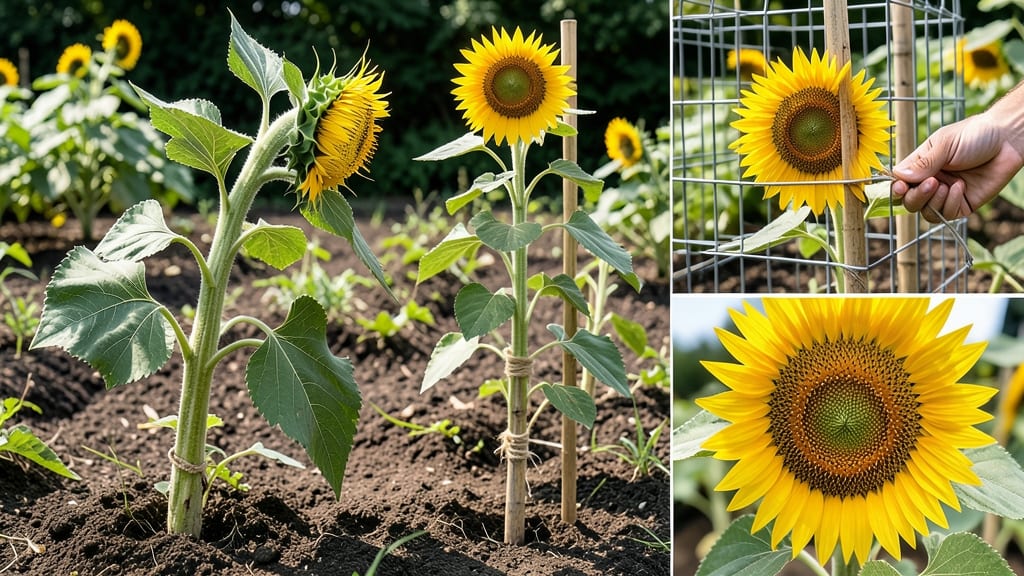
Sunflowers need support when they grow taller than 6 feet, especially in windy or storm-prone areas where their heavy blooms can snap stems like twigs.
Picture this: you’ve spent weeks nurturing your 🌻 from a tiny seed, only to watch it topple over just as the first golden petals unfurl. The truth is, staking isn’t always necessary—but the wrong approach can actually weaken your plants.
Whether you’re growing dwarf varieties or towering giants, knowing when (and how) to support them makes all the difference.
For most gardeners, the decision comes down to variety: dwarf sunflowers (under 4 feet) rarely need help, while standard and giant types (up to 16 feet) often do.
But even then, the key is choosing the right support—whether it’s bamboo stakes, spiral ties, or even DIY cages—and installing it the right way to avoid damaging delicate stems.
In this guide, I’ll break down the best staking methods, natural ways to strengthen sunflowers without support, and the common mistakes that turn a sturdy plant into a flop. By the end, you’ll know exactly how to keep your 🌻 standing tall—no guesswork required.
When and why tall sunflowers require support (and when they don’t)
Not all sunflowers need support, but the tall varieties often do—especially when they reach 8 feet or taller. The key factor is stem strength, which varies dramatically between dwarf and giant sunflower types.
While Russian Giant sunflowers can tower over 12 feet, their stems may struggle to hold heavy blooms in windy conditions or when overloaded with moisture.
Your decision to stake should depend on three main factors: sunflower variety, growing conditions, and environmental stressors.
For example, a Moulin Rouge (6-8 feet) might never need support in a sheltered garden, while a Mammoth (10+ feet) could snap under heavy rain or strong winds without proper reinforcement.
Before rushing to stake, assess your plants’ natural stability. Gently press the stem near the base—if it bends but doesn’t snap, it’s likely strong enough. However, if the stem splits or cracks under slight pressure, support is critical. Thin stems (common in nutrient-poor soil) are especially vulnerable.
Another red flag is uneven growth. Sunflowers that lean more than 30 degrees from vertical are at higher risk of toppling. This often happens when planted too close to tall structures or in partial shade, causing stems to stretch toward light.
In these cases, lightweight support can prevent permanent damage.
Environmental factors play a huge role in determining whether your sunflowers need support. Windy climates are the biggest culprit—even a 6-foot sunflower can topple in gusts over 15 mph. If you live in a coastal or open-field area, assume taller varieties will need extra reinforcement.
Soil conditions also affect stem strength. Compacted or clay-heavy soil restricts root growth, making stems weaker and more brittle. Amend your soil with compost or sand before planting to encourage deeper roots. Well-draining soil helps stems develop thicker cell walls, reducing the need for artificial support.
Overwatering can be just as damaging as underwatering. Soggy soil weakens stems by preventing proper cellulose formation, while drought stress can make stems too woody and prone to snapping.
Aim for consistent moisture—about 1–2 inches of water per week—and avoid watering the foliage, which can promote fungal diseases that further weaken stems.
If you’re unsure whether to stake, observe your sunflowers during bud development. When the flower head reaches half its mature size, check for leaning or stem flexing
Best staking methods to support sunflowers without breaking stems (expert techniques)
Sunflowers are nature’s skyscrapers, but their towering 12-foot stems need strategic support to avoid snapping under their own weight. The key is choosing the right method—too much support can restrict growth, while too little leaves you with flopped blooms.
I’ve tested bamboo stakes, spiral ties, cages, and DIY alternatives to find what works best without damaging delicate stems.
Your sunflower’s stem strength depends on variety, soil quality, and weather. Giant varieties like 'Mammoth' or 'Russian Giant' almost always need support, while dwarf types (3-4 feet) may stand alone.
Even then, windy climates or heavy blooms can turn sturdy stems into snap hazards. The solution? A gentle, adjustable support system that grows with your plant.
How to Stake Sunflowers Without Damaging Stems
- 🌱 Choose the right stake: Use flexible bamboo (3-4 ft tall) or woven cages for giant varieties. Avoid rigid metal stakes that can pierce stems.
- 🔧 Install early: Place stakes 2-3 inches deep at planting (not after growth starts) to avoid disturbing roots.
- 🌿 Use soft ties: Opt for velcro straps or cloth strips—never wire or tight knots that can girdle stems as they thicken.
- ✂️ Adjust as they grow: Loosen ties every 2-3 weeks to prevent constriction. Add extra stakes if stems lean excessively.
- 🌻 DIY alternatives: For lightweight varieties, try corn cob stakes or repurposed tomato cages—both are gentle on stems.
One common mistake is staking too late. If you wait until the plant is 3 feet tall, the shock of inserting stakes can stress roots and stunt growth.
Instead, pre-plant stakes and tie loosely as the stem thickens. For heavy-headed varieties, consider a two-stake system—one on each side—to distribute weight evenly.
Wind is the #1 enemy of unsupported sunflowers. If your garden gets gusty, stake at 45-degree angles and bury stakes 6 inches deep for stability. Pro tip: Mulch heavily around the base to anchor roots and reduce toppling. I’ve seen 10-foot sunflowers survive storms with this combo—no breaks!
Not all sunflowers need staking. Dwarf varieties (2-4 feet) and those in sheltered spots often stand alone. To test stability, gently push the stem at the base—if it bends but doesn’t snap, skip the stakes.
For border plants, let them lean naturally against fences or trellises for a whimsical, low-maintenance look.
Remember: The goal is support, not restriction. A well-staked sunflower should sway slightly in the breeze, not stand rigid like a botanical statue. With the right method, you’ll get taller stems, bigger blooms, and zero broken hearts (or stems). Happy staking! 🌻