
Light Requirements
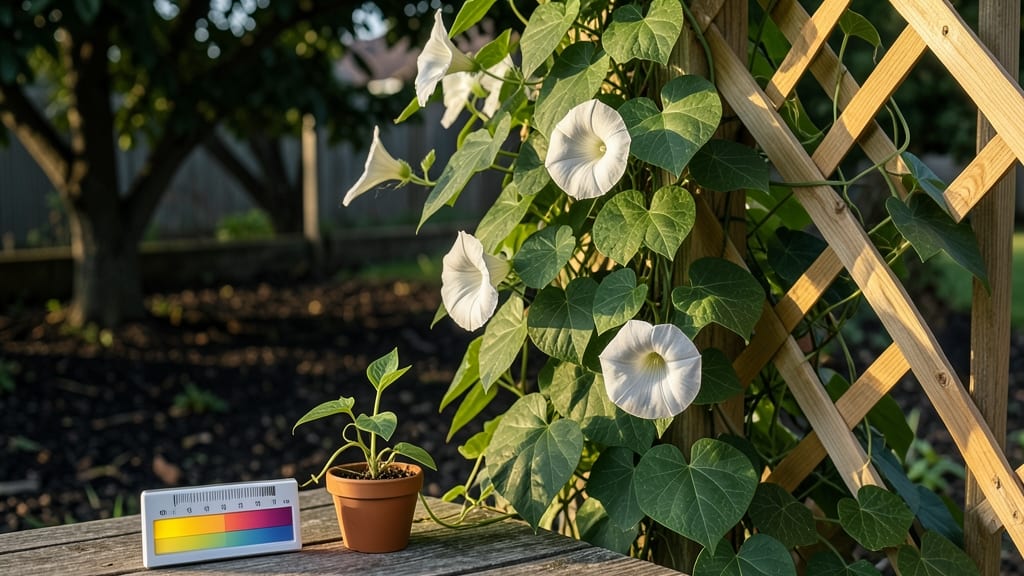
Moonflowers thrive in partial shade and don’t strictly need full sun 🌙 — in fact, too much direct light can reduce their stunning nighttime blooms.
Picture this: a vine covered in creamy white flowers unfurling only after the sun sets, filling your garden with fragrance when most plants are asleep. That’s the magic of Ipomoea alba, and the secret to unlocking it might be giving them less sun than you think.
While they can handle morning sun or dappled shade, harsh afternoon rays often stress these vines, leading to fewer flowers. In hotter zones like 6a, partial shade becomes even more critical to prevent wilting or sunburn.
Below, I’ll show you how to balance sunlight for maximum blooms, troubleshoot leggy growth, and adjust care based on your local climate — because the best moonflower gardens often start with a little shade.

Moonflower sunlight requirements: full sun vs. partial shade explained
Moonflowers (Ipomoea alba) thrive best with 6-8 hours of direct sunlight daily, but they can adapt to partial shade in certain conditions. Many gardeners assume these night-blooming beauties need full sun, but their resilience makes them more flexible than you might think.
Understanding their sunlight needs helps maximize those stunning evening blooms and lush vines.
The key difference between full sun and partial shade lies in bloom frequency and vine strength. While full sun produces the most flowers, partial shade can still yield beautiful blooms—especially in hot climates where afternoon shade helps prevent wilting. Let’s break down how sunlight affects moonflowers in different growing conditions.
| Sunlight Condition | Bloom Frequency | Vine Growth | Climate Adaptability |
|---|---|---|---|
| Full Sun (6-8+ hours) | Very High (daily blooms) | Strong, rapid vine growth | Best in temperate zones (USDA 6-9) |
| Partial Shade (3-6 hours) | Moderate (fewer blooms) | Slower growth, leggier vines | Ideal for hot climates (USDA 7-10) |
| Deep Shade (<3 hours) | Very Low (rare blooms) | Weak, sparse growth | Avoid unless using grow lights |
In full sun, moonflowers produce the most dramatic displays with daily blooms and vigorous vines that can climb 15-20 feet in a single season. This is ideal for gardeners in USDA zones 6-9 with mild summers.
However, in hotter climates (zones 10+), afternoon shade helps prevent stress and wilting while still encouraging blooms.
When grown in partial shade, moonflowers may produce fewer flowers but still thrive if given morning sun and afternoon shade. This setup works well in woodland gardens or under dappled tree canopies.
The trade-off is slower vine growth and slightly less dramatic blooms, but the plants remain healthy with proper care.
For gardeners in humid climates, partial shade reduces the risk of powdery mildew and other fungal issues. I’ve seen moonflowers in Florida and Georgia grow beautifully with 4-6 hours of morning sun and afternoon shade from nearby trees.
The key is ensuring they still get enough light to photosynthesize effectively.
If you’re growing moonflowers in containers, place them in a spot that gets at least 4-6 hours of sun. South-facing windows or balconies work well, but avoid deep shade, which leads to weak stems and fewer flowers. Rotate containers occasionally to ensure even growth.
One common misconception is that moonflowers can thrive in deep shade. While they tolerate some shade, less than 3 hours of light results in stunted growth and minimal blooms.
If your garden is naturally shady, consider using a reflective surface (like a white wall) to bounce extra light onto the plants.
To maximize blooms in partial shade, I recommend pruning leggy vines to encourage bushier growth and fertilizing lightly with a balanced 5-10-10 mix every 4-6 weeks. This helps compensate for the reduced sunlight and keeps the plant energetic enough to produce flowers.
In my own garden, I’ve experimented with moonflowers in both full sun and partial shade. The full-sun plants produced twice as many blooms but required more frequent watering, while the partial-shade plants stayed healthier in the heat and still bloomed reliably. The choice depends on your climate and garden layout!
Remember, moonflowers are annuals in most climates, so their sunlight needs are critical for a successful first season. Whether you opt for full sun or partial shade, give them well-draining soil and consistent moisture to set them up for the best possible growth.
How to grow moonflowers in partial shade: proven tips for nighttime blooms
Moonflowers (Ipomoea alba) can indeed thrive in partial shade, though they’ll produce fewer blooms than in full sun. The key is creating the right balance—morning sun and afternoon shade works best for most climates.
I’ve grown them successfully under dappled shade from trees and even near north-facing walls, with some adjustments to care routines. Let’s explore how to maximize their nighttime magic without full sun exposure.
First, focus on soil preparation. Moonflowers need well-draining, nutrient-rich soil to compensate for reduced sunlight. Amend your garden bed with compost or aged manure before planting, and consider adding a slow-release fertilizer to support vigorous growth.
I’ve found that moisture-retentive soils help prevent stress during hot afternoons when shade is most critical.
For watering schedules, prioritize consistency over quantity. Moonflowers in partial shade are more prone to root rot if overwatered, but they’ll also wilt quickly if dried out. I use a soaker hose set to run for 20 minutes every other evening during peak bloom season (June-August).
In containers, check soil moisture daily—pots dry out faster in shade.
Companion planting can work wonders for moonflowers in partial shade. Pair them with low-growing perennials like salvia or lavender, which attract pollinators to boost bloom production. Avoid planting near competitive ground covers like mint or creeping thyme, which can strangle young vines.
I’ve had great success with marigolds interplanted—their pest-repelling properties keep aphids away.
If your moonflowers struggle in partial shade, consider supplemental lighting for critical growth stages. A 100-watt LED grow light placed 12-18 inches above seedlings for 4-6 hours daily can make a dramatic difference.
I’ve used this trick in Zone 5 gardens where mornings are often cloudy. Just remember: never leave lights on overnight—moonflowers need darkness to trigger their evening blooms.
With these adjustments, you’ll still enjoy stunning nighttime displays, though expect 20-30% fewer blooms than full-sun plants. The trade-off is worth it for gardens with limited sunlight—just be prepared to babysit them a little more than their sun-loving cousins. 🌙