
Blooming
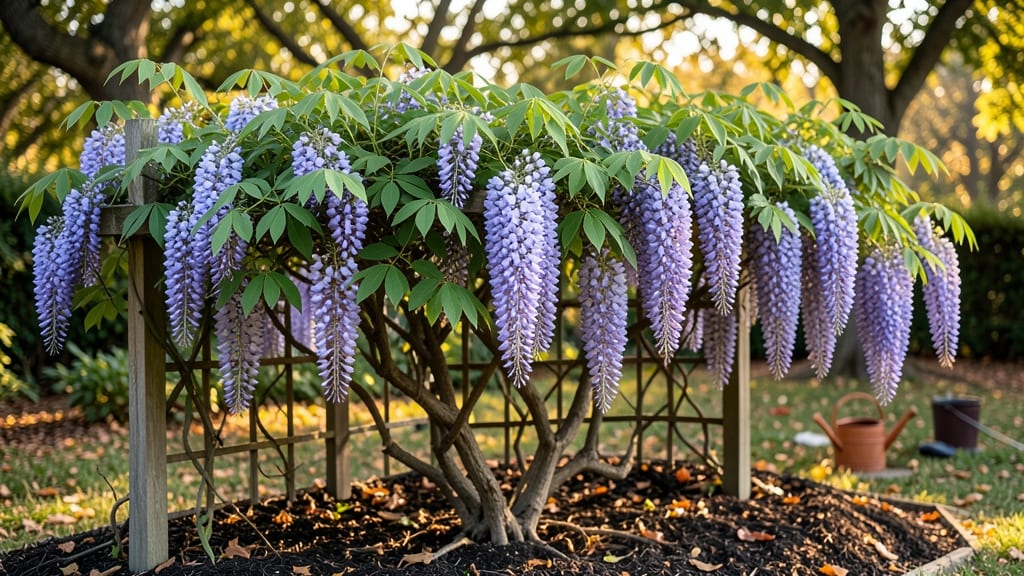
The wisteria flowering season 🌸 arrives with a burst of fragrant color, but timing this showstopper depends on where you live—and a few climate secrets most gardeners miss.
Picture this: you’ve waited all year for those cascading purple, white, or blue blooms, only to blink and realize they’re already fading. That’s the frustration of a missed window, and it happens more often than you’d think.
The truth? Your wisteria’s bloom schedule isn’t set in stone—it shifts with temperature, sunlight, and even how you prune.
In this guide, I’ll break down the exact months your wisteria will flower based on your USDA zone, plus the hidden triggers that can push blooms earlier or later.
You’ll learn how to read the leaves for early signs, adjust care for peak performance, and even nudge the season if you’re impatient for that sweet fragrance.
No more guessing—just science-backed timing to ensure your wisteria puts on its best display, year after year.
Exact wisteria flowering months by USDA hardiness zones (with climate adjustments)
Predicting your wisteria’s flowering season starts with your USDA hardiness zone. While most varieties bloom in late spring to early summer, exact timing shifts dramatically from Zone 5 to Zone 9.
In colder zones, wisteria may wait for warmer soil temperatures (55°F+), while southern climates trigger blooms with spring rainfall and increasing daylight. Understanding these patterns helps you time pruning, fertilizing, and even microclimate adjustments for peak performance.
The dormancy period is equally critical—wisteria needs 600–900 chill hours (below 45°F) to set next year’s buds. If your zone gets fewer than 500 chill hours, blooms may be sparse or delayed.
For example, Zone 9 wisteria might bloom as early as February, while Zone 5 varieties often wait until late May. Local weather anomalies—like early heatwaves or late frosts—can also shift bloom windows by 2–4 weeks.
To refine your predictions, check historical bloom data from local botanical gardens or USDA climate maps. For instance, Chicago (Zone 5b) typically sees wisteria peaks in mid-May, while Los Angeles (Zone 10a) enjoys blooms in March.
Even within a zone, microclimates (like urban heat islands or coastal breezes) can advance or delay blooms by 10–14 days. Start tracking your vine’s leaf unfurling and bud swelling—these are your first clues that flowering is near.
| USDA Zone | Primary Bloom Window | Climate Triggers | Adjustments for Early/Late Blooms |
|---|---|---|---|
| Zone 5 | Late May – Early June | 600+ chill hours, soil >55°F | Use black plastic mulch in spring |
| Zone 6 | Mid-May – Late May | 500–700 chill hours, consistent rain | Prune in late winter for earlier buds |
| Zone 7 | Early May – Mid-May | 400–600 chill hours, warm nights | Add row covers for frost protection |
| Zone 8 | Late April – Early May | 300–500 chill hours, early sun exposure | Water deeply in late winter to wake roots |
| Zone 9 | February – March | 200–400 chill hours, mild winters | Use shade cloth to delay heat stress |
If you’re in Zone 5 or 6, your wisteria’s blooms may align with leaf-out timing in nearby trees like maples or oaks. Use this as a natural calendar—when those leaves emerge, your wisteria’s buds should swell within 1–2 weeks.
For southern zones (7–9), pay attention to rainfall patterns: wisteria often responds to consistent moisture after a dry spell by pushing new growth and flowers. In Zone 9, for example, February blooms are common after January rains recharge the soil.
To calculate your local wisteria’s schedule, start by recording 3 years of bloom dates. Note any weather anomalies, like unusually warm winters or late frosts, which can disrupt dormancy.
For instance, a Zone 6 wisteria that blooms in mid-May one year might shift to late April the next if March temperatures are 10°F warmer than average. Over time, you’ll spot patterns—like how your specific variety (e.g., Amethyst Falls vs. Royal Purple) responds to your climate.
Light exposure also plays a hidden role. Wisteria planted in full sun (6+ hours/day) will bloom 2–3 weeks earlier than those in partial shade. If your vine is in a <
5 Climate triggers that determine wisteria’s bloom timing (and how to optimize them)
Wisteria’s flowering season isn’t just about spring—it’s a delicate dance with climate triggers that can shift bloom times by weeks. If you’ve ever wondered why your wisteria vine blooms late or not at all, the answer likely lies in these five hidden factors.
Understanding them lets you optimize blooms for your specific microclimate, whether you’re in Zone 5 or Zone 9. Let’s break down how each trigger works—and how to adjust them for peak flowering.
First, winter chill hours are non-negotiable. Wisteria needs 600-1,000 hours below 45°F (7°C) to set flower buds. Skip this, and you’ll get sparse or no blooms. In warmer zones, this can be a real challenge.
For example, in Southern California (Zone 9), wisteria often struggles because winters don’t provide enough chill. The fix? Plant cold-hardy varieties like Wisteria sinensis or use artificial chilling techniques in containers.
600-1,000 hours below 45°F (7°C) to set buds. Track chill hours using a weather station or online tools like PWS Weather. In warm climates, plant early-blooming varieties or use container growing to move vines to cooler spots in winter.
Rapid temperature swings above 60°F (15°C) can delay blooms. Aim for consistent warmth (65-75°F) during bud development. Use shade cloth in hot afternoons or mulch heavily to stabilize soil temps. In Zone 6+, watch for late frosts, which can damage emerging buds.
6+ hours of direct sun is critical for bud formation. South-facing walls or trellises maximize exposure. If your wisteria gets partial shade, supplement with grow lights in late winter to kickstart growth. Morning sun is ideal—it reduces stress from afternoon heat.
Prune right after flowering (late spring) to encourage next year’s blooms. Avoid heavy cuts in fall or winter, as this removes flower buds. For older vines, use the “spider pruning” method—cut back 1/3 of the oldest growth annually to rejuvenate the plant.
Consistent moisture during bud development (late winter to early spring) prevents bud drop. Water deeply once a week in dry spells, but avoid waterlogging. In containers, use self-watering pots to maintain even moisture. Mulch with wood chips to retain soil moisture.
Now that you know the triggers, let’s talk actionable adjustments. For example, if your wisteria blooms late, focus on increasing chill hours by planting in a cooler microclimate or using container growing to move it to a shaded patio in summer.
Conversely, if blooms arrive too early, delay pruning until after the first frost or use shade cloth to slow growth. Even small tweaks—like adding compost to improve soil moisture retention or installing a trellis for better sunlight exposure—can shift bloom times by 2-