
Plants
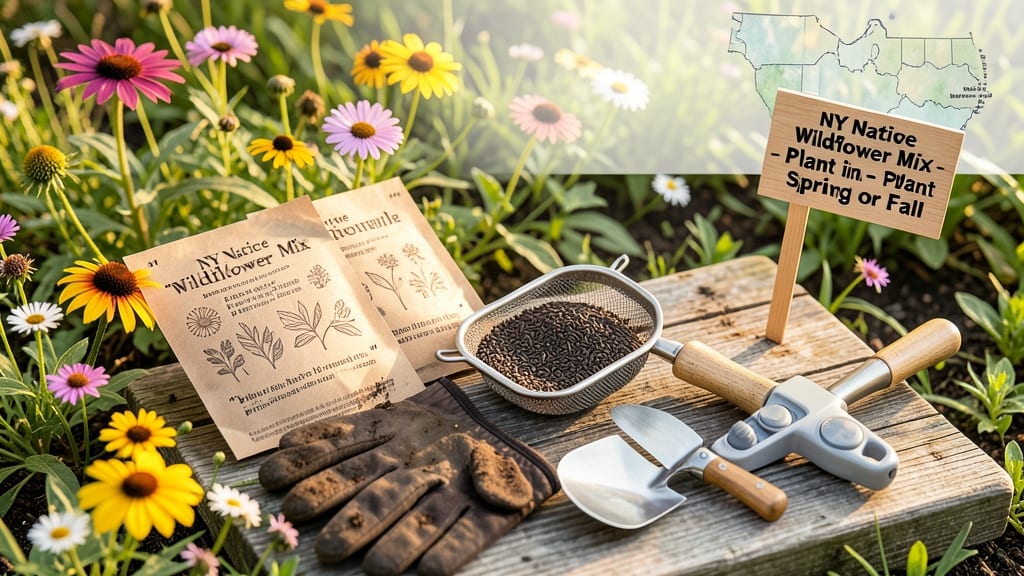
Planting wildflower seeds in New York at the right time means spring blooms from March through October, with minimal effort from you.
Want a vibrant, low-maintenance garden that thrives in New York’s unpredictable climate? Timing your wildflower seeds perfectly ensures a burst of color from spring to fall—without the guesswork.
Upstate NY’s cooler 5a-7b zones (think Buffalo or Albany) have a longer frost window, while NYC’s urban heat islands can push planting dates earlier. The key is knowing when to scatter those seeds so they beat the frost or ride out summer’s heat.
Below, I break down the best months for your region, how to prep soil for success, and the one trick that guarantees germination even if you miss the perfect window.
Best months to plant wildflower seeds in NY by region
New York’s diverse climate—from the cool mountain air of Upstate to the humid coastal breezes of Long Island—means wildflower planting times vary wildly. Timing is everything for reliable germination, and missing the window can leave you waiting years for blooms.
The key? Understanding your USDA zone (5a-7b) and adjusting for microclimates like urban heat islands or rural frost pockets.
Most wildflower seeds thrive when sown in two critical windows: early spring (March-April) for cool-season varieties like bluebells and violets, or late summer (August-September) for fall-blooming stars such as asters and goldenrod.
Perennials, like coneflowers and black-eyed Susans, often get a head start if planted in fall (October-November), giving roots time to establish before winter.
Urban gardeners in NYC or Long Island face unique challenges—heat islands delay frost and deer pressure is higher—while Upstate regions like the Hudson Valley or Finger Lakes experience earlier frosts.
Let’s break down the perfect planting months for each region, so you can skip the guesswork and start enjoying year-round color.
For Upstate NY gardeners, the earliest spring window (March 15-April 15) is critical—cool-season wildflowers like phlox and lupines need to germinate before soil warms too much.
In Buffalo (Zone 6a), aim for April 1 as your cutoff for spring planting, or risk seeds drying out before rain arrives. Late summer (August 15-September 15) is your second chance, especially for fall-blooming asters that thrive in cooler autumn temps.
In the Hudson Valley (Zones 6b-7a), you’ve got a slightly longer window—April 1-May 1 for spring—and can even push late summer planting to September 10. This region’s moderate climate makes it perfect for mixed wildflower seed blends, including black-eyed Susans and bee balm.
If you’re in a rural valley, plant 1-2 weeks earlier than urban areas to avoid unexpected late frosts.
NYC’s urban heat island effect shifts planting times later—April 15-May 10 for spring—and extends the late-summer window to September 20. Heat-loving wildflowers like milkweed (critical for monarchs!) thrive here, but seedlings need protection from drying winds.
Use shade cloth or mulch to keep soil moist until roots establish. Deer pressure is also higher in NYC parks, so choose deer-resistant varieties like yarrow or coreopsis.
Long Island’s coastal climate (Zone 7b) gives you a 3-week head start on spring planting (April 10-May 5) and
How to adjust planting times for NY’s unpredictable weather
New York’s unpredictable frost dates and variable microclimates can turn even the most eager gardener into a guesser. But with the right adjustments, you can beat the weather and still enjoy a vibrant wildflower display.
The key? Soil temperature checks, seed stratification, and knowing your backup planting dates for each wildflower species.
Most wildflower seeds need the ground to warm to at least 50°F (10°C) before planting. In NYC or Long Island, this typically happens by mid-April, while Upstate regions like Buffalo may wait until late April or early May.
But don’t rely on the calendar—use a soil thermometer to confirm readiness.
Here’s how to adjust your planting strategy for NY’s late frosts, droughts, or early freezes—plus a wildflower planting calendar with frost-date benchmarks for 12 common species.
- 🌱 Spring Planting (March–April): Ideal for cool-season wildflowers like bluebells and phlox. Plant when soil reaches 50°F (10°C) and frost risk drops below 50%.
- ☀️ Late Summer (August–September): Perfect for fall-blooming perennials like asters and goldenrod. Seeds germinate in cool fall soil and establish roots before winter.
- ❄️ Fall Planting (October–November): Best for perennial wildflowers like coneflowers. Seeds stratify naturally over winter, leading to earlier spring blooms.
- 💧 Drought-Proofing Tip: If rain is scarce, water seeds daily until germination (usually 7–14 days). After sprouting, reduce watering to once weekly.
- ⏰ Backup Dates: If frost strikes early, replant hardy species like black-eyed Susan in early June for a summer-to-fall display.
For reliable germination, pre-treat seeds with stratification if they’re from cold climates. Place seeds in a moist paper towel inside a ziplock bag and refrigerate for 4–8 weeks before planting. This mimics winter conditions and breaks dormancy—critical for Upstate NY’s shorter growing season.
NY’s urban vs. rural microclimates also play a role. City gardens (like Brooklyn) often warm up faster in spring due to heat islands, while rural areas (like the Catskills) may lag by 2–3 weeks.
Adjust your planting by 1–2 weeks earlier in cities and later in rural zones.
Pro tip: Use row covers or cloches for early spring plantings to protect seedlings from late frosts. And if deer or rabbits are a problem, opt for deer-resistant mixes like bee balm or yarrow, which they avoid.