
Flowers
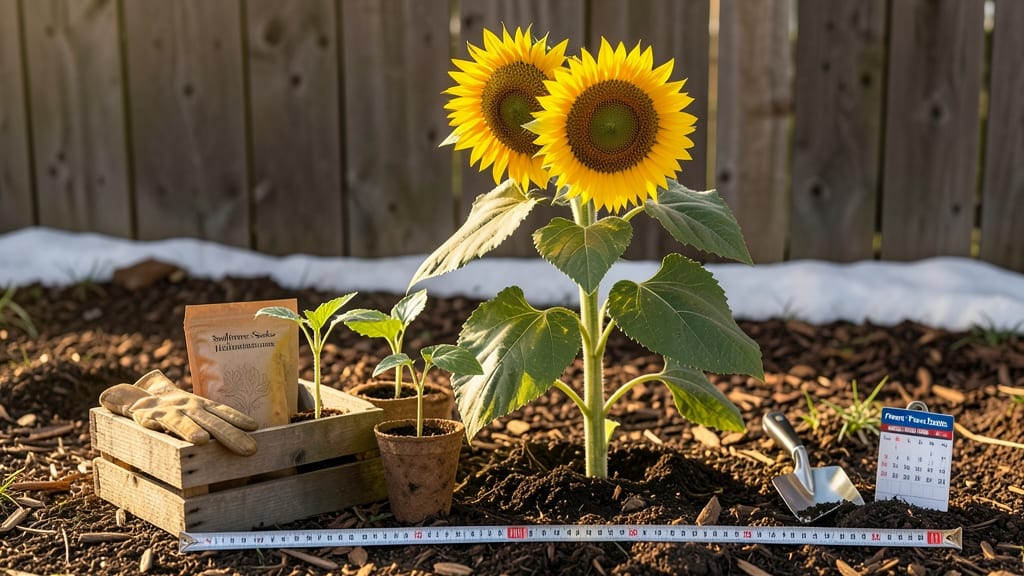
Planting sunflowers in Montana after the last frost ensures tall, vibrant blooms by summer—just don’t wait too late, or you’ll miss the growing season.
Montana’s short growing season and unpredictable weather can make timing sunflower planting tricky—but getting it right means towering blooms and bountiful seeds by summer’s end.
Most of the state falls in USDA Zones 4-6, where frost can linger into May, while heat arrives early in July. That leaves just a few months for sunflowers to mature, so choosing the right planting window—and the right varieties—is key.
In this guide, I’ll break down the best planting dates by zone, share tips for protecting seedlings from late frosts, and recommend fast-growing varieties that thrive in Montana’s climate.
Montana sunflower planting dates by USDA Zone (4-6) with frost risk
Montana’s USDA Zones 4-6 offer stunning sunflower potential, but frost dates and short growing seasons demand precise timing. In Zone 4, where average last frost dates hover around May 15-25, you’ll need to plant early to maximize bloom time before the first frost in September 15-25.
Zones 5 and 6 enjoy slightly longer seasons, but late frosts can linger until May 20-30, requiring careful planning.
Sunflowers thrive in Montana’s sunny skies, but soil temperature is critical—wait until the ground warms to at least 55°F (13°C). For Zone 4, this typically aligns with late May to early June, while Zones 5-6 can start slightly earlier.
Using frost-sensitive varieties with shorter maturity times (60-75 days) ensures success even in cooler zones.
Here’s a quick reference for Montana’s sunflower planting windows by zone, including frost risk and ideal varieties:
| USDA Zone | Avg. Last Frost | Avg. First Frost | Planting Window | Best Varieties |
|---|---|---|---|---|
| Zone 4 | May 15-25 | Sep 15-25 | Late May - Early June | 'Teddy Bear' (dwarf), 'Moulin Rouge' (red) |
| Zone 5 | May 1-15 | Sep 20-Oct 1 | Mid-May - Late May | 'Autumn Beauty' (multi-color), 'Russian Giant' |
| Zone 6 | Apr 25-May 10 | Oct 1-10 | Early May - Early June | 'Sunspot' (yellow), 'ProCut' (cut flowers) |
For Zone 4, prioritize early-maturing varieties like 'Teddy Bear' (50-60 days) to avoid frost damage. In Zones 5-6, you can extend planting into early June for a second harvest, but choose heat-tolerant types like 'Autumn Beauty' to handle Montana’s hot summer afternoons (often exceeding 90°F/32°C).
Pro tip: Use row covers for early plantings in Zone 4 to protect seedlings from late frosts. In all zones, plant seeds 1 inch deep and space them 6-12 inches apart, depending on the variety’s mature size. Larger varieties like 'Russian Giant' need more room to avoid overcrowding.
Montana’s western regions (e.g., Missoula, Bozeman) often experience earlier last frosts than eastern areas (e.g., Billings, Great Falls), so adjust your planting dates accordingly. Check local Almanac frost predictions for your specific county—these can vary by 1-2 weeks even within the same zone.
If you’re in a high-altitude area (e.g., near Glacier National Park), plant sunflowers 2-3 weeks later than the zone average, as cooler temperatures delay soil warming. For container gardening, opt for dwarf varieties like 'Sunspot' and start seeds indoors 4-6 weeks before your last frost date.
Remember, sunflowers are drought-tolerant once established, but consistent moisture during germination (first 2 weeks) is crucial. In Montana’s dry climate, mulch around seedlings to retain soil moisture and suppress weeds. This is especially important in Zone 6, where summer rainfall can be unpredictable.
For a second planting, try late June in Zones 5-6—this gives sunflowers enough time to mature before frost. Just be prepared for shorter stems and smaller blooms, as daylight hours shorten in late summer. The trade-off? A later harvest of seeds for next year’s garden.
🌻
How to adjust sunflower planting for Montana’s unpredictable weather patterns
Montana’s unpredictable frost dates and short growing season demand flexibility when planting sunflowers. Even after the last frost, late spring freezes can still threaten tender seedlings. The key is to balance early planting with frost protection while selecting varieties that mature quickly.
I’ve learned that fast-growing sunflowers with 60-75 day maturity give me the best chance to harvest before Montana’s early autumn frosts arrive.
One of my favorite strategies is using row covers or cold frames to create microclimates. These simple tools can add 2-4°F of warmth around seedlings, extending the safe planting window by 2-3 weeks.
I’ve also had success with container gardening—moving pots indoors or to sheltered spots during cold snaps. This approach works especially well for dwarf varieties like ‘Teddy Bear’ that thrive in 5-gallon containers.
Another critical adjustment is soil warming. Sunflowers germinate best when soil reaches 55-60°F. In Montana’s Zone 4-6, I use black plastic mulch or clear plastic tunnels to accelerate soil warming.
This method has helped me plant 2 weeks earlier than traditional methods, giving my sunflowers a head start before summer’s heat arrives.
🌱 5 Key Adjustments for Montana Sunflower Planting
- 1. Plant after soil warms to 55-60°F (use soil thermometer)
- 2. Use row covers for 2-3 weeks post-sprouting to protect from late frosts
- 3. Choose fast varieties (60-75 days to maturity like ‘Autumn Beauty’)
- 4. Extend season with black plastic mulch or cold frames
- 5. Try containers for dwarf varieties (move indoors at night if needed)
For those late-season plantings, I’ve had success with succession planting every 10-14 days through July. This staggered approach ensures a continuous harvest window. I also prioritize drought-tolerant varieties like ‘ProCut’ that can handle Montana’s dry spells without wilting.
These plants often produce larger seed heads when watered deeply but infrequently.
Don’t overlook seedling depth—plant seeds 1 inch deep and 12 inches apart for optimal air circulation. In my experience, overcrowded seedlings struggle more with Montana’s wind and temperature swings.
I also recommend mulching heavily with straw to retain moisture and regulate soil temperature. This simple step has reduced my watering needs by 30% during Montana’s hot, dry summers.
Finally, monitor your local microclimate. Areas near lakes or rivers may stay warmer longer, while high-elevation gardens face earlier frosts. I keep a garden journal to track when my sunflowers reach 12 inches tall—this is my signal to remove row covers before they become too hot.
With these adjustments, even Montana’s challenging climate can yield stunning sunflowers from spring to fall.