
Flowers
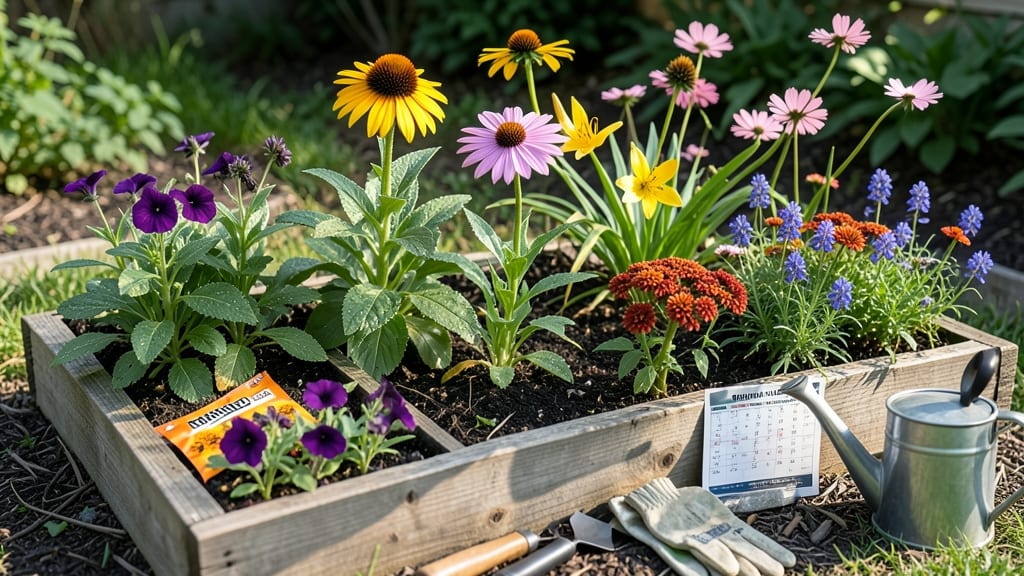
Planting flowers in Oklahoma at the right time means the difference between a garden that bursts with color and one that fades before it begins.
Timing your flower planting in Oklahoma’s unpredictable climate can mean the difference between a vibrant garden and a season of missed blooms—here’s your month-by-month guide tailored to USDA Zones 6b-8a.
Oklahoma’s spring frost dates can swing wildly, and a late freeze or early heatwave will stall even the hardiest 🌸 flowers. Whether you’re planting Black-Eyed Susans or delicate coneflowers, getting the timing right ensures roots establish before summer’s intensity hits.
Below, I break down the ideal planting windows for annuals, perennials, and bulbs—plus soil prep secrets and region-specific adjustments to keep your garden thriving from March through October.
Oklahoma flower planting calendar by USDA Zone (6b-8a)
Oklahoma’s diverse climate—from the cooler Panhandle (Zone 6b) to the humid Southeast (Zone 8a)—demands a flexible approach to planting flowers. Timing is everything: plant too early, and frost will nip tender seedlings; too late, and summer heat will stress delicate blooms.
My month-by-month guide aligns with Oklahoma’s average last frost (March 15) and first frost (November 15), while accounting for microclimates like urban heat islands or rural wind exposure.
For annuals like zinnias and perennials like black-eyed Susans, the golden window is early spring (March–April) or early fall (September–October). Bulbs, however, need 6–8 weeks before frost—so plant tulips in September and daffodils in October for reliable spring blooms.
Below, I’ve broken down the best times to plant by month, including heat-tolerant varieties for Oklahoma’s scorching summers and cool-season favorites for mild winters.
Pro Tip: Use mulch to regulate soil temperature—critical in Oklahoma’s swinging temps (from 20°F winters to 100°F summers). For container gardens, opt for self-watering pots to prevent drought stress during April–June heatwaves.
| Month | Plant Type | Ideal Varieties | Notes |
|---|---|---|---|
| January–February | Bulbs (indoor starts) | Tulips, Daffodils | Start indoors; transplant after last frost |
| March | Cool-season annuals | Pansies, Snapdragons | Wait until soil reaches 50°F; protect from late frost |
| April | Perennials, Heat-lovers | Black-Eyed Susans, Coneflowers | Soil should be 60°F+; mulch to retain moisture |
| May–June | Summer annuals | Zinnias, Marigolds, Lantana | Plant after May 15; water deeply 2x/week |
| July–August | Heat-tolerant perennials | Salvia, Blanket Flower | Mulch heavily; avoid overhead watering |
| September | Fall bulbs, Cool-season | Crocus, Asters, Mums | Plant bulbs by September 15; mums thrive in cool weather |
| October | Perennials, Spring bloomers | Lavender, Russian Sage | Soil should be 55°F+; protect from early frost |
| November | Winter-hardy annuals | Sweet Alyssum, Calendula | Plant before November 10; mulch for insulation |
In Zone 6b (Panhandle), where winters are colder, prioritize hardy perennials like lavender and cool-season annuals for early spring color. Meanwhile, Zone 8a (Southeast Oklahoma) gardeners can extend the season with tropical-looking cannas or heat-loving salvias, planting as late as June for summer-long blooms.
For container gardens, start petunias and geraniums indoors in February and transplant after the last frost. These thrive in Oklahoma’s heat but need consistent moisture—a must during June–August droughts. Pro tip: Use self-watering pots or drip irrigation to avoid wilting.
If you’re in an urban microclimate (like Oklahoma City’s heat island), plant shade-tolerant flowers like impatiens or begonias under trees. These handle reflected heat better than sun-lovers. For rural areas, windbreaks (like Russian sage) protect delicate blooms from April–May windstorms.
Don’t forget soil prep! Oklahoma’s clay-heavy soil benefits from compost or sand amendments to improve drainage. Test your soil’s pH (6.0–7.0 ideal)—many Oklahoma flowers, like azaleas or hydrangeas, thrive in acidic conditions. Adjust with sulfur or lime as needed.
For extended blooms, succession plant annuals every 2–3 weeks from April–July. This ensures continuous color, even when some varieties fade in Oklahoma’s 100°F+ heat. Pair heat-lovers (zinnias, lantana) with cool-season stalwarts (pansies, snapdragons) for a year-round garden.
Finally, keep an eye on Oklahoma’s unpredictable weather
Best flowers to plant in Oklahoma by season (with climate adaptations)
Oklahoma’s unpredictable climate—with scorching summers and freezing winters—demands smart flower choices. Cool-season blooms thrive in spring and fall, while heat-lovers dominate summer. The key? Timing your plants to avoid late frosts or midday wilting.
I’ll share my top picks for each season, plus pro tips to stretch your blooms all year.
For spring planting, focus on cool-hardy annuals like pansies and snapdragons, which tolerate light frosts (down to 25°F). In fall, switch to heat-resistant perennials like black-eyed Susans and gaillardia, which bloom until frost.
Summer? Lantana and zinnia are my go-tos—they thrive in 100°F+ heat with minimal water.
🌱 Oklahoma’s extreme temperature swings mean you’ll need to adjust planting dates by region. Northern Oklahoma (Zone 6b) has earlier last frosts (mid-March), while southern areas (Zone 8a) can plant up to 3 weeks later. Always check your local frost dates—I use the Oklahoma Mesonet for real-time updates.
- 🌿 Spring (March–May): Plant cool-season annuals (pansies, sweet peas) after last frost (mid-March). Use mulch to protect roots from late frosts.
- ☀️ Summer (June–August): Choose heat-tolerant perennials (lantana, salvia). Water deeply 2x/week to avoid wilting.
- 🍂 Fall (September–November): Sow bulbs (tulips, daffodils) 6–8 weeks before first frost. Add compost for winter resilience.
- ❄️ Winter (December–February): Focus on evergreen perennials (rosemary, hellebores). Prune dead foliage in early spring.
To extend bloom times, I recommend succession planting. For example, sow cosmos seeds every 3 weeks from May to July—this ensures continuous color until frost. Pair early bloomers (like calendula) with late-season stars (e.g., asters) for a nonstop garden.
For drought-prone areas, prioritize native Oklahoma flowers like coneflowers and blanket flower. These deep-rooted plants need half the water of imported varieties. Group them with succulents (like sedum) to create a low-maintenance, water-wise display.
Remember: Soil prep is everything. Oklahoma’s clay-heavy soil drains poorly—amend with organic matter (compost or peat moss) before planting. For container gardens, use well-draining mixes with perlite or vermiculite to prevent root rot in summer’s heat.