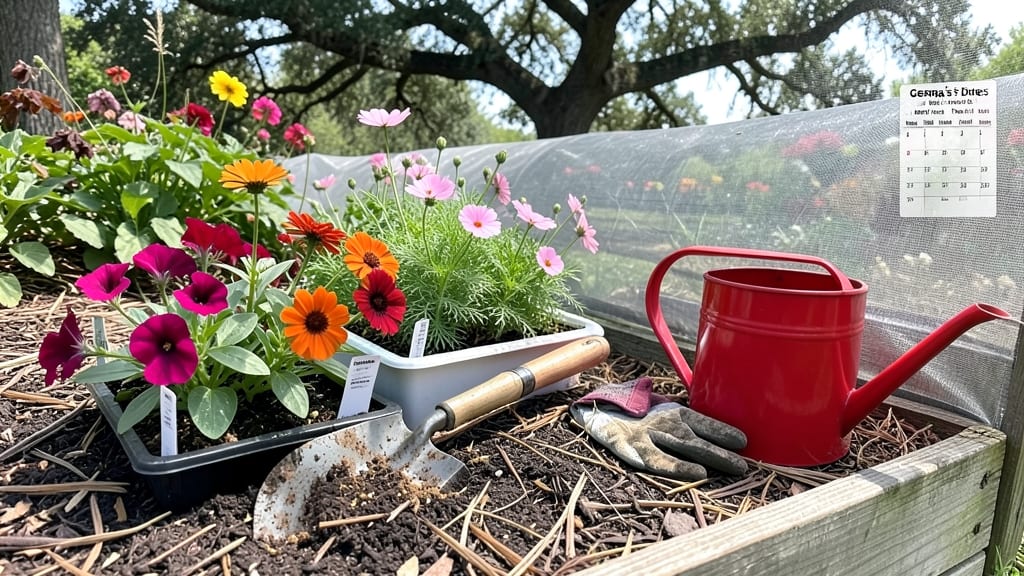
Planting flowers in Georgia at the right time means the difference between a garden that thrives all year and one that fades before it even begins.
Georgia’s warm climate and long growing season make it a paradise for gardeners—but planting flowers at the wrong time means wilting dreams instead of vibrant blooms. Whether you’re in the Piedmont’s rolling hills or the Coastal Plains’ humidity, timing is everything.
Miss the window, and you’ll battle heat stress or frost damage before your 🌸 ever get a chance to shine.
From cool-season annuals like pansies to heat-loving perennials such as black-eyed Susans, each variety has its own ideal month to hit the soil. In this guide, I’ll break down the best planting months for Georgia’s zones 7a-9a, so you can enjoy nonstop color without the guesswork.
No more second-guessing—just blooms that last.
You’ll learn when to sow seeds, transplant seedlings, and even overwinter bulbs for a garden that stays lively from spring to frost. Let’s get those flowers in the ground the right way.
Jan
🌸
Feb
🌸
Mar
🌸
Apr
🌸
May
🌸
Jun
🌸
Jul
🌸
Aug
🌸
Sep
🌸
Oct
🌸
Nov
🌸
Dec
🌸
Georgia flower planting calendar: month-by-month guide for annuals and perennials
Georgia’s USDA Zones 7a-8b offer gardeners a long growing season—but knowing exact planting windows prevents frost damage or heat stress. Cool-season flowers thrive in early spring and fall, while warm-season varieties need soil temperatures above 60°F.
Let’s break down the best months for annuals, perennials, and bulbs to keep your garden blooming year-round.
First, remember Georgia’s average last frost date is March 15 (earlier in southern zones) and first frost arrives around November 15.
This creates a 210-270-day frost-free window, perfect for strategic planting. Cool-season flowers like pansies and snapdragons can handle light frosts, while tender annuals (e.g., petunias, marigolds) need warmth to thrive.
Use this month-by-month guide to align your planting with Georgia’s climate. For perennials, early spring or fall are ideal—avoid summer heat stress. Annuals planted too early may bolt, while those sown too late risk stunted growth. Let’s dive into the details for each month.
| Month |
Cool-Season Flowers |
Warm-Season Flowers |
Perennials |
Bulbs |
| January |
Pansies, Snapdragons, Sweet Alyssum |
None (too cold) |
Divide perennials (e.g., Daylilies) |
Tulips, Daffodils (plant in fall) |
| February |
Violas, Stock, Calendula |
Start seeds indoors |
Prune early bloomers |
Hyacinths (if not planted) |
| March |
Sweet Peas, Larkspur, Dianthus |
Transplant warm-season starts |
Plant hardy perennials |
Crocus (naturalize) |
| April |
Alyssum, Stock, Sweet William |
Marigolds, Zinnias, Sunflowers |
Plant heat-tolerant perennials |
Dahlias (tubers) |
| May |
None (transition to warm-season) |
Petunias, Geraniums, Coleus |
Deadhead spring bloomers |
Plant summer bulbs (e.g., Gladiolus) |
| June |
None (heat-sensitive) |
Vinca, Portulaca, Lantana |
Water deeply; mulch |
None (summer dormancy) |
| July |
None (peak heat) |
Cosmos, Celosia, Gaillardia |
Fertilize perennials |
None (focus on care) |
| August |
None (still hot) |
Marigolds, Zinnias, Snapdragons |
Prepare for fall planting |
Plant spring bulbs (e.g., Tulips) |
| September |
Aster, Chrysanthemum, Pansies |
Calendula, Stock, Sweet Alyssum |
Plant fall perennials |
Daffodils, Hyacinths |
| October |
Sweet Peas, Larkspur, Snapdragons |
None (cooling down) |
Divide and transplant |
Crocus, Muscari |
Best flowers to plant in Georgia by season for non-stop color
Georgia’s long growing season and diverse climate zones (7a-8b) let you enjoy year-round blooms—if you plant the right flowers at the right time. Spring brings cool-season favorites, while summer thrives with heat-loving annuals, and fall offers drought-resistant beauties.
Even winter can shine with evergreens and early bloomers. Let’s dive into the best seasonal picks for non-stop color that thrive in Georgia’s heat and humidity.
Native Georgia flowers like black-eyed Susans and coreopsis are drought-tolerant powerhouses, while annuals like zinnia and marigold deliver bold pops of color with minimal fuss. For pollinator-friendly gardens, prioritize butterfly magnet varieties like coneflower and bee balm.
Whether you’re a beginner gardener or a seasoned pro, these seasonal guides will help you maximize blooms with minimal effort.
🌸 Seasonal Planting Guide for Georgia
- 🌱 Spring (Feb–April): Plant cool-season annuals like pansies, snapdragons, and lobelia after last frost (mid-March). Add perennials like iris and daylilies for long-term color.
- ☀️ Summer (May–July): Focus on heat-tolerant annuals such as zinnias, marigolds, and sunflowers. Native perennials like blanket flower thrive with minimal water.
- 🍂 Fall (Aug–Oct): Choose drought-resistant options like salvia, gaillardia, and mums. Plant spring-blooming bulbs (daffodils, tulips) in October for early color.
- ❄️ Winter (Nov–Jan): Opt for evergreen shrubs (e.g., camellias) and winter jasmine. Pansies and calendula handle light frosts beautifully.
💡 Pro Tip: Mulch after planting to retain moisture and protect roots from temperature swings.
For low-maintenance gardens, zinnias and marigolds are my top picks—they self-seed easily and repel pests like aphids. If you love perennials, black-eyed Susans and coneflowers return year after year with zero fuss.
Both thrive in full sun and dry soil, making them ideal for Georgia’s hot, humid summers.
Don’t overlook Georgia-native wildflowers like partridge pea and wild bergamot. These pollinator magnets attract butterflies and bees while requiring almost no water. Plant them in wildflower meadows or along garden borders for a low-effort, high-impact look. They’re perfect for drought-prone areas and urban containers alike.
In Zone 8 (common in Atlanta and Savannah), heat-tolerant annuals like portulaca and celosia flourish even in 100°F+ temperatures. These succulent-like plants store water in their leaves, so they rarely wilt. Pair them with shade-loving perennials like impatiens or fuchsia for balanced color in partial shade spots.
To keep your garden blooming non-stop, stagger plantings every 4–6 weeks. Start with spring bulbs in October, follow with annuals in March, and add fall bloomers in July.
This overlapping strategy ensures continuous color from February to November. With the right seasonal mix, your Georgia garden will be the neighborhood envy—no wilting dreams here! 🌺
★★★★★5.0(4 reviews)
|