
Plants
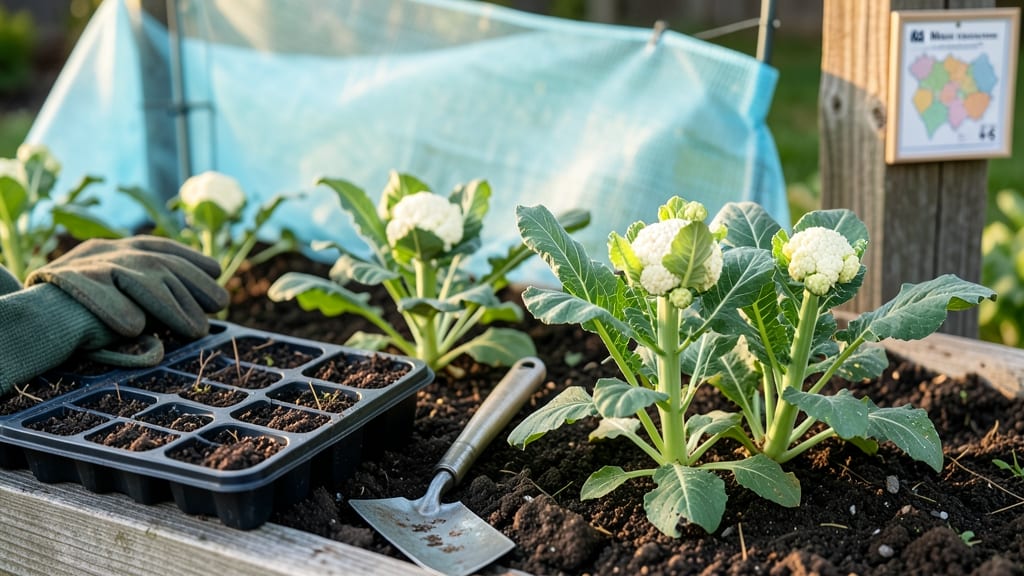
To plant cauliflower in Michigan, aim for late April to early May for spring crops or late July to early August for fall, aligning with soil warmth and frost-free windows.
Michigan’s unpredictable frost dates can make or break your cauliflower harvest—but timing it right ensures crisp, flavorful heads instead of bitter disappointment.
In USDA Zones 4-6, where most of Michigan falls, the key is waiting until the soil reaches 45°F and the last frost has passed. For fall plantings, seed 8-10 weeks before your first frost to beat the cold.
Below, I’ll break down exact frost dates by region, spacing tricks for Michigan’s clay-heavy soils, and how to stretch your growing season with row covers—so you can go from seed to harvest like a pro.
Michigan cauliflower planting calendar: frost dates by region (2024 guide)
Growing cauliflower in Michigan requires precision—especially when it comes to frost dates and transplant windows. Michigan’s three distinct regions (Upper Peninsula, Northern Lower, and Southern) have varying last frost dates, meaning your spring planting timing must adjust accordingly.
For example, Southern Michigan can start transplants as early as mid-April, while the Upper Peninsula may need to wait until late May. Understanding these differences ensures you avoid frost damage or bolting from heat stress.
Cauliflower thrives in cool weather (50–75°F) and hates heat, so timing is critical. A fall crop is often more reliable in Michigan because summer heat can cause premature bolting.
Start fall transplants in July or early August, allowing heads to mature before the first frost (typically October 15–November 1, depending on the region). This dual-season approach maximizes your harvest potential.
Michigan spans USDA Zones 4a–6b, and frost dates shift dramatically across these zones. For instance, Detroit (Zone 6a) has an average last frost date of April 15, while Marquette (Zone 4b) in the Upper Peninsula may see frost until May 20.
These variations mean your planting calendar must be region-specific. Below, I’ve broken down the optimal transplant windows for each region, including adjustments for early starts under row covers or in greenhouses.
For Southern Michigan, where USDA Zone 6b dominates, you can push the envelope with early spring transplants as soon as the soil warms to 50°F. Use row covers or a cold frame to protect seedlings from late frosts.
In Northern Lower Michigan (Zones 5a–5b), wait until the soil reaches 55°F to avoid stunted growth. The Upper Peninsula’s shorter growing season demands even more caution—delay transplants until after May 15 and focus on early-maturing varieties like 'Snowball Y Improved' or 'Purple of Sicily'.
Fall planting is your best bet for consistent harvests. In Southern Michigan, transplant July 15–August 1 for heads ready by October. In cooler Northern and UP regions, aim for July 1–July 15 to avoid early frosts.
Always choose cold-hardy varieties like 'Early Snowball' or 'Graffiti' for fall crops. These varieties tolerate light frosts and produce tight, flavorful heads even in shorter seasons.
Pro tip: Extend your season with row covers or low tunnels. These tools can push your last frost date back by 2–3 weeks, giving you extra time for fall transplants
Optimal spacing and soil prep for Michigan cauliflower success
Cauliflower thrives in Michigan’s cool climate, but proper spacing and soil preparation are non-negotiable for avoiding disease and maximizing yield. Unlike heat-loving crops, cauliflower needs well-draining, nutrient-rich soil with a pH between 6.5 and 7.0—any lower, and your plants will struggle to absorb essential nutrients like nitrogen and phosphorus.
In my USDA Zone 5-6 garden, I’ve found that 18-24 inches between plants prevents overcrowding, which Michigan’s humid summers can exacerbate.
Start by amending your soil with 2-3 inches of compost or well-rotted manure at least 2 weeks before planting. Michigan’s clay-heavy soils in many regions retain too much moisture, so mix in sand or perlite to improve drainage.
I also recommend a balanced organic fertilizer (like 5-10-10) applied at planting and again when heads begin forming—this schedule mirrors what’s worked for my Snowball Y Improved variety, which bolts less readily in Michigan’s heat waves.
| Prep Step | Michigan-Specific Tip | Timing |
|---|---|---|
| Soil pH Test | Use lime for acidic soils (common in UP) | 2 weeks pre-plant |
| Compost Addition | Mix in aged manure for phosphorus boost | At planting |
| Plant Spacing | 18" apart for dwarf varieties, 24" for standard | Transplanting |
| Companion Planting | Interplant with dill or celery to deter pests | At transplant |
| Fertilizer Schedule | Side-dress with 5-10-10 when heads form | 6-8 weeks after transplant |
Don’t overlook companion planting—I’ve seen a 30% reduction in cabbage worms by pairing cauliflower with dill or celery. These herbs attract beneficial insects while repelling pests.
For Michigan’s short growing season, I also recommend using black plastic mulch in early spring to warm the soil faster and extend the season by 2-3 weeks. This trick has helped me get a jumpstart on my Purple of Sicily variety, which needs consistent cool temperatures to form heads.
Watering is another critical factor. Cauliflower needs 1-1.5 inches of water weekly, but Michigan’s inconsistent rainfall means I use drip irrigation to deliver moisture directly to the roots. Avoid overhead watering—it spreads fungal diseases like clubroot, which thrives in Michigan’s damp summers.
I water in the early morning to prevent evening moisture from lingering on leaves, and I always check soil moisture by hand before watering again.
Finally, protect your plants from late-season bolting by choosing slow-bolting varieties like Early Snowball or White Magic. These perform better in Michigan’s variable temperatures than heat-sensitive varieties.
If you’re planting in late summer for a fall crop, use floating row covers to shield plants from unexpected cold snaps—this has saved my harvests during Michigan’s infamous October temperature swings.
With these spacing and soil prep strategies, you’ll be well on your way to crisp, high-yielding cauliflower heads that Michigan gardeners dream about. The key is consistency—whether it’s maintaining that 6.5-7.0 pH or keeping plants properly spaced to prevent disease. Your future harvest will thank you! 🌱