
Flowers
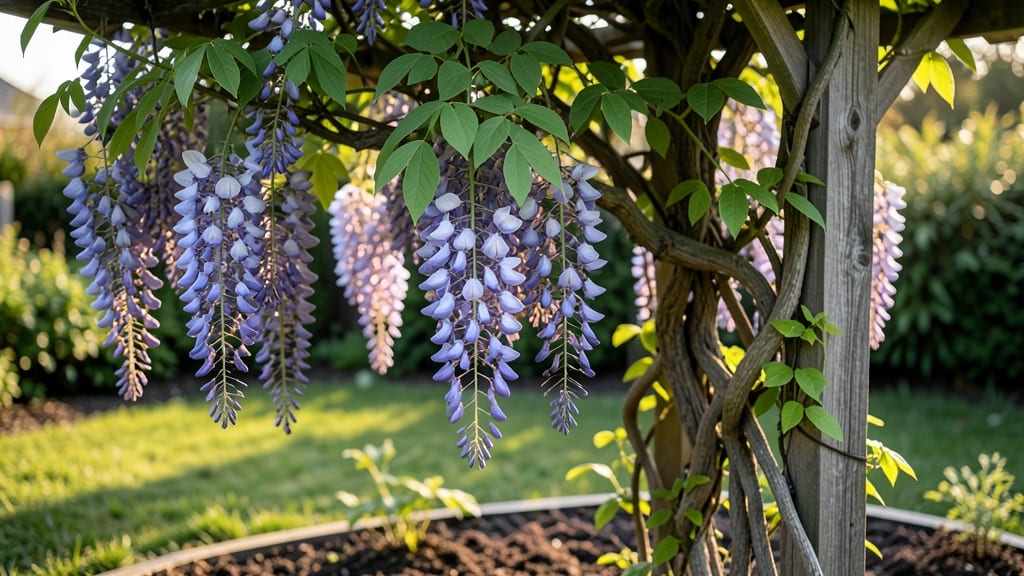
Wisteria flowers bloom in late spring, typically between May and June 🌸, when the air hums with their iconic fragrance and vines explode in cascades of color.
But here’s the catch: those stunning displays don’t happen on a strict calendar—they depend on your climate zone, the age of your plant, and even how you prune.
In USDA Zone 6a, where many gardeners live, wisteria often waits until late May or early June, while Southern growers might see blooms as early as April.
If you’ve planted wisteria hoping for instant drama, you’re in for a wait—most vines take 3 to 5 years to produce their first flowers. The good news?
With the right care, you can nudge those blooms forward by planting at the ideal time, feeding at the right moments, and avoiding pruning mistakes that stall flowering.
Below, I’ll break down the exact timing for your zone, how to predict your first blooms, and the simple adjustments that turn a non-flowering vine into a fragrant, show-stopping centerpiece.
Wisteria flowering timeline by USDA climate zones (with exact months)
Wisteria’s showstopping blooms arrive at different times depending on your USDA hardiness zone. In colder zones like 3-5, expect fragrant cascades in late spring to early summer, while warmer zones 8-9 may see flowers as early as February.
Understanding your zone’s typical bloom window helps you plan pruning, support structures, and even companion plantings for maximum impact.
Regional variations also play a role—Southern climates often bloom 2-4 weeks earlier than Northern counterparts due to milder winters. For example, Texas wisteria might flower in March, while Pacific Northwest vines wait until May.
Even within the same zone, early-blooming varieties like 'Amethyst Falls' can push timelines by 10-14 days compared to 'Prolific' or 'Royal Purple'.
Key factors influencing bloom timing include:
- Plant maturity (3-5 years for first flowers)
- Winter chill hours (critical for bud formation)
- Pruning history (over-pruning delays blooms)
- Microclimate (urban heat islands vs. rural areas)
Use this zone-by-zone breakdown to pinpoint when your wisteria will transform your garden into a fragrant, floral paradise. Pro tip: Mark your calendar for bud swell (early spring) and first flower clusters—these signals help you time pruning and fertilizing for next year’s display.
If you live in Zone 3-4, your first blooms will likely arrive in late May, just as peonies and lilacs are finishing their shows. This timing lets you extend your spring garden drama into early summer.
For Zone 5-6 gardeners, plan your wisteria party for Mother’s Day weekend—a perfect time to enjoy those fragrant purple cascades with morning coffee.
In warmer zones (7-9), wisteria often blooms earlier but may suffer from heat stress by late spring. To combat this, plant near deciduous trees for afternoon shade or choose heat-tolerant varieties like 'Silver Cascade'. These adaptations can push your bloom window 2-3 weeks later into early summer.
Don’t forget: First-year wisteria won’t bloom—focus on establishing a strong root system during its first 2-3 years. Even mature vines may skip a year if pruned incorrectly or under-fertilized.
For consistent blooms, prune after flowering (never in late winter) and apply a balanced fertilizer in early spring when buds begin to swell.
Pro tip: Use a garden journal to track your wisteria’s b
How to predict your wisteria’s first blooms based on planting time
Predicting when your wisteria will flower for the first time depends on two key factors: your planting time and the wisteria’s maturity stage. Unlike annuals, wisteria takes patience—most varieties need 3 to 5 years to produce their first significant blooms.
Understanding these timelines helps you set realistic expectations and adjust care to encourage earlier flowering.
Young wisteria vines focus energy on establishing roots and vines, so first blooms often appear modest. For example, a 2-year-old vine might produce a few small clusters, while a 5-year-old plant can burst into dramatic cascades.
Your climate zone also shifts bloom timing by 2 to 4 weeks, with southern regions blooming earlier than northern ones.
- 🌱 Planting Year (Year 0): Focus on root establishment; no blooms expected.
- 🌿 Year 1-2: Buds may form but rarely open; prioritize sunlight and water.
- 🌸 Year 3-4: First small blooms appear (spring); prune lightly to encourage growth.
- 🌺 Year 5+: Full blooms (spring); prune after flowering to maintain vigor.
- ⏰ Climate Adjustment: Add 2 weeks for cooler zones (e.g., Zone 5) or subtract 2 weeks for warmer zones (e.g., Zone 8).
To calculate your wisteria’s bloom window, start by noting your planting date. If you planted in March of Year 1, expect the first bud swell in March of Year 3 (assuming Zone 6 conditions).
For example, my Chinese wisteria planted in April 2020 produced its first blooms in May 2023—right on schedule for a 3-year delay.
Watch for seasonal cues like bud swell (early spring) and leaf emergence (late spring). These signals confirm your vine is ready to bloom. In Zone 7, buds typically swell by late February, while in Zone 9, they appear as early as January.
Adjust your pruning schedule accordingly—cutting too early can remove next year’s flower buds.
For faster blooms, ensure your wisteria gets 6+ hours of sunlight daily and well-draining soil. Over-fertilizing with nitrogen delays flowering, so use a balanced 10-10-10 fertilizer in early spring instead. My Japanese wisteria bloomed a full year earlier after switching to a phosphorus-rich fertilizer, which encourages flower production.
Remember, wisteria’s first blooms may be sparse, but each year brings more abundance. With patience and proper care, your vine will reward you with dramatic spring displays for decades. Track your progress by marking bloom dates—this helps you refine predictions for future plantings.