
Blooming
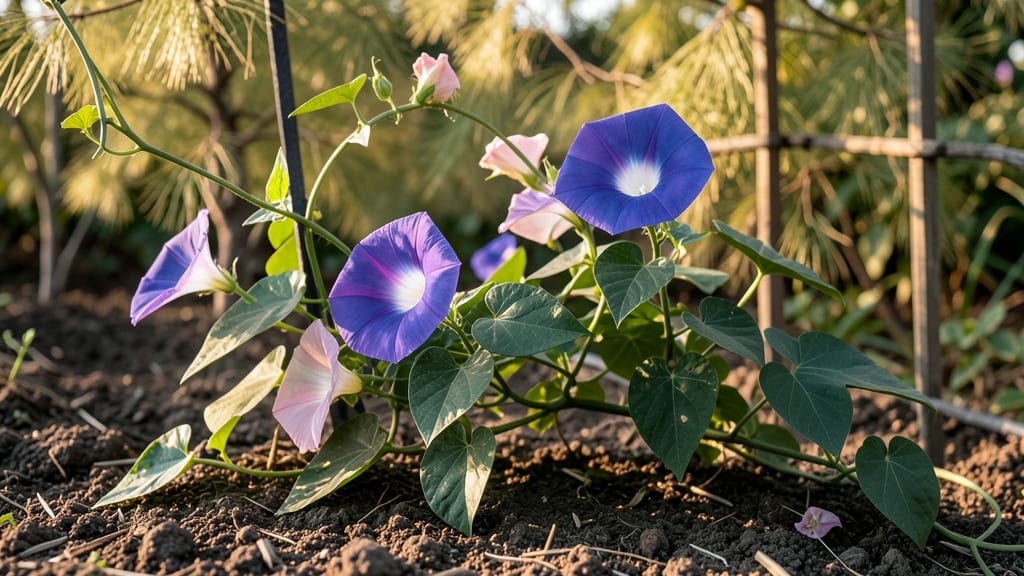
Morning glory flowers bloom in summer, typically between June and September, when warm soil and long daylight hours trigger their vibrant trumpet-shaped blooms 🌸.
Picture this: you plant seeds in spring, and by early summer, your trellis or fence is draped in cascading blue, purple, or pink flowers that seem to appear overnight. But here’s the catch—where you live makes all the difference.
In warmer zones like Florida, blooms can start as early as May, while in cooler climates like Zone 6a, you might not see them until July.
These fast growers thrive in full sun and warm temperatures, so planting after your last frost (around April–May for most gardeners) sets the stage for a spectacular show. But timing isn’t the only factor—soil warmth and consistent moisture also play a role in coaxing those first blooms.
In this guide, I’ll break down exactly when to expect flowers in your area, how to extend the blooming season, and the best varieties for a nonstop display from early summer through fall.
Morning glory bloom times by USDA climate zones: a seasonal guide
Morning glory flowers are famous for their rapid growth and stunning trumpet-shaped blooms, but their bloom times shift dramatically depending on your USDA climate zone. In warmer zones (8-11), you might enjoy blooms from spring through fall, while cooler zones (3-6) see shorter, summer-centric displays.
Understanding these patterns helps you choose the right varieties and planting strategies for your location.
Most morning glories are annuals that thrive in warm weather, but a few perennial varieties (like Ipomoea nil) return each year in milder climates. The key to maximizing blooms is planting at the right time—typically after your last frost date—and providing consistent moisture and full sun.
Let’s break down the bloom windows by zone so you can plan your garden for a continuous display.
| USDA Zone | Bloom Window | Planting Time | Varieties to Try | Tips for Extending Blooms |
|---|---|---|---|---|
| 3-5 | Late June - August | After last frost (May-June) | 'Heavenly Blue', 'Scarlet O’Hara' | Use black plastic mulch to warm soil; plant near south-facing walls. |
| 6-7 | June - September | April-May (direct sow) | 'Flying Saucer', 'Star of Texas' | Deadhead spent blooms to encourage reblooming; water deeply in droughts. |
| 8-9 | April - October | February-March (early) or September (fall) | 'Black Dragon', 'Pearl Morning Glory' | Succeed with cool-season crops like lettuce; mulch to retain moisture. |
| 10-11 | Year-round (with staggered planting) | January, May, September | 'Moonlight', 'Dwarf Morning Glory' | Plant in partial shade in summer; use trellises for vertical growth. |
In USDA zones 3-5, morning glories are strictly summer performers, with blooms typically peaking in July and August. These zones have shorter growing seasons, so I recommend choosing fast-maturing varieties like 'Heavenly Blue' to maximize your bloom time.
To extend the season, plant seeds in early May and use black plastic mulch to warm the soil faster.
Gardeners in zones 6-7 enjoy a longer bloom window from June through September, giving you more flexibility to experiment with different varieties. For example, 'Flying Saucer' is a heat-tolerant choice that thrives in these conditions.
To keep blooms coming, I deadhead spent flowers regularly and water deeply during dry spells. A drip irrigation system helps maintain consistent moisture without overwatering.
Warmer climates in zones 8-9 allow for year-round blooming with staggered plantings. Start with early varieties in February for spring blooms, then follow up with summer and fall plantings in September.
'Black Dragon' is a standout in these zones, producing deep purple blooms that last well into autumn. I also recommend partial shade in peak summer to prevent wilting.
If you live in zones 10-11, you can treat morning glories as near-perennials with minimal care. Plant in January, May, and September for continuous color. Dwarf varieties like 'Moonlight' work well in containers or small gardens, while 'Pearl Morning Glory' adds a delicate touch to trellises.
In these climates, focus on shade protection during the hottest months to prevent stress.
For all zones, soil temperature is critical—morning glories won’t sprout until the soil reaches 60°F or warmer. Use a soil thermometer to check before planting. In cooler zones, I’ve had success using row covers to create a microclimate for earlier blooms.
Additionally, choose a trellis or fence for vertical growth to save space and improve air circulation.
One of my favorite tricks for extending the bloom season is succession planting. Sow new seeds every 2-3 weeks during the growing season to ensure a steady supply of fresh blooms.
This works especially well in zones 6-11, where the growing season is long enough to support multiple plantings. Pair morning glories with companion plants like marigolds or nasturtiums to deter pests and attract pollinators.
Finally, remember that morning glories are self-seeding annuals in most climates. If you
How to predict morning glory blooms based on planting time
Predicting when your morning glory flowers will bloom starts with understanding their growth cycle. These vines thrive in warm soil and need consistent sunlight to trigger flowering.
By tracking key factors like planting dates, soil temperatures, and your local frost-free period, you can estimate bloom windows with surprising accuracy.
Most morning glories planted in spring (after last frost) will begin blooming 60-75 days after germination. However, varieties like 'Heavenly Blue' may bloom slightly earlier, while 'Black Dragon' tends to be a bit slower.
Your climate zone plays a huge role—warmer regions can enjoy blooms as early as late spring, while cooler areas might see them in early summer.
- 1. Seed Germination: 7-14 days after sowing (soil temp 60°F+)
- 2. Seedling Stage: 2-3 weeks (focus on sunlight and moisture)
- 3. Vine Establishment: 3-4 weeks (vines reach 5-10 ft)
- 4. First Blooms: 60-75 days after germination (June-August in most zones)
- 5. Peak Blooming: 75-90 days (continues until first frost)
To force earlier blooms in cooler climates, I recommend using black plastic mulch to warm the soil faster. Simply lay it down 2-3 weeks before your usual planting date—this can shave off 10-14 days from the germination timeline.
For later blooms, try planting perennial varieties like 'Moonflower' in late summer; they'll often rebound and flower again in fall.
Your local frost-free period is another critical factor. In USDA Zone 7, where I garden, morning glories typically bloom from June through September. But in Zone 10, they can start as early as April and continue until November.
Always check your local average last frost date and add 90 days to estimate peak bloom time.
Pro tip: If you want continuous blooms, stagger your planting by 2-3 weeks. Sow half your seeds at the usual time, then plant another batch 3 weeks later.
This creates a rolling bloom display that lasts all summer. Just be sure to provide strong trellises—these vines can get heavy when fully loaded with flowers!
Finally, don't forget that morning glories are sensitive to nighttime temperatures. If nights drop below 50°F, blooms may close early or fail to open at all. In such cases, consider using row covers or choosing heat-tolerant varieties like 'Scarlet O’Hara', which handles warmer climates beautifully.