
Watering
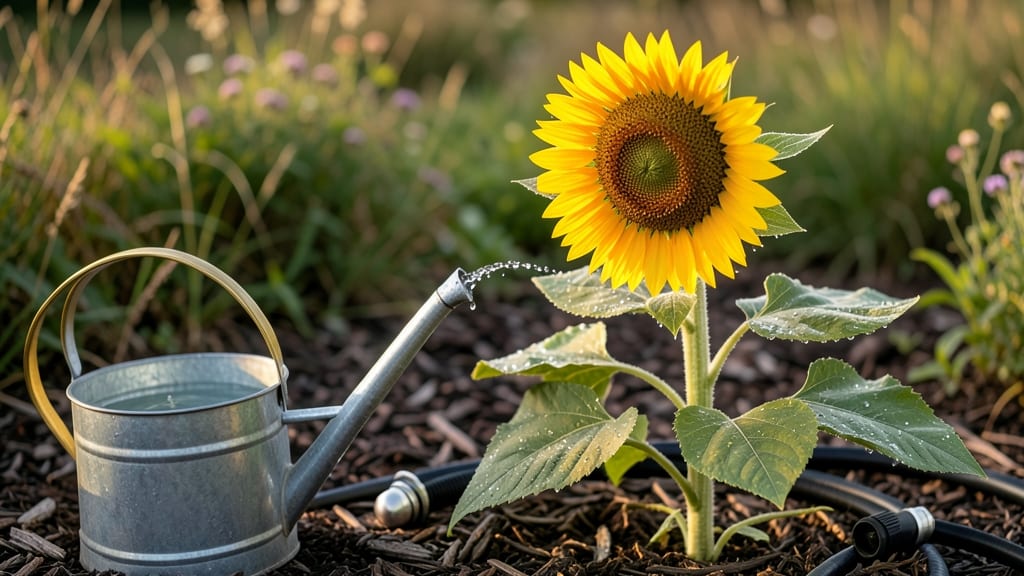
Watering sunflower plants 🌻 the right way is the secret to those 12-foot giants you’ve always dreamed of growing.
Picture this: You’ve just planted your seeds, and by summer, your garden should be a golden skyline. But too little water, and those stalks wilt before they reach their potential. Too much, and you’ll drown the roots before they even take hold.
Sunflowers thrive on deep, infrequent watering—think of it like filling a reservoir for their roots to drink from. This isn’t just about keeping them alive; it’s about unlocking their full height and vibrant blooms.
In this guide, I’ll walk you through the exact watering schedule, seasonal adjustments, and the critical mistakes that stunt growth—so you can grow sunflowers that turn every neighbor’s head.
How deep watering boosts sunflower growth and prevents wilting
Sunflowers thrive when their roots dive deep—literally. Unlike shallow watering, which only moistens the top inch of soil, deep-soil watering encourages roots to grow 3-4 feet down, creating a sturdy foundation for those towering 12-foot stalks.
This technique isn’t just about survival; it’s about vibrant blooms and drought resistance that keep your sunflowers standing tall even in summer heat.
Most gardeners make the mistake of watering just enough to keep the soil damp at the surface. But sunflowers need consistent moisture at their root zone—the area where 60-70% of their roots develop.
When you water deeply, you’re telling the plant, "Go deeper, find water, and grow strong." Shallow watering, on the other hand, leads to weak root systems and wilting stalks that can’t support their own weight.
Here’s the science: Sunflowers are deep-rooted annuals, meaning they invest energy in growing long taproots to access water and nutrients. When you water shallowly, roots stay near the surface, making them vulnerable to drought stress and wind damage.
Deep watering mimics natural rainfall, encouraging roots to explore downward where moisture and nutrients are more stable.
Ready to transform your sunflowers from floppy stems to showstopping giants? Follow this step-by-step deep-watering technique designed to maximize root growth and minimize wilting. The key is patience—sunflowers reward you for giving them the right kind of hydration.
💧 Step-by-Step Deep Watering for Sunflowers
- 1 Choose the right time: Water in the early morning (before 10 AM) to reduce evaporation and fungal risks. Avoid evening watering, which can leave foliage damp overnight.
- 2 Use the right tool: A soaker hose or drip irrigation is ideal, but a garden trowel helps check soil depth. For containers, water until 20% runs out the drainage holes.
- 3 Target the root zone: Water until the soil is moist 12-18 inches deep. For young seedlings, aim for 6 inches deep. Use a trowel to check moisture—damp soil at this depth means success!
- 4 Water slowly and deeply: Apply water over 20-30 minutes to allow it to penetrate. Avoid rapid pouring, which causes runoff. For mature plants, 1-2 gallons per watering is ideal.
- 5 Mulch to retain moisture: Spread 2-3 inches of mulch (straw or wood chips) around the base (but not touching the stem) to lock in water and regulate soil temperature. Replenish mulch as it breaks down.
- 6 Adjust for growth stages: Young plants (first 4 weeks) need frequent shallow watering (every 2-3 days). Mature plants (after 6 weeks) thrive on deep watering every 3-5 days. In summer, increase to every 2 days.
Deep watering isn’t just about quantity—it’s about consistency. Sunflowers hate moisture fluctuations, which can cause roots to expand and contract, weakening their structure.
By keeping the soil evenly moist at depth, you’re creating an environment where roots can grow long and strong, supporting those 6-foot stalks without bending.
Think of your sunflower’s root system like a tree’s roots—they need space to spread and access to deep water. When you water shallowly, roots stay clustered near the surface, making the plant more susceptible to wind damage and heat stress.
Deep watering encourages roots to explore downward, creating a stable anchor that keeps your sunflowers upright even in storms.
One of the biggest misconceptions about sunflowers is that they’re drought-tolerant once established. While they are drought-resistant, that doesn’t mean they thrive on neglect. A deep-rooted sunflower with consistent moisture will outperform a shallow-rooted one in every way—taller stalks, larger blooms, and better seed production. Invest
Sunflower watering schedule: frequency, timing, and seasonal adjustments
Sunflowers thrive on consistency, but their water needs shift dramatically from sprout to towering bloom. Young seedlings demand daily moisture to establish roots, while mature plants develop drought resistance once their taproots reach 3 feet deep.
The key? Deep, infrequent watering that mimics natural rainfall patterns and keeps soil evenly moist but never soggy.
Timing matters just as much as frequency. Watering in the early morning (before 10 AM) gives foliage time to dry, preventing fungal diseases like powdery mildew. Avoid evening watering—wet leaves overnight create the perfect environment for pathogens.
For container-grown sunflowers, check soil moisture daily since pots dry out 3x faster than in-ground beds.
⚠️ Critical Watering Warning: The #1 Mistake Killing Sunflowers
Shallow watering stresses plants by encouraging surface roots. Instead, water until 12 inches deep—use a trowel to check moisture levels. Overwatering (yellowing leaves) is just as deadly as underwatering (wilting stalks).
Adjust your schedule by season: Spring and fall call for watering every 3-4 days, while summer heatwaves may require daily checks. Mulch with 3 inches of straw to retain moisture and regulate soil temperature. During heavy rains, pause watering entirely—sunflowers' deep roots access groundwater when needed.
Container sunflowers need special attention. Their small root zones dry out quickly, so water when the top 1 inch of soil feels dry. Use self-watering pots or drip irrigation systems to maintain consistent moisture.
For in-ground plants, reduce watering as stalks mature—overwatering at this stage causes premature flower drop.
Watch for these signs: Drooping leaves signal thirst, while yellowing foliage or black stems indicate overwatering. Adjust immediately—sunflowers bounce back quickly when corrected. In drought-prone areas, consider drought-tolerant varieties like 'ProCut' or 'Moulin Rouge' that handle irregular watering better than standard types.
Pro tip: Use a moisture meter or the "squeeze test"—gently press soil between fingers. If it crumbles easily, it's time to water. With this schedule, your sunflowers will grow 6-12 feet tall with minimal effort, turning your garden into a golden masterpiece. 🌻