
Planting
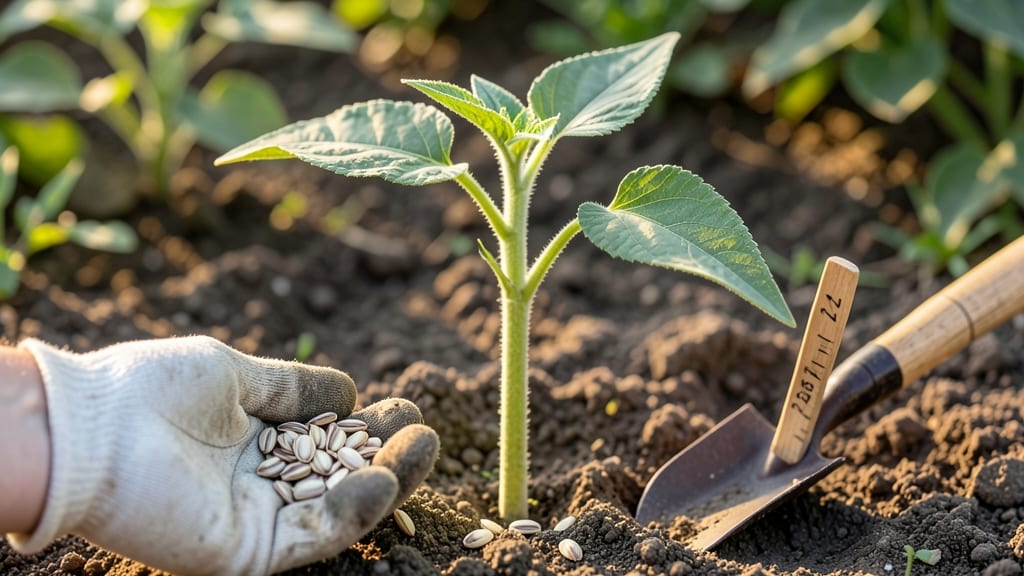
Planting sunflowers at the right depth—1 inch deep—is the foundation of strong stems and those iconic giant blooms you’ve been dreaming of.
Struggling to grow sunflowers that flop over or produce tiny blooms? The secret often lies in the soil—specifically, how deep you plant those seeds. Get it wrong, and even the hardiest varieties will struggle to reach their full potential.
In this guide, I’ll walk you through the exact planting depth for 🌻 sunflowers, how to adjust for your soil type, and the common mistakes that lead to weak stems or slow germination.
By the end, you’ll know exactly where to place each seed for healthy growth and bigger blooms—no guesswork involved.
Optimal sunflower planting depth by seed type and variety
Getting the sunflower planting depth right is one of the easiest ways to ensure your seeds grow into strong, towering plants with massive blooms. Too shallow, and your seeds may dry out before sprouting. Too deep, and they’ll struggle to break through the soil, leading to weak stems or rot.
The ideal depth depends on your seed type and sunflower variety, but most gardeners find success with a range of ½ inch to 1.5 inches.
For giant sunflower varieties like 'Mammoth' or 'Russian Giant,' stick to the deeper end of the spectrum—around 1 to 1.5 inches—to give their robust roots room to establish.
In contrast, dwarf varieties such as 'Teddy Bear' or 'Little Becka' thrive when planted just ½ to 1 inch deep, as their smaller seeds and delicate stems don’t need as much soil coverage.
Understanding these nuances can make the difference between a floppy stem and a sunflower that reaches its full height potential.
When planting giant sunflower seeds, I always make sure to firm the soil gently around the seed to eliminate air pockets. This helps prevent the seed from drying out or shifting too much once germination begins.
For standard varieties, a simple finger-depth measurement works perfectly—just press the seed into the soil until it’s covered by about 1 inch. This depth ensures the seed has enough moisture to sprout while still allowing the shoot to push through the soil easily.
One common mistake I see is planting seeds too deep in heavy clay soil. Clay holds moisture well but can suffocate seeds if they’re buried too deeply.
In these conditions, I recommend planting at the shallower end of the range—around ½ inch—and mixing in organic matter like compost to improve drainage.
For sandy soil, which drains quickly, you can plant slightly deeper (1 to 1.25 inches) to help retain moisture around the seed.
If you're growing sunflowers in containers, the rules are slightly different. Since pots dry out faster, I always plant seeds just ½ inch deep and use a well-draining potting mix. This prevents the soil from becoming waterlogged, which can lead to seed rot.
Additionally, I make sure the container is large enough—at least 12 inches deep—to accommodate the sunflower’s taproot as it grows.
Another pro tip is to pre-soak your seeds before planting, especially if your soil is dry or sandy. This gives them a head start on hydration, reducing the risk of them drying out before they sprout.
For dwarf varieties, which have smaller seeds, I often plant them in small clusters of 2-3 seeds per spot. This increases your chances of germination while still giving each seedling enough space to grow.
Avoid the temptation to plant seeds too shallowly, even if you’re eager to see quick results. Seeds planted at less than ½ inch deep can dry out or be blown away by wind or rain.
I’ve learned this the hard way—once, I planted a batch of dwarf sunflowers too shallowly, and half of them never sprouted. Since then, I’ve made it a rule to measure my planting depth with a small ruler or even the end of a pencil for accuracy.
For direct-sown sunflowers in the garden, I always recommend planting in rows or hills for better airflow and easier maintenance. Space seeds 6 inches apart within rows and 2 to 3 feet apart between rows to give plants room to grow.
This spacing also makes it easier to monitor each plant’s progress and adjust watering or support as needed. If you’re growing sunflowers for cut flowers or seed production, wider spacing (3 feet apart) is ideal to prevent overcrowding.
Finally, remember that soil temperature plays a role in germination success. Sunflower seeds germinate best in soil that’s at least 55°F (13°C). If you’re planting early in the season, consider using a seedling heat mat or waiting until the soil has warmed up naturally.
Once your seeds sprout, keep the soil consistently moist but not soggy, and watch as your sunflowers reach for the sky.
How to adjust planting depth for soil type and climate
Your sunflower seeds might look perfect, but soil type and climate conditions can turn a great planting session into a flop. In sandy soil, moisture drains too fast, while clay soil holds too much water—both can send your seeds into depth trouble.
Even the right season matters: spring planting in cool climates needs deeper seeds to avoid frost damage, while humid summers demand shallower planting to prevent rot.
Let’s break down how to tweak your planting depth for different soils and climates. The standard 1-inch rule is a great starting point, but your local conditions might need adjustments.
For example, in arid climates, you’ll want to plant slightly deeper to help seeds access moisture, while humid regions call for shallower depths to avoid fungal issues. Seasonal timing also plays a role—fall plantings often need a little extra depth for winter protection.
Adjusting Sunflower Planting Depth
Sandy Soil
- Pros: Faster germination
- Cons: Seeds dry out quickly
Plant 1.5 inches deep to retain moisture near seeds.
Clay Soil
- Pros: Retains moisture well
- Cons: Risk of overwatering
Plant 0.75 inches deep to avoid waterlogging.
Dry Climates
- Pros: Less fungal risk
- Cons: Needs more water
Plant 1.25 inches deep for moisture access.
Humid Climates
- Pros: Faster growth
- Cons: Higher rot risk
Plant 0.5 inches deep to reduce moisture buildup.
Seasonal Adjustments
- Spring: 1 inch deep (moderate moisture)
- Fall: 1.25 inches deep (extra frost protection)
If you’re in a hot, dry climate, consider mixing organic matter like compost into your soil before planting. This helps retain moisture without altering your planting depth too much.
For cool-season planting, like late spring in Zone 5, add a light mulch after germination to protect young stems from temperature swings.
Troubleshooting depth issues starts with observing your plants. If your sunflowers emerge leggy or flop over, they may have been planted too shallow. Conversely, if germination is slow or stems appear stunted, they might be too deep.
Adjust next season by keeping a planting journal—note soil type, climate, and depth for each batch.
Remember, consistency is key. Once you find the right depth for your conditions, stick with it. With these adjustments, your sunflowers will grow strong, tall, and ready to bloom into those showstopping blooms you’ve been dreaming of. Happy planting! 🌻