
Watering
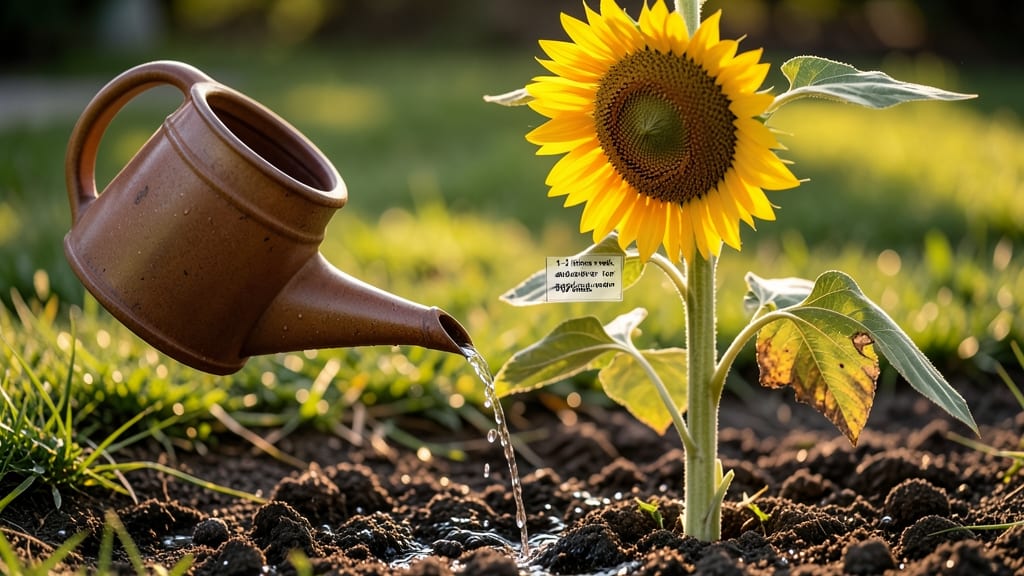
Sunflowers need about how much water does a sunflower need per day—typically 1-2 inches per week—but how you deliver it makes all the difference between a thriving 🌻 and a struggling seedling.
Picture this: You’ve just planted your sunflower seeds, dreaming of a towering, golden bloom by summer. But without the right watering routine, you’re left with droopy stems or—worse—roots that suffocate in soggy soil. The key isn’t just how much water they get, but how you give it to them.
Young sunflowers need consistent moisture to establish strong roots, while mature plants can handle slightly drier conditions. Too little water stunts growth, but overwatering drowns those delicate roots before they can reach their full potential.
The trick? Deep watering early in the day to keep the soil just right—moist but never waterlogged.
In this guide, I’ll break down the exact watering schedule for every growth stage, from seedling to full bloom, plus how to adjust for your climate and soil type. No guesswork—just science-backed tips to help your sunflowers grow tall and proud.
Daily water requirements for sunflowers by growth stage (with soil-moisture triggers)
Sunflowers thrive on consistency, but their water needs change dramatically from seedling to maturity. Germination requires precise moisture, while mature plants develop deeper roots that need deep, infrequent watering. The key is monitoring soil moisture triggers—how deep and how often to water based on your sunflower's stage.
Newly planted seeds and seedlings are the most delicate. They need 1-2 inches of water weekly, applied gently to avoid displacing soil. Overwatering at this stage can cause seed rot or fungal diseases like damping off.
Use a spray bottle or fine mist for the first few days, then gradually switch to shallow watering as they establish roots.
Here’s how their water needs evolve alongside their growth—plus the soil-moisture triggers to watch for at each stage:
To check soil moisture, stick your finger 1–2 inches deep for seedlings or 3–4 inches deep for mature plants. If the soil feels dry at that depth, it’s time to water.
For sandy soil, which drains quickly, you may need to water more frequently, while clay soil holds moisture longer and requires less frequent watering.
Watch for drought stress signs like wilting leaves, yellowing foliage, or dry soil cracks. These indicate your sunflowers need water immediately. However, overwatering is just as harmful—look for yellowing leaves, mushy stems, or fungal spots on foliage.
Always water in the early morning to reduce evaporation and fungal risks.
Mulching with 2–3 inches of organic mulch (like straw or wood chips) helps retain soil moisture and regulate temperature. This reduces the need for frequent watering while protecting roots from extreme heat or cold.
For container-grown sunflowers, ensure pots have drainage holes and water when the top 1 inch of soil feels dry.
In hot climates, increase watering frequency by 20–30% to compensate for higher evaporation rates. Conversely, in cooler months, reduce watering to every 7–10 days as growth slows. Always adjust based on rainfall—skip watering if you’ve had 1 inch of rain in the past 24 hours.
Pro tip: Use a moisture meter for precision, especially in container gardens where soil dries out faster. For large garden beds, group sunflowers together to create a microclimate that retains moisture more efficiently.
With the right watering routine, your sunflowers will grow taller, stronger, and more resilient—ready to bloom like sun-soaked giants.
How to adjust watering for sunflower growth conditions (climate, soil, and seasonal factors)
Sunflowers thrive when their watering routine adapts to your local climate, soil type, and seasonal shifts. In hot climates like Arizona, I double my watering frequency during peak summer months, while in cooler Pacific Northwest regions, I reduce it by half.
The key is understanding how these factors interact with your sunflower’s root depth and transpiration rate.
Your soil type dictates how often you water. Sandy soil drains quickly, requiring daily checks for moisture, while clay soil holds water longer, needing less frequent but deeper watering. I test soil moisture by sticking my finger 2 inches deep—if it’s dry, it’s time to water.
Seasonal changes also play a role: spring showers mean less supplemental water, while winter dormancy reduces needs entirely.
💧 Daily Water Needs by Condition
| Condition | Water Amount | Frequency |
|---|---|---|
| Sandy Soil | 1-2 gallons | Every 1-2 days |
| Clay Soil | 2-3 gallons | Every 3-4 days |
| Hot Climate (90°F+) | 3-4 gallons | Every 2 days |
| Cool Climate (60°F-75°F) | 1-2 gallons | Every 3-5 days |
| Spring/Rainy Season | 1 gallon | Every 5-7 days |
💡 Pro Tip: Always water at soil level, not leaves, to prevent fungal diseases like powdery mildew.
Seasonal adjustments are critical. During summer, I water my sunflowers deeply every 2 days to encourage strong root growth, while in winter, I cut back to bi-weekly watering or only when the soil feels completely dry.
I also monitor rainfall patterns: if we get 1 inch of rain, I skip watering for 3-4 days. This flexibility prevents both underwatering and overwatering, which can lead to root rot.
Watch for visual cues to fine-tune your watering. Underwatered sunflowers show wilting leaves, yellowing foliage, and dry soil cracks, while overwatered plants develop yellowing leaves, mold, and a mushy stem base. I keep a small notebook to track these signs alongside my watering schedule.
For example, if my sunflowers wilt by mid-afternoon in clay soil, I know I need to increase frequency slightly.
Mulching is my secret weapon for adjusting water needs. A 2-3 inch layer of organic mulch like straw or wood chips retains moisture in sandy soil and prevents evaporation in hot climates.
I apply mulch within 2 weeks of planting and replenish it every 2-3 months. This simple step reduces my watering frequency by 30-40% while keeping roots cool and hydrated.
Finally, container-grown sunflowers need more frequent watering than in-ground plants because pots dry out faster. I water my potted sunflowers every 1-2 days in summer, checking moisture levels at the root zone.
If the top inch of soil is dry, it’s time to water. For containers, I also use self-watering pots or wick systems to maintain consistent moisture without overwatering.