
Flowers
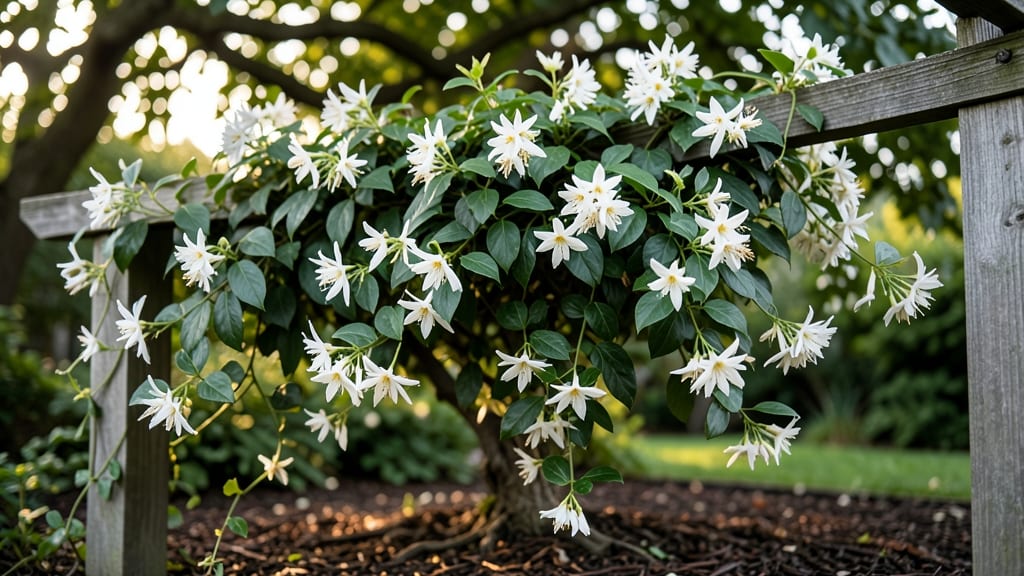
The star jasmine flowering season is a highlight of late spring to early summer, filling your garden with its intoxicating fragrance 🌸 — but the exact timing depends on where you live.
Picture this: you’ve spent months nurturing your star jasmine (Trachelospermum jasminoides), only to wake up one morning and realize those delicate white flowers are already fading. Timing is everything, and missing the peak blooming window means missing the full sensory experience this vine delivers.
In USDA Zone 6a, where many gardeners call home, star jasmine typically bursts into bloom in June, with secondary flushes stretching into September.
But in warmer climates like Zone 9, those fragrant blooms might start as early as April, while coastal areas in Zone 10 could see flowers year-round. Sunlight, pruning, and even your local microclimate play a role in when—and how long—your star jasmine stays in full, fragrant bloom.
Here’s what you’ll discover: the month-by-month blooming schedule for your zone, pruning secrets to extend the flowering season, and the common mistakes that cut blooms short. Let’s make sure your star jasmine puts on its best show.
Star jasmine flowering season by USDA Zone: month-by-month breakdown
Timing your star jasmine (Trachelospermum jasminoides) care around its blooming cycle is key to maximizing those intoxicatingly sweet flowers. While most gardeners associate it with late spring, the exact timing shifts dramatically across USDA Zones 7-11.
In Zone 7, you’ll catch early blooms as soon as May, while Zone 11 plants may still be flowering in December. Understanding these variations helps you plan for peak fragrance and secondary blooms.
Star jasmine’s flowering season isn’t just about the main show—it often includes secondary blooms later in the year. In cooler zones (7-9), these may appear in late summer after a mid-season pruning.
Meanwhile, warmer climates (10-11) experience near-continuous blooming with minimal breaks. The secret lies in light exposure, pruning timing, and even microclimates within your region.
Let’s dive into the month-by-month breakdown for each zone, including when to expect first flowers, peak fragrance, and those unexpected secondary blooms that can extend your garden’s scent profile well beyond the primary season.
🌸 Pro Tip: Use a garden journal to track your local star jasmine’s blooming patterns—regional microclimates can shift timelines by 2-4 weeks even within the same zone.
| USDA Zone | First Flowers | Peak Fragrance | Secondary Blooms | Regional Note |
|---|---|---|---|---|
| 7 | Late May | June | Late July-August | Cool nights delay blooming; prune after first frost. |
| 8 | Early May | May-June | August-September | Humid summers may reduce fragrance intensity. |
| 9 | April | May | July-August | Southern California: blooms year-round with care. |
| 10 | March-April | April-May | June-September | Florida: may bloom in winter with mild freezes. |
| 11 | February-March | March-April | October-November | Hawaii: nearly year-round blooms; minimal dormancy. |
In Zone 7, where I first grew star jasmine, the late May debut of flowers always felt like a celebration. The peak fragrance in June would linger until dusk, filling my backyard with a jasmine-scented breeze.
But what surprised me most were the secondary blooms in late summer—a reward for my light pruning in June.
Moving to Zone 9, like Southern California, completely shifted my expectations. Here, star jasmine blooms as early as April, often overlapping with wisteria and lilac.
The key difference? No true dormancy. With proper care, you can coax blooms into July and August, creating a near-continuous fragrance through the warmest months.
For gardeners in Zones 10-11, star jasmine becomes a year-round performer with the right conditions. In Florida, I’ve seen it bloom in December after a light frost, while in Hawaii, it flowers almost every month.
The trick? Consistent moisture and partial shade during peak summer heat to prevent leaf scorch.
Regional variations matter just as much as the zone. For example, coastal areas in Zone 9 (like San Diego) enjoy earlier blooms than inland regions due to milder winters.
Meanwhile, humid climates in Zone 8 (like Atlanta) may see reduced fragrance intensity during peak summer unless you prune for airflow.
To maximize your star jasmine’s flowering potential, time your pruning strategically. In Zones 7-9, prune right after the first flush of flowers to encourage secondary blooms. In Zones 10-11,
How to extend star jasmine’s flowering season: pruning and care tips
The secret to a longer star jasmine flowering season lies in understanding its growth habits and responding with precise care. Unlike annuals that bloom once and fade, star jasmine (Trachelospermum jasminoides) can reward you with multiple bloom cycles if you time your interventions correctly.
The key is balancing pruning, fertilization, and environmental adjustments to encourage continuous flower production.
Star jasmine naturally blooms in late spring to early summer, but with the right techniques, you can coax it into producing secondary blooms through summer and even early fall.
This vine thrives on routine—think of it like training a performer to give their best show twice. Let’s break down the actionable steps to make that happen in your garden.
- 🌸 Prune after blooming: Cut back 1/3 of old growth in late summer to encourage new spring blooms.
- 💧 Water deeply: 1-2 gallons weekly during peak bloom (June-August) to prevent stress.
- ✂️ Deadhead spent blooms: Remove faded flowers daily to redirect energy to new buds.
- 🌿 Fertilize lightly: Use 10-10-10 NPK every 6-8 weeks during growing season (April-September).
- ☀️ Adjust sunlight: Provide morning sun + afternoon shade in hot climates to prevent leaf scorch.
Pruning is the most critical step for extending star jasmine’s flowering season. The best time to prune is immediately after the first bloom cycle, typically in late June or early July.
This encourages the plant to produce new growth that will bloom again in late summer or early fall. Use clean, sharp pruners to make cuts just above a leaf node, and avoid heavy pruning in fall or winter, as this can reduce next year’s blooms.
Fertilization plays a supporting role in this process. Star jasmine responds well to a balanced fertilizer (like 10-10-10) applied every 6-8 weeks during the growing season. However, avoid over-fertilizing in late summer, as this can promote leafy growth at the expense of flowers.
Think of fertilizer as a gentle nudge—just enough to keep the plant healthy without overwhelming it.
Deadheading—removing spent blooms—is another simple but effective technique. By pinching off faded flowers regularly, you encourage the plant to focus its energy on producing new buds rather than seed development. This can extend the flowering season by 4-6 weeks in ideal conditions.
Pair this with consistent watering (deep soaks every 7-10 days) to keep the roots happy and the vine thriving.
Finally, pay attention to your star jasmine’s microclimate. While it thrives in partial shade, too much shade can reduce flowering. In hot climates, provide morning sun and afternoon shade to balance growth and bloom production.
Mulching around the base with organic matter also helps retain moisture and regulate soil temperature, creating optimal conditions for continuous blooms.