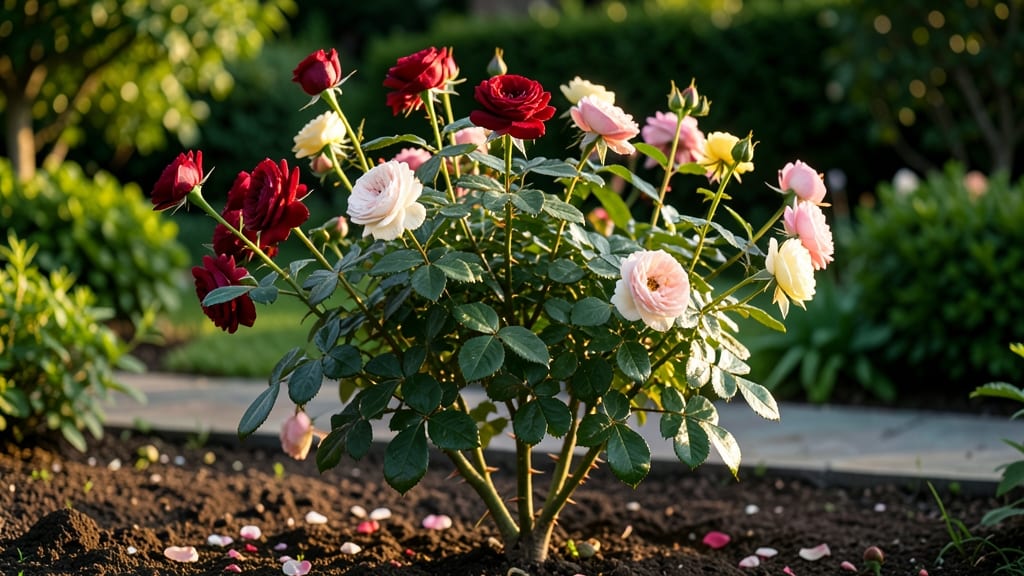
Understanding rose flower height is the first step to designing a garden that thrives with beauty and balance — and it’s easier than you think.
Planning your rose garden but struggling to visualize how different varieties will fit into your space? You’re not alone. A 3-foot dwarf rose in a window box looks completely different from a 10-foot climbing variety draped over a trellis, and getting it wrong can mean wasted space or overcrowded blooms.
Height isn’t just about aesthetics—it affects sunlight exposure, pruning needs, and even how you arrange companion plants. A shrub rose might need 3 feet of clearance for airflow, while a climber could stretch 20 feet if given the right support.
In this guide, I’ll break down the height ranges of popular rose types, share pruning secrets to control growth naturally, and help you pick the perfect varieties for your garden’s layout — whether you’ve got a tiny balcony or a sprawling backyard.
Rose Height Range
1 ftto10 ft
0 ft
3 ft
6 ft
9 ft
12 ft
🌱
Medium Shrub
Rose flower height by variety: a comprehensive growth chart comparison
Choosing roses for your garden often comes down to one key question: how tall will they grow? The answer determines everything from trellis placement to sunlight exposure and even your pruning schedule.
Roses range from miniature varieties under 2 feet to climbing giants reaching 20 feet, making height the most critical factor in garden planning. Let’s explore how different rose types mature in size and what spacing you’ll need for each.
Understanding mature rose heights helps you avoid overcrowding, ensure proper airflow, and create stunning vertical displays. For example, a 3-foot floribunda planted too close to a 10-foot climber will struggle for sunlight, while dwarf roses need careful placement to avoid being overshadowed.
Below, I’ve categorized the most popular rose varieties by height and included their ideal spacing requirements for a thriving garden.
Pro Tip: Always measure your garden space before planting. Most roses need 2-4 feet of clearance around them for airflow, and taller varieties require sturdy supports. If you’re working with limited space, dwarf or patio roses are your best bet—some even thrive in containers!
| Variety Type |
Mature Height (ft) |
Spread (ft) |
Ideal Spacing (ft) |
Seasonal Growth Notes |
| Miniature Roses |
1-2 |
1-2 |
1-2 |
Slow growers; prune lightly in spring to maintain shape. |
| Patio Roses |
2-3 |
2-3 |
2-3 |
Compact; great for containers or small gardens. |
| Floribunda Roses |
3-4 |
2-3 |
2-3 |
Fast growers; prune after first bloom to encourage reblooming. |
| Hybrid Tea Roses |
4-6 |
2-3 |
3-4 |
Tall and elegant; stake tall stems to prevent flopping. |
| Shrub Roses |
4-6 |
3-5 |
3-5 |
Low-maintenance; prune to open center for airflow. |
| Climbing Roses |
10-20 |
4-6 |
6-8 (from support) |
Fast vertical growth; train on trellis or fence. |
| Grandiflora Roses |
5-6 |
3-4 |
4-5 |
Hybrid of tea and floribunda; prune to shape in late winter. |
| English Roses |
4-8 |
3-5 |
4-6 |
Fragrant and bushy; prune lightly to preserve natural shape. |
Rug
How rose height affects garden design and maintenance
Choosing roses based on flower height transforms your garden from a flat landscape into a layered masterpiece. Tall climbers like 'New Dawn' can reach 10+ feet, while miniature roses stay under 2 feet.
This height variation isn't just decorative—it dictates sunlight access, pruning schedules, and even wind protection for delicate blooms.
In small gardens, dwarf varieties (1-3 ft) create focal points without overwhelming space, while shrub roses (3-6 ft) add mid-level interest. For large properties, climbing roses on trellises can frame walkways or arbors, but require strategic placement to avoid shading shorter plants below.
Here’s how height impacts your garden’s flow and care routine:
Tall Roses (6+ ft)
Pros:
- Vertical space utilization
- Privacy screens or trellis focal points
- Extended bloom visibility
Cons:
- Requires sturdy trellises
- Shades shorter plants below
- Harder to prune at height
Medium Roses (3-5 ft)
Pros:
- Balanced garden proportions
- Easier maintenance than tall roses
- Versatile placement options
Cons:
- Limited vertical impact
- May need staking
- Less dramatic than climbers
Dwarf Roses (1-3 ft)
Pros:
- Perfect for containers or borders
- Low-maintenance pruning
- Ideal for small spaces
Cons:
- Limited height for vertical interest
- May need extra protection from wind
- Smaller bloom quantity
For small gardens, I recommend placing tall roses at the back of borders, with medium-height varieties in the middle, and dwarf roses closest to walkways. This creates a natural tiered effect while maximizing every inch of space.
In larger gardens, use climbing roses on arbors to define pathways or create vertical gardens against fences.
When it comes to maintenance, taller roses need annual pruning in late winter to control height and shape, while dwarf varieties only require light trimming after blooming.
Always prune 1/3 of the plant’s height in one season to avoid stress. For climbing roses, prune in early spring to encourage new growth for summer blooms.
Avoid the common mistake of overcrowding tall roses—they need 3-5 feet of space to prevent disease spread and ensure proper airflow. In containers, choose dwarf or semi-dwarf varieties and prune regularly to maintain compact growth.
With thoughtful placement and pruning, rose height becomes your garden’s most powerful design tool. 🌹
★★★★★4.7(8 reviews)
|