
Trees
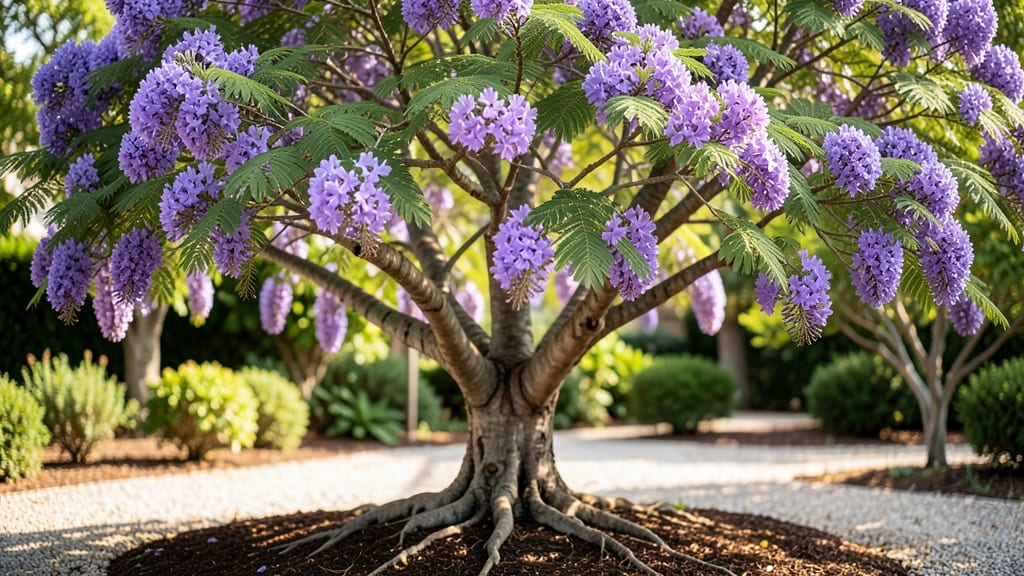
The purple jacaranda mimosifolia flowering tree 🌸 is the kind of tree that turns heads—and entire neighborhoods—when its fragrant, lavender-blue blooms cascade like a waterfall in spring.
But here’s the catch: not every jacaranda delivers that jaw-dropping show year after year. Too little sun, the wrong pruning timing, or even a misplaced fertilizer can leave you staring at bare branches when your neighbors’ trees are in full glory.
If you’re dreaming of a dramatic purple canopy that draws crowds (and maybe even a few Instagram likes), you’re in the right place.
Below, I’ll walk you through the exact steps to trigger those stunning blooms—from the best planting window in USDA Zone 9b to the pruning secrets that keep your tree flowering like clockwork.
Ready to turn your backyard into a purple paradise? Let’s get started.
When does purple jacaranda bloom & key factors that trigger annual flowers
The purple jacaranda (Jacaranda mimosifolia) is famous for its stunning lavender-blue blooms that carpet branches in late winter and spring. But timing varies dramatically depending on your hemisphere and climate zone.
In the Northern Hemisphere, blooms typically appear from March to May, while in the Southern Hemisphere, they burst forth between September and November. Understanding these patterns is key to planning your landscape for maximum impact.
Your local climate zone plays a critical role in bloom timing. Jacarandas thrive in USDA zones 9b-11, where they experience mild winters and warm summers. In cooler zones (like 8a-9a), they may bloom later or produce fewer flowers unless you provide optimal growing conditions.
The tree’s flowering cycle is triggered by a combination of temperature shifts, sunlight exposure, and pruning practices—all of which we’ll explore in detail.
Sunlight is non-negotiable for jacaranda blooms. These trees demand full sun exposure (6-8+ hours daily) to produce their signature flowers. In shady conditions, they’ll focus energy on foliage growth instead of blooms. If your tree isn’t flowering as expected, check its light exposure first. Even mature trees can revert to a leafy state if deprived of sunlight, though they’ll recover with proper care.
| Factor | Northern Hemisphere | Southern Hemisphere | Key Tip |
|---|---|---|---|
| Bloom Season | March - May | September - November | Plant in full sun for reliable blooms |
| Temperature Trigger | 50-70°F (10-21°C) | 15-25°C (59-77°F) | Avoid late frosts that damage buds |
| Sunlight Needs | 6-8+ hours daily | 6-8+ hours daily | Prune to open canopy for better light penetration |
| Pruning Window | Late winter (Feb) | Late winter (Aug) | Remove dead wood but keep flowering branches |
| Watering Needs | Deep weekly (established) | Deep weekly (established) | Reduce watering before blooming season to stress roots slightly |
Temperature fluctuations are the primary trigger for jacaranda blooms. These trees respond to cool winter nights (50-60°F or 10-15°C) followed by warmer days (70-80°F or 21-27°C). In USDA zone 10+, where winters are mild, blooms may appear year-round but peak in spring and fall.
If your tree isn’t flowering, check if it’s experiencing consistent warmth without temperature swings—this can delay or prevent blooming entirely.
Pruning plays a surprisingly large role in encouraging annual blooms. The best time to prune is late winter, just before new growth begins. Remove dead, diseased, or crossing branches to improve airflow and sunlight penetration.
However, avoid heavy pruning in summer or fall, as this can reduce next year’s flower production. Focus on shaping rather than cutting back hard—jacarandas bloom on old wood, so preserve last year’s branches.
Soil conditions also influence flowering. Jacarandas prefer well-draining, slightly acidic to neutral soil (pH 6.0-7.0). Heavy clay soils can suffocate roots and reduce bloom production. If your tree is struggling, amend the soil with compost or sand to improve drainage.
Overwatering is another common issue—soggy roots lead to fewer flowers. Once established, jacarandas are drought-tolerant, but young trees need consistent moisture during their first few years.
Fertilization timing matters too. Apply a balanced, slow-release fertilizer (6-4-4 NPK) in early spring to support new growth and flower production. Avoid fertilizing in late summer or fall, as this can encourage tender new growth vulnerable to frost damage.
Organic options like composted manure or bone meal can also boost blooms without risking over-fertilization.
If your jacaranda isn’t blooming as expected, start with a diagnostic checklist:
- Is it getting 6+ hours of sun daily?
- Has it experienced temperature swings this season?
- Was it pruned correctly last winter?
- Is the soil well-draining?
Step-by-step guide to pruning & caring for jacaranda trees for maximum blooms
Your jacaranda mimosifolia tree thrives when you follow a seasonal care routine tailored to its natural growth cycles. Unlike many trees, jacarandas bloom on old wood, meaning last year’s growth produces this year’s flowers.
Pruning at the wrong time can reduce blooms dramatically, so timing is everything. Let’s break down the essential steps to keep your tree flowering like a purple dream every season.
First, understand that late winter to early spring (just after blooms fade) is the ideal pruning window for jacarandas. This timing ensures you remove dead wood while preserving next year’s flower buds.
Avoid pruning during summer or fall, as this can stress the tree and stunt flowering. Use sterilized pruning shears and a sharp saw for larger branches to prevent disease spread.
Step-by-Step Pruning & Care Guide
-
Step 1: Prune in Late Winter/Early Spring
Cut back dead or crossing branches to 30-40% of total volume. Avoid heavy pruning—this tree blooms on old wood!
-
Step 2: Adjust Soil pH to 6.0-7.0
Test soil and amend with lime for acidity or sulfur for alkalinity. Jacarandas prefer neutral to slightly alkaline soil.
-
Step 3: Water Deeply Weekly (Established Trees)
Soak the root zone to 12-18 inches deep. Young trees need bi-weekly watering during dry spells.
-
Step 4: Fertilize in Early Spring Only
Use a balanced 6-4-4 NPK fertilizer. Apply 1 cup per 10 sqft in March—never fertilize after June.
-
Step 5: Mulch with Organic Matter
Spread 3-4 inches of mulch (wood chips or bark) to retain moisture and regulate soil temp.
-
Step 6: Avoid Over-Pruning in Summer
Summer pruning stresses the tree and can reduce next year’s blooms. Only remove safety hazards.
One of the most common mistakes gardeners make is pruning too late or over-pruning. If you cut back more than 30% of the canopy, you risk fewer blooms the following season.
Another pitfall is fertilizing in summer, which encourages new growth that won’t harden off before winter, making the tree vulnerable to cold damage.
For maximum blooms, pair your pruning with consistent soil care. Jacarandas love well-draining soil with a pH between 6.0 and 7.0. If your soil is too acidic, add pelletized lime in early spring.
Avoid heavy clay soils, which can suffocate roots and reduce flowering. A layer of compost around the base also helps retain moisture and nutrients.
Finally, watch for pests like jacaranda psyllids or fungal issues such as powdery mildew. These can weaken the tree and diminish blooms. If you spot yellowing leaves or sticky residue, treat with neem oil or an insecticidal soap.
With the right care, your jacaranda mimosifolia will reward you with vibrant purple cascades year after year.