
Flowers
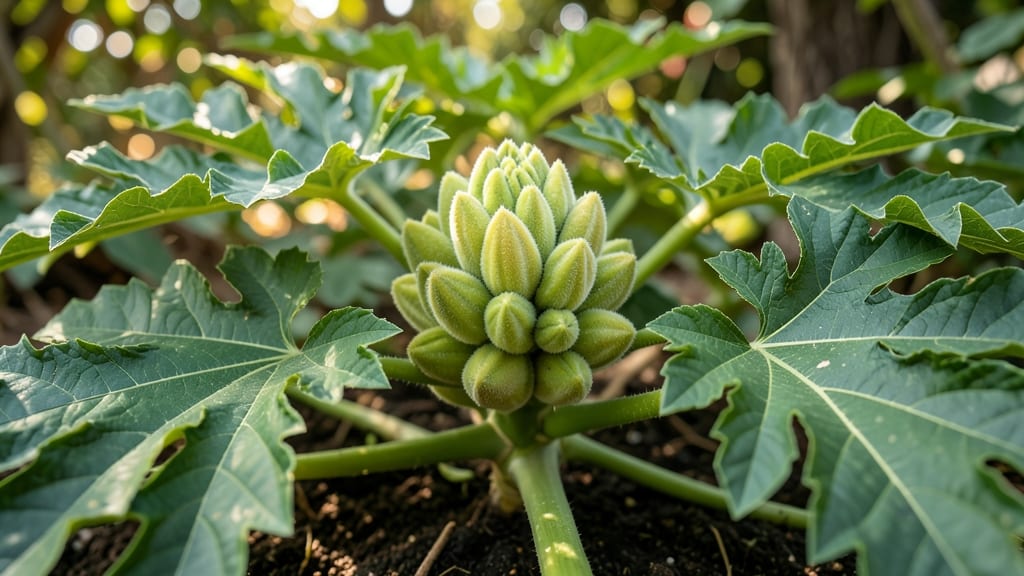
Papaya flower buds are the first step toward a sweet harvest, but many growers miss the signs of healthy development—or worse, watch them drop before blooming.
If you’ve ever nurtured a papaya tree 🍈 only to see those delicate buds fall off without a trace, you’re not alone. The problem often boils down to timing, care, or even a simple misunderstanding of how these tropical plants signal their readiness to fruit.
In this guide, I’ll walk you through how to spot healthy buds, create the perfect conditions for them to thrive, and avoid common mistakes that sabotage flowering.
Whether you’re dealing with male vs. female buds or troubleshooting why your tree isn’t blooming, these tips will help you turn buds into fruit.
From hand-pollination tricks to soil and light adjustments, you’ll discover the game-changer techniques that make all the difference in your papaya’s productivity.
How to identify healthy papaya flower buds and their growth stages
Understanding your papaya tree's flower buds is the first step toward a fruitful harvest. These buds develop on the plant's branches and come in two distinct types—male and female—each playing a crucial role in pollination and fruit production.
As a gardener, I’ve learned that recognizing these buds early helps me maximize my tree’s potential, especially in tropical or greenhouse settings where conditions are ideal.
Papaya flower buds typically appear when your tree reaches 6-12 months of age, depending on the variety and growing conditions.
The buds start as small, tight clusters at the leaf axils and gradually swell as they mature. Female buds are easier to spot because they grow directly from the main stem or older branches, while male buds often appear on newer growth.
Knowing which is which helps you focus your pollination efforts efficiently.
Here’s a quick visual guide to help you distinguish between them:
The growth stages of papaya flower buds are fascinating to observe. Initially, buds appear as tiny green bumps, often hidden among the leaves. As they mature, they swell and develop a more defined shape.
For male buds, you’ll notice a long, slender structure forming, while female buds will start to look like small bulbs with a slightly swollen base. This stage is critical because it’s when you can prepare for pollination.
Once the buds open, the real action begins. Male flowers bloom first, releasing pollen that must reach the female flowers for fertilization to occur.
If you’re growing papayas in a greenhouse or cooler climate, you may need to hand-pollinate using a small brush or cotton swab to transfer pollen from male to female flowers. This step is essential for fruit development, especially in areas where natural pollinators like bees are scarce.
After pollination, the female flower will begin to develop into a fruit. You’ll see the base of the flower swell and turn into a small papaya. This is your cue that the process is working! However, not all pollinated flowers will produce fruit.
Some may drop off due to environmental stress, nutrient deficiencies, or poor growing conditions. Monitoring your tree’s health and providing consistent care will help maximize your chances of a successful harvest.
One common mistake I’ve seen is confusing male and female buds, leading to missed pollination opportunities. Female buds are more valuable because they directly contribute to fruit production, so it’s worth taking the time to identify them accurately.
Additionally, ensuring your papaya tree receives adequate sunlight (6+ hours daily) and balanced fertilization (rich in potassium and phosphorus) will encourage robust bud development and healthier flowers.
If your tree is struggling to produce buds, check for signs of nutrient deficiencies, such as yellowing leaves or stunted growth. Papayas thrive in well-draining, slightly acidic soil with a pH between 5.5 and 6.5.
Amending your soil with compost or a balanced fertilizer can give your tree the boost it needs to produce more buds and, ultimately, more fruit. Keep an eye on your tree’s watering schedule too—overwatering or underwatering can stress the plant and inhibit bud formation.
As your papaya tree matures, you’ll start to see more buds and flowers. The key to a bountiful harvest lies in timely pollination and ongoing care.
By understanding the growth stages and distinguishing between male and female buds, you’ll be well on your way to enjoying a delicious crop of papayas. With patience and attention to detail, your efforts will pay off in the form of vibrant, ripe fruit ready to pick!
Proven techniques to encourage papaya flower bud formation
If your papaya tree isn't producing flower buds, don't panic—it's often a matter of adjusting care practices. Papayas thrive under specific conditions, and small tweaks can trigger bud formation.
I've found that focusing on light exposure, temperature control, and nutrient balance makes all the difference in my own garden. Let's dive into the science-backed methods that work.
The key to encouraging papaya flower buds lies in mimicking their natural tropical environment. These trees need consistent warmth, bright light, and proper nutrients to shift from vegetative growth to flowering.
When I first grew papayas, I struggled until I learned these four proven techniques—each one targeting a different aspect of plant health. Together, they create the perfect conditions for bud formation.
🌱 Top 4 Techniques for Papaya Flower Bud Formation
- 🌞 Maximize sunlight: Papayas need 6+ hours of direct sun daily. Place your tree in the sunniest spot possible—south-facing windows work for containers. In my zone 10 garden, I've seen bud formation double when moving trees from partial shade to full sun.
- 🌡️ Maintain warmth: Ideal temperatures are 75-90°F. Use row covers or greenhouses in cooler zones. I keep my indoor papayas near heat vents during winter, which triggers earlier budding than outdoor plants.
- 🌿 Prune strategically: Remove overcrowded branches to redirect energy. I prune my papaya trees in late winter, cutting back 1/3 of non-fruiting growth—this boosts bud formation within 6-8 weeks.
- 💧 Fertilize smartly: Use a balanced 10-10-10 fertilizer every 4-6 weeks during growing season. I've found that adding potassium-rich compost in late summer helps prepare the tree for flowering.
Let's start with the most critical factor: light exposure. Papayas are sun-worshippers, and insufficient light is the #1 reason buds fail to form. In my experience, trees receiving less than 5 hours of sun often produce only male flowers—or no flowers at all.
I recommend supplementing with grow lights (12-14 hours/day) if natural light is limited, especially in cooler climates.
Temperature plays an equally vital role in triggering papaya flower buds. These tropical plants become dormant below 60°F, halting all growth. I've noticed that my outdoor trees in zone 10 produce buds most consistently when daytime temps stay above 80°F.
For container growers, consider using heat mats during cooler months to maintain root zone warmth.
Don't overlook the power of pruning—it's not just about shaping your tree. Strategic pruning removes competing growth, allowing the plant to focus energy on flower bud development. I always prune in late winter or early spring, cutting back 1/3 of the oldest branches.
This encourages new growth that's more likely to flower. Just avoid heavy pruning during flowering season, as it can stress the tree.
Finally, fertilization timing makes a surprising difference. Too much nitrogen promotes leafy growth at the expense of flowers, while potassium and phosphorus encourage bud formation. I switch to a low-nitrogen fertilizer (like 5-10-10) 2-3 months before the typical flowering season in my area.
Pair this with organic compost worked into the soil for best results.