
Flowers
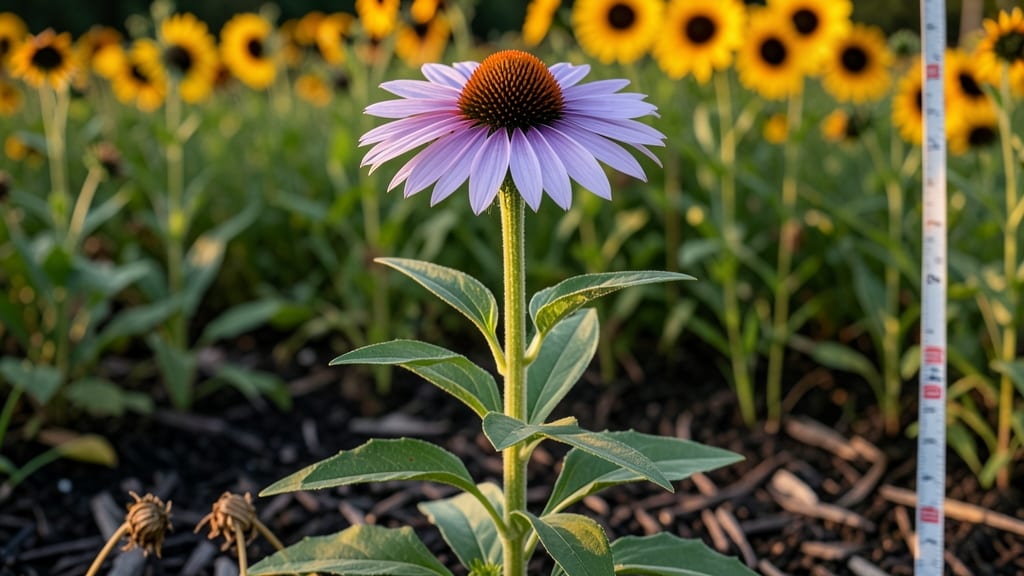
Coneflowers grow anywhere from 1 to 5 feet tall, depending on the variety and growing conditions, making them a versatile choice for any garden design.
If you're planning a pollinator-friendly garden or simply admiring the bold beauty of coneflowers, knowing their mature height is crucial for spacing, design, and maintenance. But did you know some varieties can reach nearly five feet tall—while others stay compact enough for containers?
For example, the classic Purple Coneflower (Echinacea purpurea) typically grows 3 to 5 feet tall, perfect for adding height to the back of a flowerbed. In contrast, dwarf varieties like 'Green Envy' or 'Hot Papaya' stay between 1 to 2 feet, making them ideal for borders or window boxes.
Height isn’t just about aesthetics—it also impacts how you space plants, pair them with companions, and even prune for healthier blooms. Below, we’ll break down the exact heights by variety and the factors that influence how tall your coneflowers will grow.


Coneflower height by variety: exact growth ranges for popular species
When planning your garden, knowing coneflower height by variety helps you choose the perfect spot for each plant. Some varieties like Purple Coneflower (Echinacea purpurea) can reach towering heights, while others stay compact enough for containers.
Understanding these differences ensures your garden looks intentional and thrives with proper spacing.
Coneflowers typically mature between 60 to 120 days after planting, depending on the variety and growing conditions. Their growth habits vary—some grow upright, while others form mounding shapes. This variety in height and form makes them incredibly versatile for different garden designs, from pollinator-friendly borders to cut flower arrangements.
| Variety | Mature Height | Growth Habit | Maturity Timeline | Best For |
|---|---|---|---|---|
| Purple Coneflower (Echinacea purpurea) | 36-48 inches | Upright | 90-120 days | Backdrops, pollinator gardens |
| White Swan (E. purpurea 'White Swan') | 30-36 inches | Upright | 80-100 days | Cut flowers, borders |
| Green Envy (E. purpurea 'Green Envy') | 12-18 inches | Mounding | 60-75 days | Containers, borders |
| Hot Papaya (E. purpurea 'Hot Papaya') | 18-24 inches | Semi-mounding | 70-90 days | Pollinator gardens, small spaces |
| Magnus (E. purpurea 'Magnus') | 48-60 inches | Upright | 100-120 days | Tall backdrops, cottage gardens |
The Purple Coneflower (Echinacea purpurea) is one of the most popular varieties, often reaching heights of 36 to 48 inches. Its upright growth habit makes it perfect for the back of garden beds or as a focal point.
If you're looking for a white coneflower variety, the 'White Swan' stands at 30 to 36 inches, offering a striking contrast to its purple cousins.
For gardeners with limited space, dwarf varieties like 'Green Envy' are ideal. This variety stays between 12 to 18 inches tall and thrives in containers or along garden edges. Its mounding growth habit adds texture and color without overwhelming smaller spaces.
Similarly, 'Hot Papaya' reaches 18 to 24 inches, making it perfect for pollinator gardens or small borders.
If you're aiming for a dramatic effect, consider 'Magnus', which can grow up to 48 to 60 inches tall. This variety is perfect for cottage gardens or as a tall backdrop for other plants.
Its height and striking blooms make it a standout feature in any landscape. However, be mindful of its size when planting—it requires ample space to avoid crowding other plants.
Understanding these coneflower height ranges helps you plan your garden layout effectively. For example, taller varieties like 'Magnus' should be placed at the back of beds, while dwarf varieties like 'Green Envy' can be used in the front or in containers.
This thoughtful placement ensures your garden remains balanced and visually appealing throughout the growing season.
Another key factor to consider is the maturity timeline. Taller varieties like 'Magnus' take longer to reach their full height, often requiring 100 to 120 days. In contrast, dwarf varieties like 'Green Envy' mature faster, typically in 60 to 75 days.
This difference can influence when you plant and how you schedule maintenance tasks like pruning or fertilizing.
When selecting coneflowers for your garden, think about both their height and their growth habits. Upright varieties like 'Magnus' provide vertical interest, while mounding varieties like 'Green Envy' add width and texture. Mixing these types creates a dynamic and visually engaging garden that supports both aesthetics and pollinators.
Finally, remember that
Factors that affect coneflower height: sunlight, soil, and pruning
Coneflowers are famously adaptable, but their mature height can vary dramatically based on growing conditions.
If you’ve noticed your Echinacea purpurea stretching taller than expected—or staying shorter than the catalog promised—you’re likely dealing with environmental factors. Full sun exposure (6+ hours daily) typically yields the tallest, sturdiest stems, while partial shade can stunt growth by 20-30%.
Even the same variety might hit 3 feet in shade but reach 5 feet in full sun.
Soil composition plays an equally critical role. Coneflowers thrive in well-draining soil, like sandy loam, which promotes robust root systems and supports ideal height. Heavy clay soils, however, can restrict growth and lead to overgrown but weak stems.
Amending clay with compost or sand can help achieve that perfect 3-4 foot height most gardeners aim for in standard varieties.
Here’s the key takeaway: height control starts with sunlight, soil, and pruning. These three factors directly influence whether your coneflowers will tower like sentinels or stay compact and bushy. Let’s break down how each affects growth—and how you can optimize them for your garden’s needs.
🌱 How Tall Are Coneflowers Under Different Conditions?
| Condition | Standard Variety Height | Dwarf Variety Height |
|---|---|---|
| Full Sun (6+ hrs/day) | 3–5 ft | 1–2 ft |
| Partial Shade (3–6 hrs/day) | 2–3 ft | 12–18 in |
| Well-Draining Soil | 3–4 ft (ideal) | 1–1.5 ft |
| Clay Soil (Unamended) | 2–3 ft (weak stems) | 10–14 in |
✂️ Pruning Tip: Cut back overgrown stems by 1/3 in early summer to encourage bushier growth and prevent flopping.
Let’s talk sunlight first. Coneflowers are sun lovers, and their height reflects that. In full sun, varieties like ‘Magnus’ or ‘White Swan’ can easily hit 5 feet, making them perfect for back-of-border plantings or cut flower arrangements.
But if you’re growing them in partial shade—say, under tall trees—they’ll likely max out at 2-3 feet. This isn’t necessarily bad; shorter coneflowers work beautifully in container gardens or as pollinator-friendly borders.
Next, soil quality determines whether your coneflowers hit their genetic height potential or struggle to stand tall. Sandy loam soils provide the perfect balance of drainage and nutrients, allowing roots to establish deeply and support upright growth.
If your soil is heavy clay, consider raising beds or mixing in organic matter like compost or perlite. This simple tweak can add 1-2 feet to your plants’ height by improving root health and stability.
Finally, pruning is your secret weapon for controlling height and encouraging bushier blooms. If your coneflowers are overgrown or flopping, prune them back by one-third in early summer. This removes leggy stems and redirects energy to side shoots, resulting in a fuller, more compact plant.
For tall varieties, a mid-season trim also prevents wind damage and keeps blooms within reach for easy harvesting.
By mastering these three factors—sunlight, soil, and pruning—you can grow coneflowers at exactly the height you want, whether that’s a 5-foot statement plant or a 1-foot container star. Experiment with placement and care to find the perfect balance for your garden’s vision! 🌻