
Watering
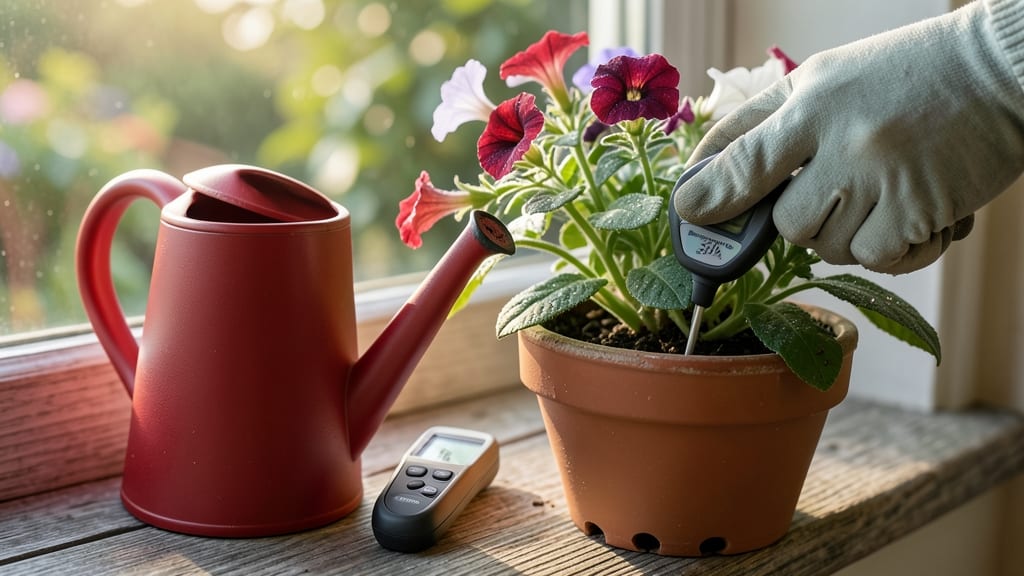
Watering your potted flowers the right way means checking soil moisture—not guessing—because overwatering kills more plants than drought.
You’ve probably drowned a few 🌸 without realizing it: that soggy soil smell, the yellow leaves, or the sad wilt that won’t bounce back. The truth? Most gardeners water on a schedule instead of reading their plants’ needs—and that’s how root rot starts.
Here’s the game-changer: a 3-step soil test that tells you exactly when to water, whether you’re growing thirsty petunias or drought-tolerant succulents. No more guesswork, just perfect moisture every time.
In this guide, I’ll walk you through adjusting for pot size, climate, and plant type—plus how to spot the 5 signs you’re watering wrong before it’s too late.
The 3-Step soil test method to determine watering frequency
Watering potted flowers feels like a guessing game—until you learn the soil test method. Most gardeners overwater because they rely on schedules instead of the soil’s actual needs.
This 3-step technique uses your fingers, eyes, and hands to check moisture levels accurately, so you’ll never drown or dehydrate your plants again.
Start by understanding that pot size and plant type change everything. A succulent in a 6-inch pot needs water every 3 weeks, while a fern in a 12-inch pot may need watering twice a week.
The key? Test before you water—your plants will thank you with healthier roots and vibrant blooms.
Here’s the foolproof method I use for all my potted flowers, adapted for succulents, tropicals, and everything in between:
💧 Step 1: Finger Depth Check
- Insert your finger 1–2 inches into the soil (deeper for large pots).
- If soil feels dry and crumbly, it’s time to water.
- If it’s cool and damp, wait 1–2 more days.
🌱 Step 2: Color & Texture Test
- Lift a handful of soil—dark and clumpy means it’s moist.
- Light and powdery soil needs immediate watering.
- For succulents, aim for a sandy, dry feel between waterings.
⚖️ Step 3: Weight Test
- Pick up the pot—lightweight means it’s dry.
- Heavy pots (especially terracotta) hold moisture longer.
- Adjust for plastic pots, which dry out faster.
For succulents and cacti, I skip the weight test—they thrive on dry soil.
Instead, I focus on the color test: if the soil is still damp after 2 weeks, I wait longer. Ferns and orchids, on the other hand, need consistent moisture, so I combine all three steps for accuracy.
Pro tip: Use a moisture meter for tricky plants like bromeliads, which hate soggy roots. But for most flowers, your fingers are all you need. Morning watering (before 10 AM) reduces evaporation and fungal risks, so I always water then.
Don’t forget to adjust for seasonal changes. In summer, I check soil moisture daily, while winter slows everything down—I water every 7–10 days unless the pot feels bone-dry. Terracotta pots dry out faster than plastic, so I water them more frequently.
If your potted flowers start wilting or developing yellow leaves, it’s a sign you’re over- or underwatering. The soil test method prevents these issues by giving you real-time data. Trust your senses—your plants will grow stronger and bloom brighter when you water them just right.
Now that you’ve mastered the soil test, you’re ready to tackle watering frequency charts for specific flowers. But first, grab a pot, stick your finger in the dirt, and let your plants tell you what they need! 🌿
Watering frequency chart: how often to water 20 common potted flowers
Watering potted flowers isn’t one-size-fits-all—your petunias might need daily checks in summer, while orchids thrive with water every 7–10 days. The key lies in understanding each plant’s natural moisture needs, pot size, and your local humidity levels.
Below, I’ve broken down 20 popular varieties with science-backed intervals to keep them blooming beautifully without over- or underwatering.
Before diving into the chart, remember: terracotta pots dry faster than ceramic, and small pots (under 6 inches) need water 2–3x more often than large containers. Adjust these schedules if your home has low humidity (like during winter heating) or high heat (summer AC struggles).
Always water until excess drains from the bottom—this prevents root rot.
This chart covers 20 of the most popular potted flowers, but remember: your microclimate matters most. For example, if you live in Arizona’s desert heat, even geraniums might need daily watering in summer.
Conversely, in Pacific Northwest’s damp winters, orchids can stretch to 14 days between waterings.
Pro tip: Group plants with similar water needs together. Place petunias next to impatiens and orchids near African violets to simplify your routine. And always check soil moisture before watering—stick your finger 1–2 inches deep.
If it’s dry, water; if it’s moist, wait. Your plants will thank you with **longer