
Watering
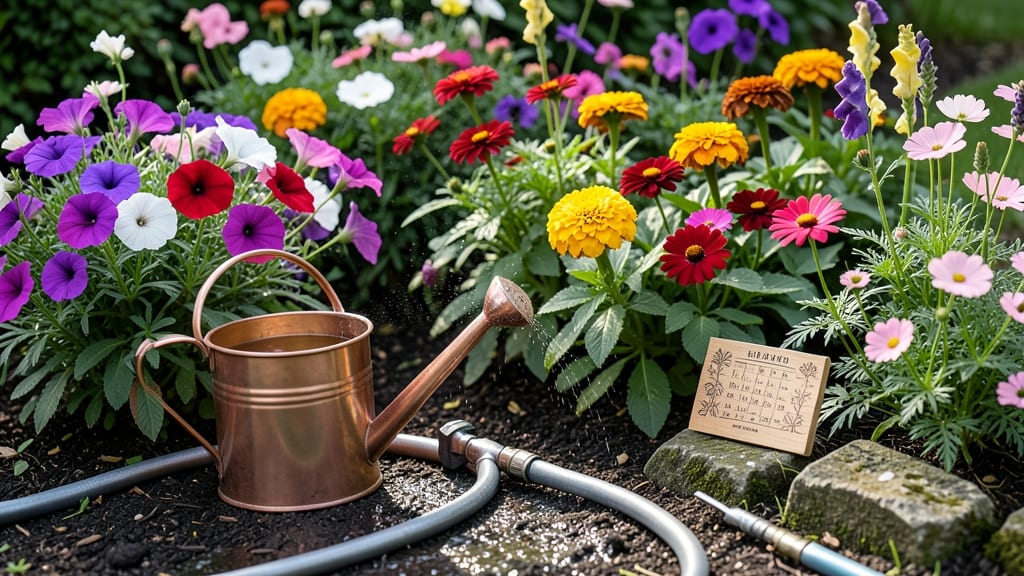
To water a flower garden properly means balancing soil moisture, plant needs, and weather—because one size doesn’t fit all.
Picture this: your 🌱 Often thrives under daily watering in July but wilts by September when the rains return. Or worse, you drown your petunias because you assumed "water every day" meant light sprinkles, not deep soaks.
The truth? Frequency depends on the season, soil, and even the plant’s age.
Most gardeners overcomplicate watering, but the key is simple: check the soil before you water. Stick your finger an inch deep—if it’s dry, it’s time. If it’s damp, wait. This method saves water, prevents root rot, and keeps your garden lush without guesswork.
Here’s what you’ll learn: a plant-by-plant schedule for annuals, perennials, and drought-tolerant blooms, plus how to adjust for heatwaves, mulch benefits, and the three signs your garden is thirsty or drowning.
Watering frequency by flower type: a plant-specific schedule
Not all flowers crave the same amount of water—some thrive with daily hydration while others rebel against overzealous watering. The key lies in understanding your plants' root depth, soil type, and growth stage.
Annuals like petunias and marigolds demand consistent moisture, while succulents and lavender prefer dry spells. Let's break down the perfect watering schedule for your garden's star players.
Before reaching for the hose, check the top 1-2 inches of soil. If it feels dry, it's time to water. For container-grown flowers, the soil dries out faster—often requiring daily checks in summer.
Use your finger as a moisture meter: damp soil means wait, bone-dry soil means hydrate. This simple test prevents both root rot and wilting from thirst.
| Flower Type | Watering Frequency | Soil Moisture Trigger | Deep-Watering Tip |
|---|---|---|---|
| Annuals (Petunias, Marigolds) | Every 1-2 days (summer), 2-3x/week (spring/fall) | Top 1 inch dry | Water until soil is saturated 6 inches deep |
| Perennials (Lavender, Coneflowers) | Weekly (established), 2-3x/week (new plants) | Top 2 inches dry | Focus on root zone, avoid wetting foliage |
| Drought-Tolerant (Succulents, Cacti) | Every 2-4 weeks (spring/fall), monthly (winter) | Top 3 inches completely dry | Soak thoroughly, then let dry completely |
| Bulbs (Tulips, Daffodils) | Weekly until foliage dies back | Top 1 inch dry | Water at base, avoid stems |
For annual flowers like petunias and marigolds, morning watering is ideal. This schedule prevents fungal diseases by letting foliage dry before nightfall. Use a soaker hose or drip irrigation to deliver water directly to roots, reducing evaporation and waste.
Aim for 1 inch of water per week during growing season, adjusting for rainfall.
Perennials like lavender and coneflowers establish deep root systems over time. Once mature, they need less frequent watering but benefit from deep soakings every 7-10 days. Newly planted perennials require more attention—keep soil consistently moist for the first 2-3 months to encourage root growth.
Mulch around the base with 2-3 inches of organic material to retain moisture.
Drought-tolerant plants like succulents and cacti store water in their leaves and stems. Overwatering is their biggest enemy—always let the soil dry completely between waterings. In containers, these plants may need water every 2-4 weeks, while in-ground varieties might go even longer.
Group them with similar water needs to simplify care.
Deep-watering techniques are your secret weapon against root rot. Instead of light, frequent waterings, give plants a slow, thorough drink that penetrates 6-12 inches deep. This encourages roots to grow downward where moisture persists.
For container plants, water until it runs out the drainage holes—never let them sit in saucers of water.
Your soil type plays a huge role in watering needs. Sandy soil drains quickly, requiring more frequent waterings, while clay holds moisture longer. Amend heavy soils with compost to improve drainage, and add perlite to sandy soils for better water retention.
Always water at the base of plants to prevent fungal spores from splashing onto leaves.
Remember: wilting doesn't always mean thirst. Some plants wilt in hot afternoons as a natural moisture-conservation tactic. Check soil moisture before panicking—often, a quick drink of water brings them right back.
For container gardens, weigh your pots: a lighter pot signals it's time to water. This simple trick saves time and prevents overwatering.
Adjust your schedule based on weather conditions. During heatwaves, increase frequency by 30-50%, and reduce by half during cool, rainy periods. Use a rain gauge to track precipitation—every inch of rain counts toward your weekly water total.
With this plant-specific approach, your flower garden will flourish without guesswork or waste.
Seasonal watering adjustments: when to increase or decrease frequency
Your flower garden's watering needs change dramatically with the seasons. What works in spring's mild temperatures can drown plants during summer heatwaves, while autumn's cooler air often signals reduced watering needs. Understanding these seasonal shifts is key to maintaining vibrant blooms without wasting water or stressing your plants.
I've learned the hard way that ignoring seasonal changes leads to either soggy soil or crispy petals. The solution? Adjust your watering schedule based on temperature fluctuations, rainfall patterns, and plant dormancy cycles.
Let's break down exactly when to increase or decrease your watering frequency for each season.
🌱 Seasonal Watering Guide: When to Adjust
- 1 Spring: Increase frequency as temperatures rise. Most flowers need 2-3 waterings per week when daytime temps hit 70°F+. Use a soil moisture meter to check top 2 inches.
- 2 Summer: Double check daily during heatwaves (90°F+). Water deeply 2x daily—morning and late afternoon—using drip irrigation to reduce evaporation. Mulch with 3-4 inches of straw to retain moisture.
- 3 Autumn: Reduce to 1-2 waterings weekly as temps drop below 60°F. Focus on root zone hydration—water only when top 1-2 inches feel dry. Stop fertilizing to prevent new growth before dormancy.
- 4 Winter: Cut back to monthly waterings or only when soil is bone-dry. Use snow as natural irrigation—1 inch of snow equals ~0.1 inch of water. Avoid winter watering if temps are 32°F to prevent frost damage.
💡 Pro Tip: Always water early morning (6-8 AM) to prevent fungal diseases from evening moisture.
Don't rely solely on calendars—pay attention to weather forecasts and plant behavior. If your marigolds wilt by noon but recover by evening, they're thirsty. If lavender leaves turn yellow despite damp soil, you're overwatering. These cues are more reliable than rigid schedules.
For container gardens, increase frequency by 30-50% since pots dry out faster. Group containers together and water them simultaneously to create a microclimate that retains moisture longer. I've seen container geraniums thrive with daily watering in summer when planted in clusters.
Remember that mulching is your best friend for seasonal adjustments. A 3-inch layer of organic mulch can reduce watering needs by 25-50% by slowing evaporation. Apply mulch in early spring and refresh it annually to maintain effectiveness.
Start tracking your garden's water needs now. Keep a simple log of when you water, how much, and how your plants respond. After a season, you'll have a customized watering schedule that works perfectly for your climate and soil type—no more guesswork, just beautiful blooms year-round. ☀️🌷