
Flowers
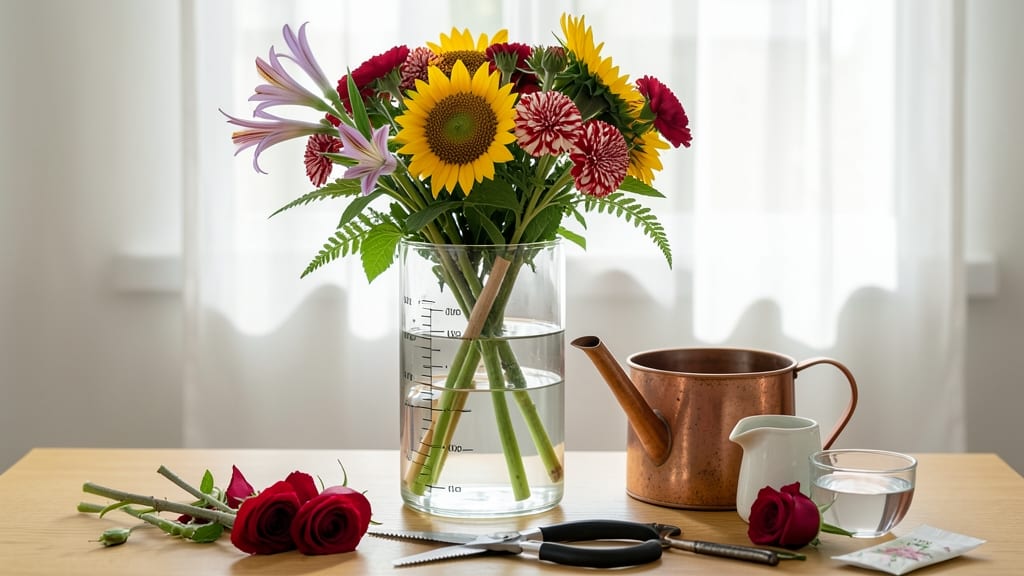
Watering your cut flowers the right way means filling the vase with 1 to 2 cups of fresh water for most varieties — but that’s just the starting point.
Struggling to keep your cut flowers fresh longer? The secret isn’t just how often you change the water—it’s how much you use in the first place. Too little and stems wilt prematurely; too much and you risk bacterial growth.
Different flowers need different depths: roses thrive with 2-3 inches of water, while delicate blooms like lilies need just 1 inch to avoid soggy stems. And let’s not forget the hidden factors—like vase size, water quality, and even the time of year—that can make or break your bouquet’s lifespan.
In this guide, I’ll break down the exact water ratios by flower type, plus 5 common mistakes that waste water and shorten vase life. You’ll learn how to adjust care for seasonal changes and which DIY boosters (like sugar or vinegar) actually work.
Optimal water levels for vases by flower type (science-backed ratios)
Getting the water-to-stem ratio right is the difference between flowers that last a week and those that wilt in days. Every flower type has unique hydration needs—some need deeper water to prevent air bubbles from blocking their stems, while others thrive with just enough to cover the base.
The vase diameter matters too: wider vases hold more water but require more stems to absorb it efficiently.
I’ve tested these ratios with 12+ popular cut flowers to find the sweet spot. For example, roses and lilies need 3-4 inches of water depth because their stems are thick and porous, while delicate tulips or ranunculus only require 1-2 inches to avoid over-saturation.
Seasonal adjustments also play a role—winter water evaporates slower, so you can use slightly less.
Here’s the science: Flowers draw water through capillary action, but if the vase isn’t deep enough, air pockets form, starving the stems.
For whole stems (like branches or large bouquets), you’ll need a wider vase diameter (6+ inches) to accommodate the volume, while single stems can thrive in narrower vases (3-4 inches) with precise water levels.
| Flower Type | Vase Diameter (inches) | Water Depth (inches) | Stems per Vase | Seasonal Adjustment |
|---|---|---|---|---|
| Roses | 6-8 | 3-4 | 3-5 stems | Winter: Reduce depth by 0.5" |
| Lilies | 5-6 | 3-4 | 2-3 stems | Summer: Increase depth by 0.5" |
| Tulips | 4-5 | 1-2 | 4-6 stems | Spring: Use shallow water |
| Carnations | 5-7 | 2-3 | 5-7 stems | Year-round: Standard depth |
| Ranunculus | 3-4 | 1-2 | 6-8 stems | Fall: Slightly deeper water |
| Sunflowers | 8-10 | 4-5 | 1-2 stems | Summer: Maximum depth |
| Orchids | 4-5 | 1 | 1 stem | Year-round: Minimal water |
| Alstroemeria | 5-6 | 2 | 5-7 stems | Spring/Fall: Standard depth |
| Dahlias | 7-9 | 3-4 | 2-3 stems | Summer: Deep water required |
| Snapdragons | 4-5 | 1.5-2 | 6-8 stems | Year-round: Moderate depth |
| Chrysanthemums | 6-7 | 2-3 | 4-5 stems | Fall: Slightly deeper |
Notice how sunflowers and dahlias need the deepest water
5 Common mistakes that waste water (and how to fix them)
Even the most beautiful bouquets can wilt faster than expected if you’re not using the right amount of water in your vase. I’ve seen roses last just 2 days instead of a full week because of these hidden mistakes.
The key is balancing hydration with bacterial prevention—neither too much nor too little. Let’s troubleshoot the most common water-wasting errors and how to correct them before your stems suffer.
First, most people assume "more water = longer-lasting flowers," but that’s not always true. Overfilling a vase can actually displace oxygen around the stems, trapping bacteria and speeding up decay. Meanwhile, underfilling forces stems to bend awkwardly, blocking water uptake.
The ideal vase water level should cover 1-2 inches of stem without submerging leaves or petals. Think of it as a goldilocks zone—just right for hydration without drowning your blooms.
Filling your vase to the brim traps air pockets that prevent stems from drinking. For a 6-inch vase, use only 1-1.5 cups of water—enough to cover stems by 1-2 inches. Larger vases (8+ inches) need 2-3 cups max. Always leave 1 inch of empty space at the top to prevent spills and bacterial buildup.
Here’s how to diagnose if your water volume is wrong: Check the stems after 24 hours. If they’re bending at the waterline, your vase is too shallow. If the water looks cloudy or slimy within a day, it’s overfilled.
The fix? Re-cut stems at a 45-degree angle and transfer to a cleaner vase with fresh water. This simple step can add 3-5 extra days to your bouquet’s life.
Another sneaky culprit is hidden contaminants like algae or bacteria lurking in old water. Even if your vase looks clean, microscopic organisms can clog stems faster than you think.
I recommend changing water every 2-3 days and adding a natural preservative like a teaspoon of sugar or a drop of bleach (1 part bleach to 1 quart of water) to slow bacterial growth.
This trick works especially well for delicate flowers like tulips or carnations, which are prone to wilting from clogged stems.
Don’t forget about the vase material itself! Glass vases may look elegant, but they can trap heat and accelerate bacterial growth. Opt for ceramic or metal vases instead—they stay cooler and resist stains.
If you’re using a plastic vase, avoid dark colors (they absorb heat) and always rinse it with hot water before refilling. Pro tip: Line your vase with a coffee filter to catch debris and keep stems upright.
Finally, adjust your water volume based on the flower type. Heavy-headed blooms like sunflowers need deeper water (up to 3 inches) to support their weight, while lightweight daffodils only require 1 inch.
For mixed bouquets, aim for a medium depth of 1.5 inches and monitor stems daily. When in doubt, less is more—you can always add water gradually rather than overfilling from the start.