
Flowers
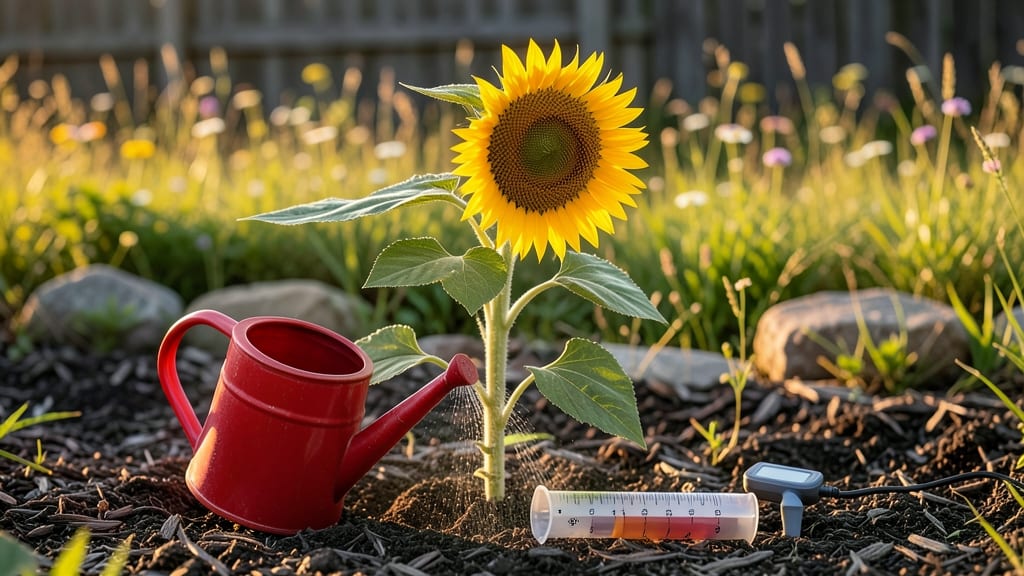
Sunflowers need 1 to 1.5 inches of water per week during their growing season to develop strong roots and towering stems—without it, you’ll end up with weak stalks that flop before they bloom.
Picture this: you’ve spent weeks watching your 🌻 sunflowers shoot up, only for them to suddenly wilt or develop yellow leaves. That’s often a sign of inconsistent watering—not too much, not too little, but just right.
The key is deep, infrequent watering that encourages roots to grow downward, not shallow puddles that evaporate by noon.
In USDA Zone 6a, where spring planting kicks off in April, young sunflowers need water every 3 to 4 days until they’re established.
Once they hit 3 feet tall, you can stretch that to 5 to 7 days, but always check the soil first—stick your finger an inch down. If it’s dry, it’s time to water.
Below, I’ll break down the exact schedule by season, how to spot over- or underwatering, and the one mulching trick that cuts your watering time in half. No guesswork, just drought-resistant sunflowers that reach for the sky.
Sunflower watering requirements by growth stage: deep roots need smart hydration
Sunflowers may look like they’re built to handle drought, but their deep taproots need consistent moisture to reach their full 10-16-foot potential. The key is understanding how their water needs shift from seedling to flowering stages.
Overwatering or underwatering at the wrong time can stunt growth or invite diseases like powdery mildew. Let’s break down the science so you can water like a pro.
When sunflowers first sprout, their roots are tiny and shallow, meaning they need frequent but shallow watering to keep the soil evenly moist. As they mature, those roots dive deep—up to 6 feet—so you’ll adjust to deep, infrequent watering.
The trick is matching your watering schedule to the plant’s stage, not just the calendar. For example, a 3-foot seedling in July needs more frequent water than a 10-foot mature plant in September.
Climate plays a huge role too. In hot, dry regions like Arizona or California, sunflowers may need watering every 2-3 days in peak summer, while in cooler, humid zones like the Pacific Northwest, you might stretch it to 5-7 days.
Even within the same region, sandy soil drains faster than clay soil, so your watering frequency must adapt. Let’s compare the exact needs by growth stage so you can tailor your approach.
During the germination stage, sunflowers need their soil to stay consistently damp but never soggy. Think of it like a sponge—you want it moist to the touch but not dripping. Use a spray bottle or gentle watering can to avoid disturbing the tiny seeds.
If the soil dries out completely in this stage, you risk failed germination, which is heartbreaking after all your prep work. Pro tip: Cover seeds with a lightweight row cover to retain moisture and speed up sprouting.
Once seedlings emerge, their roots start branching out, but they’re still shallow. This is where the 2-inch rule comes in: stick your finger 2 inches deep into the soil. If it feels dry, it’s time to water.
At this stage, I water every 2-3 days in my garden, but I always check the soil first—especially in hot afternoons when evaporation kicks in. A drip irrigation system works wonders here because it delivers water slowly at the roots without wetting the leaves, which helps
Weekly watering schedule for sunflowers: adjust for soil type and weather
Sunflowers are surprisingly drought-resistant once established, but their young roots need consistent moisture to reach their full 10-foot potential. The key is deep, infrequent watering—think of it like giving them a long drink instead of daily sips.
I’ve grown sunflowers in both sandy and clay-heavy soils, and the difference in water needs is dramatic.
Your soil type and current weather should dictate your schedule. Sandy soil drains too quickly, while clay holds moisture for days. Heatwaves demand extra attention, but overwatering is just as dangerous as underwatering. Let’s break down the weekly watering routine tailored to your garden’s conditions.
- 💧 Sandy Soil: Water every 2-3 days—1-2 inches deep. Use drip irrigation to avoid runoff.
- 💧 Loamy Soil: Water every 4-5 days—1.5 inches deep. Perfect balance; let topsoil dry slightly between waterings.
- 💧 Clay Soil: Water every 5-7 days—2 inches deep. Test with your finger: water when top 1 inch is dry.
- ☀️ Heatwave Adjustment: Double check soil moisture—water daily in 90°F+ weather if topsoil is bone-dry.
- 🌱 Seedling Stage: Keep soil consistently moist (not soggy) for first 3 weeks—use a spray bottle for gentle hydration.
- 🌧️ Rainy Season: Skip watering if 1 inch of rain falls in 24 hours. Too much moisture causes root rot.
Here’s my pro tip: Always water in the early morning (before 10 AM) to reduce fungal diseases like powdery mildew. I’ve seen sunflowers wilt dramatically when watered at night—this invites bacterial infections.
Use a moisture meter or the finger test (stick your finger 1-2 inches deep; if dry, water).
For container-grown sunflowers, the rules change slightly. Pots dry out 3x faster than garden beds, so water daily in summer if the top inch feels dry.
Add mulch around the base to lock in moisture—this is a game-changer for drought-prone areas. I’ve saved struggling sunflowers by mulching with straw during heatwaves.
Watch for leaf wilting or yellowing—these are your sunflowers’ way of saying “adjust my water!” Overwatered plants develop mushy stems, while underwatered ones show crispy edges.
The goal is balanced hydration, not perfection. Even 10-minute adjustments to your schedule can mean the difference between a 6-foot and a 12-foot sunflower.
Remember, sunflowers are resilient. A missed watering won’t kill them, but consistency builds those deep taproots they need to thrive. Start with this schedule, then tweak based on your local climate and soil type. Your sunflowers will reward you with bold, happy blooms all season long. 🌻